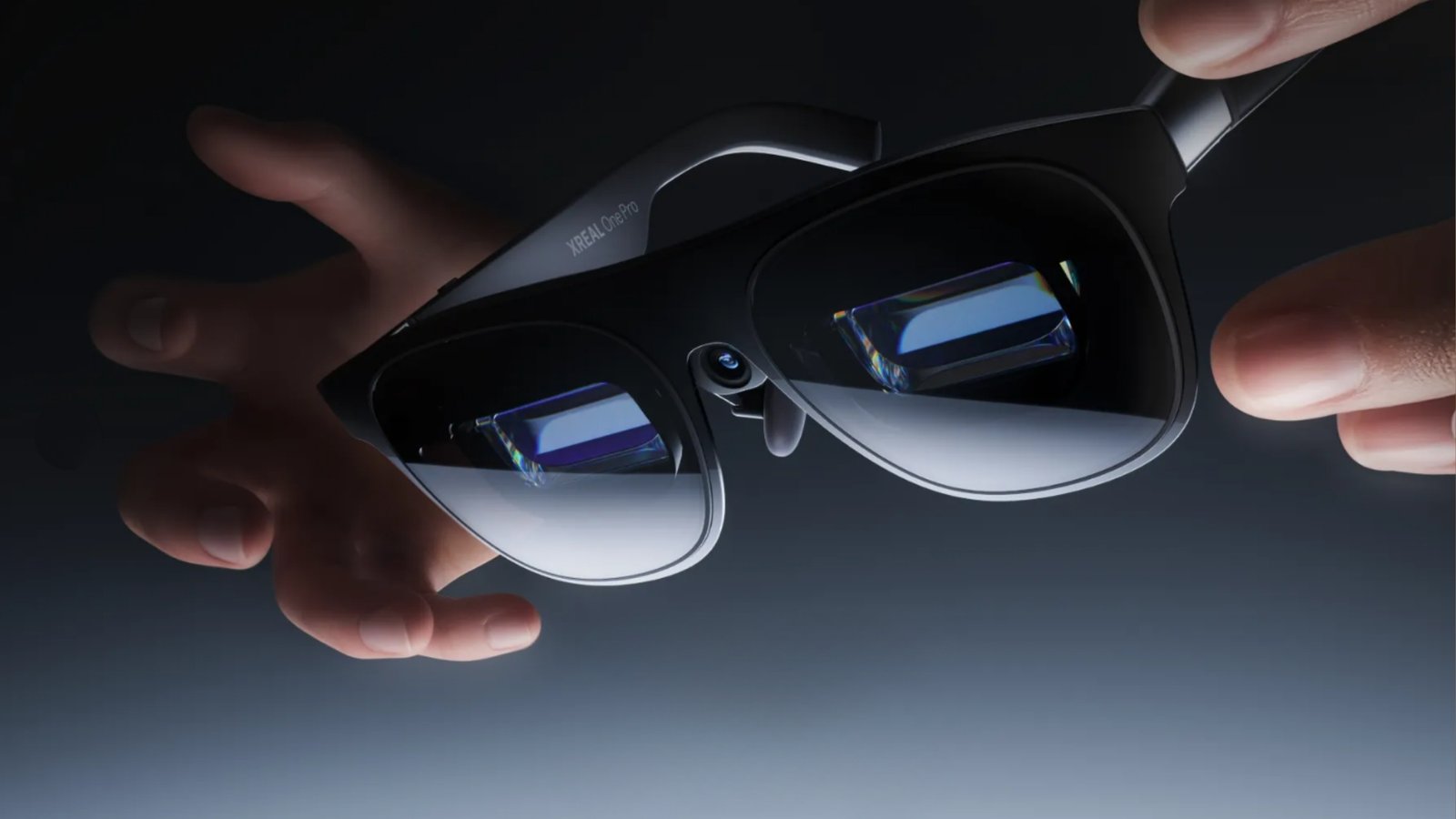
Smart Glasses are becoming an increasingly popular way to enjoy entertainment and work with a private virtual display, but premium models can still be expensive. Ahead of Black Friday 2026, the Xreal One Pro smart glasses have dropped to their lowest Amazon price yet, making them a more attractive option for anyone considering a wearable screen for movies, gaming or laptop productivity.
The discount arrives shortly after Xreal introduced its newer One Pro Plus model, but the original Xreal One Pro remains an impressive choice. Unlike camera-equipped smart glasses designed to capture photos and videos, these glasses focus on displaying content from connected devices. They effectively turn a compatible phone, tablet, laptop or gaming console into a personal virtual screen that appears to float in front of the wearer.
The Xreal One Pro is currently available for $499 at Amazon US and £449 at Amazon UK. According to the supplied deal information, these are the lowest prices the glasses have reached on Amazon. Although the newer model may attract attention, the original One Pro still offers a compelling combination of micro-OLED picture quality, a 120Hz refresh rate and an improved optical design.
Xreal One Pro Black Friday Deal: How Much Can You Save?
The current Black Friday promotion makes the Xreal One Pro more accessible to buyers who have been waiting for a price reduction. The glasses are listed at $499 in the US and £449 in the UK, with both prices representing their lowest Amazon levels so far.
The timing is particularly interesting because Xreal has recently introduced the One Pro Plus. A newer product does not automatically make the previous generation a poor purchase, especially when the older model already delivers the features that matter most for its intended use.
For buyers who primarily want a large virtual display for watching films, playing games or working privately on a laptop, the One Pro could offer better value than paying extra for the latest hardware.
However, shoppers should compare the specifications and pricing of both models before purchasing. The One Pro Plus may offer improvements that matter to particular users, while the original One Pro’s record-low price makes it worth considering for anyone prioritising value.
What Makes the Xreal One Pro Different From Camera-Based Smart Glasses?
Not all smart glasses serve the same purpose. Camera-equipped models are often designed around capturing images, recording videos, interacting with voice assistants or providing hands-free access to information. The Xreal One Pro takes a different approach.
It is primarily a wearable display. Instead of recording the world around the wearer, it receives video from a connected device and presents that content through its built-in displays. This makes it more comparable to a portable monitor that can be worn rather than a conventional pair of camera-equipped smart glasses.
Users can connect compatible devices such as smartphones, tablets, laptops and gaming consoles. Once connected, the glasses project a large virtual image into the user’s field of view, creating the impression of watching content on a much larger screen.
This design has two important advantages. First, it gives users a private viewing experience without requiring a large television or monitor. Second, because the glasses do not include built-in cameras, they avoid the specific recording and surveillance concerns associated with camera-equipped smart glasses.
171-Inch Virtual Display With Micro-OLED Technology
The biggest selling point of the Xreal One Pro is its display technology. The glasses use micro-OLED displays to create a virtual screen equivalent to a 171-inch television, giving movies, television shows and games a much larger presentation than a typical smartphone or tablet screen.
OLED technology is particularly useful for entertainment because each pixel can control its own light output. This allows the display to produce deep blacks, strong contrast and vibrant colours. Dark scenes in films and games can therefore look more convincing than they would on many conventional LCD displays.
The large virtual image also changes how users experience portable entertainment. Instead of holding a phone close to their face or watching a small tablet screen, they can enjoy content through a display that appears much larger in their field of vision.
There is one important resolution limitation, however. The Xreal One Pro’s picture quality tops out at Full HD resolution (1920 x 1080). This is worth considering because the virtual display may feel enormous, but it does not offer the pixel resolution of a native 4K television or monitor.
For films, streaming videos and many games, Full HD can still provide a satisfying experience. Buyers looking for the sharpest possible image for detailed professional work should understand this limitation before making a purchase.
120Hz Refresh Rate Makes the Glasses Suitable for Gaming
Another important feature is the 120Hz refresh rate. A display’s refresh rate determines how many times per second it can update the image. A higher refresh rate can make movement appear smoother, particularly when playing games that support higher frame rates.
With support for up to 120Hz, the Xreal One Pro offers a more responsive viewing experience than many standard 60Hz displays. Fast movement, camera pans and gameplay animations can look smoother when the connected device and game are capable of delivering the required frame rate.
This makes the glasses an interesting option for handheld gaming devices, compatible smartphones, laptops and gaming consoles. Instead of relying on a small built-in screen, players can use the glasses to enjoy a much larger virtual image.
However, the glasses do not increase a game’s performance by themselves. The actual frame rate still depends on the connected device, the game and the video signal being supplied.
Improved Optical Design Helps Reduce Distracting Reflections
One feature that separates the Xreal One Pro from some competing wearable displays is its optical engine. The optical system uses reflective elements to make the small internal displays appear much larger to the wearer.
In some smart glasses, reflections from the surrounding environment can become distracting. Patterns on clothing, bright surfaces and other visual details may appear in the display and interfere with the viewing experience.
Xreal’s One Pro uses a specially shaped optical design intended to reduce glare and unwanted reflections. This helps create a clearer image and makes the virtual screen more comfortable to watch in situations where surrounding visual distractions might otherwise become noticeable.
The improved optical system is also one reason the One Pro sits in a more premium category than some less expensive wearable displays. Buyers are not simply paying for a screen attached to a pair of glasses; the optics play a major role in determining how usable that screen feels.
For people planning to use smart glasses regularly, this can be just as important as resolution or refresh rate. A technically impressive display is less useful if reflections make it difficult to concentrate on the content.
Bose-Tuned Speakers Deliver Built-In Audio
The Xreal One Pro also includes integrated speakers tuned by Bose. This means users can watch videos, listen to music or play games without necessarily connecting a separate pair of headphones.
The built-in audio system is designed to provide a more immersive sound experience, with balanced low, middle and high frequencies. For casual entertainment, the speakers can make the glasses feel like a more complete portable viewing system rather than a display that depends on additional accessories.
There are limitations to the open-ear design, though. Sound can leak into the surrounding environment, which means people sitting nearby may hear some of what the wearer is watching. The glasses also do not include active noise cancellation to block out background sounds.
That makes the built-in speakers less suitable for noisy public spaces. If you plan to use the Xreal One Pro during train journeys, flights or other travel, pairing the glasses with earbuds may provide a better listening experience.
Can You Use Xreal One Pro as a Private Laptop Display?
Entertainment is only part of the appeal. The Xreal One Pro can also be useful for people who need a private display while working away from home.
When connected to a compatible laptop, users can configure their display settings so that the content appears on the glasses rather than the laptop’s built-in screen. This allows them to work with documents, emails and other information while keeping the visible display largely within their personal viewing space.
That could be useful when working in public places such as airports, trains, cafés or shared offices. Someone sitting beside the wearer may be less able to see confidential information displayed through the glasses than they would be when looking at a conventional laptop screen.
However, this should not be treated as a complete security solution. The glasses do not replace device encryption, strong passwords or other workplace security measures. Users should also check their laptop’s compatibility and display settings before relying on them for professional work.
The Full HD resolution is another consideration. It can be suitable for everyday productivity, but people who regularly work with detailed spreadsheets, large documents or multiple windows may prefer a higher-resolution physical monitor.
Who Should Buy the Xreal One Pro?
The record-low Black Friday price makes the Xreal One Pro worth considering, but it is not necessarily the right purchase for everyone. Its value depends on whether a wearable virtual display fits the way someone watches content, plays games or works.
Movie and TV fans
People who frequently watch films and television on phones or tablets may appreciate the much larger virtual screen. The micro-OLED technology, strong contrast and integrated speakers make the glasses an appealing portable entertainment option.
Handheld and console gamers
The 120Hz refresh rate and large virtual display could make gaming more enjoyable, particularly when using compatible devices. Players should still check their hardware connections and remember that the glasses do not improve the performance of the console or game itself.
Frequent travellers
Travellers who want a private screen for films, shows or games may find the One Pro useful. Its open-ear audio design is less ideal in noisy environments, so carrying earbuds could be a sensible addition.
Remote workers and mobile professionals
People who regularly work in public spaces may appreciate being able to view laptop content through a wearable display. The private viewing experience can reduce the chance of nearby passengers seeing sensitive information, although it should not replace proper security practices.
Who Should Skip These Smart Glasses?
Despite the attractive display technology, the Xreal One Pro has limitations that could make it unsuitable for some buyers.
- People who need 4K resolution: The display is limited to Full HD, so users who prioritise high-resolution viewing may prefer a conventional 4K monitor or television.
- People who need noise cancellation: The built-in speakers use an open-ear design and do not provide active noise cancellation.
- People who want camera-based smart features: The One Pro is primarily a wearable display, not a camera-equipped assistant designed for recording photos and videos.
- People who prefer a traditional monitor: Some users may find a physical display more comfortable for extended productivity sessions or detailed work.
- People with incompatible devices: Buyers should verify that their phone, laptop, tablet or gaming device supports the required video connection before purchasing.
Xreal One Pro vs the New One Pro Plus: Is the Older Model Still Worth Buying?
The arrival of the Xreal One Pro Plus creates an obvious question: should buyers choose the newer model or take advantage of the discount on the original One Pro?
The answer depends on the differences between the two products and how much those improvements matter to an individual buyer. The newer model may appeal to people who want the latest hardware, but the original One Pro still offers the core features that make wearable displays attractive.
Its micro-OLED screen, 171-inch-equivalent virtual image, 120Hz refresh rate and reflection-reducing optical design remain compelling for entertainment and compatible productivity tasks.
At $499 in the US and £449 in the UK, the One Pro’s current Amazon price makes it easier to justify choosing the previous model. Buyers should compare the latest specifications, availability and actual price difference before deciding whether the newer version is worth the additional cost.
Is the Xreal One Pro Worth Buying at Its Lowest-Ever Amazon Price?
The Xreal One Pro’s Black Friday discount makes it one of the more interesting wearable-display deals ahead of the shopping season. It combines micro-OLED picture quality, a large virtual screen, a 120Hz refresh rate and integrated Bose-tuned speakers in a portable format that can work with compatible phones, tablets, laptops and gaming devices.
Its improved optical design is another important advantage, particularly for users who want to minimise distracting reflections. The absence of built-in cameras also gives it a different appeal from smart glasses focused on recording or capturing the surrounding environment.
There are compromises. Full HD is the maximum resolution, the open-ear speakers can leak sound and there is no active noise cancellation. Compatibility also needs to be checked before purchase, especially if the glasses will be used with a particular laptop or gaming device.
Nevertheless, at $499 in the US and £449 in the UK, the Xreal One Pro is worth considering for anyone who wants a personal virtual display without paying for the newest model. If your priority is portable entertainment, gaming or a more private way to view laptop content, this Black Friday deal could be a good opportunity to buy.
For breaking news and live news updates, like us on Facebook or follow us on Twitter and Instagram. Read more on Latest Technology on thefoxdaily.com.




COMMENTS 0