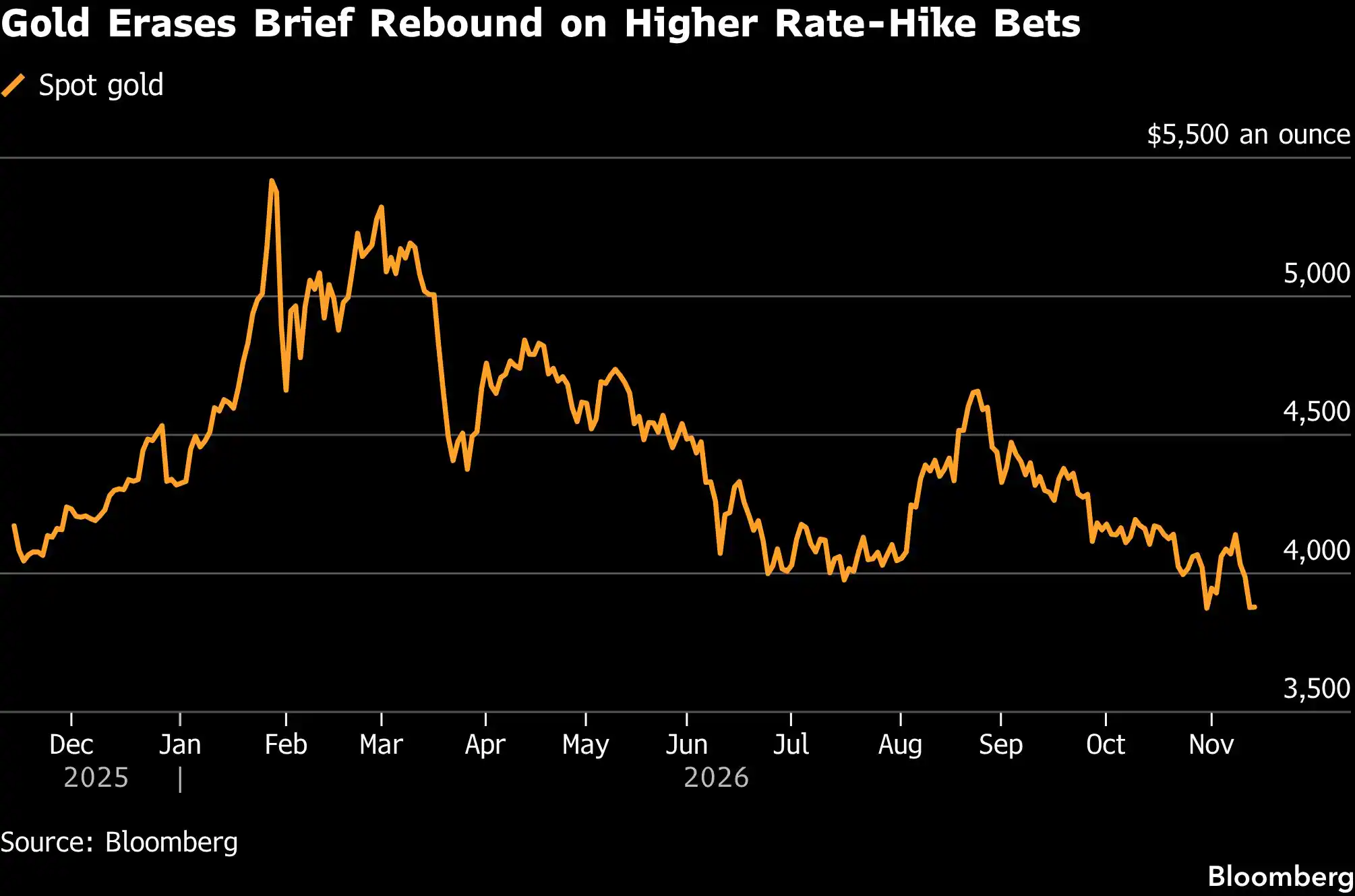
Gold Prices remained close to a 13-month low as rising expectations of further US Federal Reserve interest-rate increases put pressure on the precious metal. Persistent inflation concerns, stronger US Treasury yields and a firmer dollar weighed on bullion, while Crude Oil prices climbed towards $96 a barrel amid fading hopes of a diplomatic breakthrough between the United States and Iran.
Spot gold edged up 0.1% to $3,881.02 an ounce as of 7:57 a.m. Singapore time, after falling nearly 3% in the previous session and briefly touching its lowest level in 13 months. Silver gained 0.2% to $50.11 an ounce, while platinum and palladium also moved higher.
The latest market movements reflect growing concerns that inflation could remain elevated for longer, forcing the Federal Reserve to maintain or intensify its monetary tightening approach. Higher interest rates generally reduce the appeal of gold because the metal does not provide interest income.
Key Highlights
- Gold traded near $3,880 an ounce after touching a 13-month low in the previous session.
- US Treasury yields rose sharply following stronger-than-expected inflation data.
- Markets priced in a possible 25-basis-point Federal Reserve rate increase next month.
- Brent crude surged towards $96 a barrel as hopes of a US-Iran diplomatic agreement weakened.
- Silver, platinum and palladium recorded modest gains during the latest trading session.
Why Gold Prices Have Fallen to a 13-Month Low
Gold has come under pressure as investors reassess the Federal Reserve’s interest-rate outlook. Stronger-than-expected US consumer price data and comments from central bank officials have increased expectations that policymakers may need to take additional action to control inflation.
Bullion fell nearly 3% in the previous session, briefly reaching a 13-month low before stabilising around $3,880 an ounce. The decline reflects the changing relationship between inflation expectations, bond yields and demand for non-interest-bearing assets.
Gold is traditionally viewed as a store of value during periods of economic uncertainty and inflation. However, when interest rates rise, investors can earn higher returns from interest-bearing assets such as government bonds. This increases the opportunity cost of holding gold and can reduce demand for the metal.
Rising US Treasury Yields Add Pressure on Bullion
US Treasury yields climbed sharply on Thursday following the latest inflation concerns. Yields on some government securities increased by more than 12 basis points, with the strongest moves recorded in shorter-term bonds that are particularly sensitive to expectations about Federal Reserve policy.
The increase in Treasury yields extended a movement that began earlier in the week after inflation data came in hotter than expected. Investors interpreted the figures as a sign that price pressures could remain persistent, potentially requiring a more restrictive monetary policy.
The US dollar also strengthened, with the Bloomberg Dollar Spot Index ending the previous session 0.2% higher. A stronger dollar can make gold more expensive for buyers using other currencies, potentially limiting international demand.
Federal Reserve Officials Signal Continued Focus on Inflation
Comments from Federal Reserve officials have reinforced expectations that interest-rate increases may remain under consideration. Policymakers have indicated that inflation needs to come under control before price pressures become more difficult to manage.
Chicago Fed President Austan Goolsbee said on Thursday that the central bank needs to act to tame inflation before the economy becomes overheated. His comments highlighted concerns about allowing persistent price increases to become more deeply established.
San Francisco Fed President Mary Daly also indicated that further interest-rate increases would likely be necessary. She pointed to inflation pressures extending beyond sectors most directly affected by tariffs or oil prices.
These remarks have strengthened market expectations that the Federal Reserve could continue tightening monetary policy if inflation remains stubborn.
Markets Price in Another Federal Reserve Rate Increase
Traders are increasingly pricing in a 25-basis-point interest-rate increase at the Federal Reserve’s next meeting in December. There is also an outside possibility of a larger 50-basis-point increase, while some market participants expect rate hikes to continue beyond December.
These expectations have changed the outlook for gold. If the Federal Reserve raises borrowing costs, investors may prefer assets offering interest income over bullion. However, the actual direction of monetary policy will depend on incoming inflation, employment and economic growth data, as well as policymakers’ assessments.
For gold investors, the timing and scale of potential rate increases will remain important factors. A stronger-than-expected inflation reading could reinforce expectations of tighter policy, while signs of easing price pressures could reduce pressure on bullion.
Oil Prices Approach $96 as US-Iran Diplomatic Hopes Fade
Crude oil prices moved higher as expectations of a diplomatic breakthrough between Washington and Tehran weakened. Brent crude surged towards $96 a barrel on Thursday after US President Donald Trump said the United States did not need an agreement with Iran and that military strikes remained possible.
The comments raised concerns about the risk of further disruption to energy supplies from the Middle East. The region plays a significant role in global oil production and transportation, making geopolitical developments an important influence on crude prices.
Higher oil prices can also add to inflation concerns by increasing energy and transportation costs. If these pressures feed into broader consumer prices, central banks may face greater difficulty in bringing inflation under control.
How Higher Oil Prices Affect Gold
Gold and oil have largely moved in opposite directions since the US-Iran conflict disrupted energy flows from the Middle East and pushed global oil prices higher. Rising energy costs have added to inflation concerns and increased expectations of tighter monetary policy.
Higher inflation can support gold’s appeal as a store of value. However, if the same inflation pressure leads central banks to raise interest rates, the resulting increase in bond yields can weigh on bullion.
This creates competing forces for gold prices. Geopolitical uncertainty and inflation concerns can support demand for precious metals, while higher interest rates and a stronger dollar can limit gains or push prices lower.
Silver and Other Precious Metals Also Move Higher
While gold remained close to its recent low, other precious metals recorded modest gains. Spot silver rose 0.2% to $50.11 an ounce, while platinum and palladium also edged higher.
Silver can respond to many of the same investment factors as gold, including dollar movements, interest-rate expectations and inflation concerns. However, it also has significant industrial uses, meaning demand from manufacturing and other sectors can influence its price.
The modest gains across precious metals indicate that the latest session’s movement was not limited to gold. Nevertheless, the broader interest-rate outlook remains an important factor for the sector.
What Investors Should Watch Next
Gold’s near-term direction will depend heavily on upcoming US economic data and signals from Federal Reserve policymakers. Inflation readings, Treasury yields and the dollar will remain key indicators for investors assessing whether monetary policy could become more restrictive.
Developments in the US-Iran situation will also matter because any further disruption to Middle Eastern energy supplies could push oil prices higher and intensify inflation concerns. This could create additional uncertainty for both commodity and financial markets.
For now, gold remains under pressure from rising rate expectations, even as geopolitical tensions and higher oil prices provide competing market signals. Investors will be watching whether bullion can stabilise near current levels or face further declines if Treasury yields and the dollar continue to strengthen.
For breaking news and live news updates, like us on Facebook or follow us on Twitter and Instagram. Read more on Latest Business on thefoxdaily.com.






COMMENTS 0