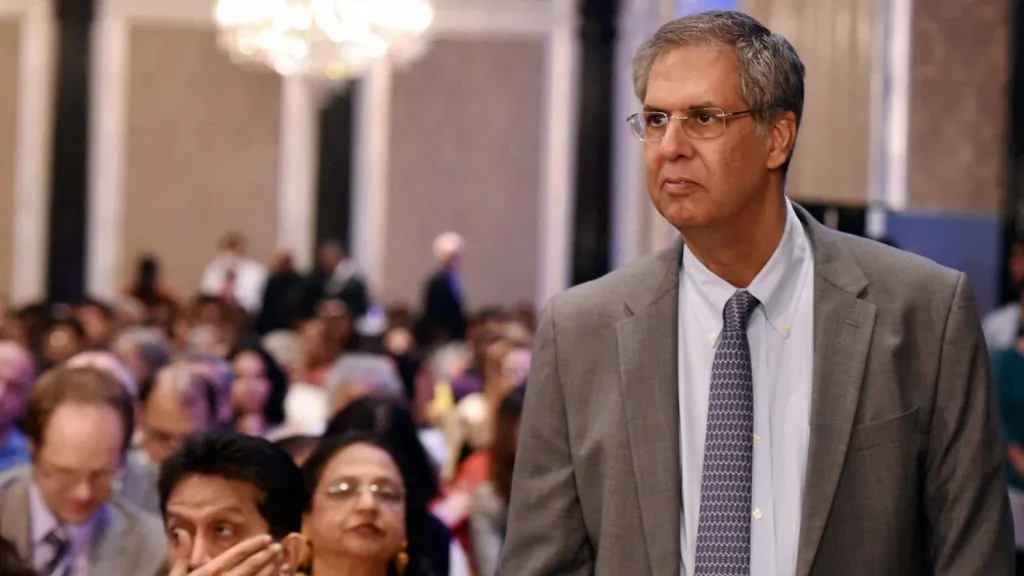
Tata Trusts Chairman Noel Tata has raised concerns over the proposed public listing of Tata Sons, warning that the move could fundamentally change the Tata Group‘s traditional business philosophy by placing profitability ahead of philanthropy. Speaking at the HT Leadership Summit, he said a wider shareholder base could gradually shift the conglomerate’s priorities and weaken the institutional values that have guided it for generations.
His remarks come ahead of the crucial Tata Sons board meeting scheduled for November 26, amid growing differences between the holding company’s board and its majority shareholder, Tata Trusts. The disagreement centres on the proposed listing, leadership decisions and the group’s ownership and governance structure.
Key Highlights
- Noel Tata warned that listing Tata Sons could shift the group’s focus from philanthropy towards profits.
- Tata Trusts holds a 66% stake in Tata Sons and has raised concerns over the proposed public listing.
- The Tata Sons board supported the listing plan and a fresh five-year term for Chairman N Chandrasekaran.
- The November 26 board meeting is expected to revisit disagreements over ownership, governance and the Shapoorji Pallonji Group’s exit demand.
- Noel Tata also highlighted the importance of disciplined project execution, social responsibility and retail expansion.
Noel Tata Questions Impact of Tata Sons Public Listing
At the HT Leadership Summit, Noel Tata said a public listing could change the way the Tata Group operates. He expressed concern that if Tata Sons eventually had 30,000 to 40,000 shareholders, the pressure to deliver profits could take precedence over the group’s philanthropic commitments.
According to Noel, the existing ownership structure and institutional character have helped preserve the Tata Group’s values across generations. He indicated that Tata Trusts would engage constructively with regulators and other stakeholders to find a solution that protects the group’s traditional approach.
He also stressed that he did not question the group’s broader direction but wanted stronger discipline in executing major projects. His comments underline the importance of balancing commercial objectives with long-term social commitments.
Tata Sons Board Supports Listing Plan
The disagreement became more visible following the September 17 Tata Sons board meeting. The board supported moving ahead with a public listing and approved a fresh five-year term for Executive Chairman N Chandrasekaran.
Noel Tata, who is also a member of the Tata Sons board, opposed the listing proposal. The decisions highlighted differences between the board and Tata Trusts over the future ownership structure and governance of the holding company.
The listing discussion gained importance after the Reserve Bank of India rejected Tata Sons’ application to surrender its registration as a Core Investment Company. The decision closed a route the company had pursued to avoid mandatory listing requirements applicable to upper-layer non-banking financial companies.
Why the November 26 Board Meeting Matters
The next Tata Sons board meeting, scheduled for November 26, is expected to bring the disagreements back into focus. Noel Tata has sought to place two contentious proposals on the agenda.
The first concerns the Shapoorji Pallonji Group’s demand for Rs 25,000 crore as part of its proposed exit from Tata Sons. The second involves a proposal to merge two unlisted Tata Group companies with Tata Sons, with the objective of helping the holding company retain its unlisted status.
The meeting is also expected to take place against the backdrop of disputes over the powers of Tata Trusts’ nominees, the interpretation of Tata Sons’ Articles of Association and the legal validity of the September 17 board resolutions.
Tata Sons has also rejected Noel Tata’s request for the audio-video recording of the September 17 board meeting, adding another point of disagreement between the chairman of Tata Trusts and the holding company’s board.
Ownership Structure and Shapoorji Pallonji Group’s Exit Demand
Tata Trusts holds approximately 66% of Tata Sons, making it the holding company’s majority shareholder. The Shapoorji Pallonji Group owns an 18.37% stake and has been seeking an exit from its investment.
The two shareholders have different interests in the listing debate. Tata Trusts has expressed concern about preserving the group’s founding philosophy, while the Shapoorji Pallonji Group has sought to unlock value from its investment.
The differences have also raised broader questions about shareholder rights, the authority of board representatives and the relationship between Tata Sons and Tata Trusts. These issues could have implications for the group’s governance framework and future decision-making.
Differences Emerge Within Tata Trusts
The disagreement over listing has also exposed differences within Tata Trusts. Vice-chairmen Venu Srinivasan and Vijay Singh have defended the September 17 board decisions and questioned the opposition to a public listing.
They have also raised concerns about the uncertainty surrounding Chandrasekaran’s leadership. Their position reflects a different view of how Tata Sons can maintain its institutional character while improving transparency and Corporate Governance.
The debate therefore involves not only the relationship between Tata Trusts and the Tata Sons board but also differing perspectives among trustees about the group’s future structure.
Noel Tata Calls for Greater Discipline in Large Projects
Beyond the listing controversy, Noel Tata discussed the importance of improving execution across the group’s businesses. He said the Tata Group’s broad objectives were appropriate but stressed that large projects required stronger planning, capital allocation and implementation discipline.
He questioned how projects with long gestation periods could succeed without effective execution and careful allocation of funds. According to him, the group must ensure that its major investments deliver on their objectives.
Noel also highlighted Tata companies’ participation in emerging industries, including semiconductors and electric vehicle batteries. He said the group was undertaking its first semiconductor project and setting up its first EV battery plant as part of its contribution to India’s development.
Social Responsibility Remains Important to Noel Tata
Noel Tata also reflected on his experience after taking over as chairman of Tata Trusts. He said the role had given him a deeper understanding of the challenges faced by vulnerable and deprived sections of society.
Although he had served as a trustee before becoming chairman, taking on the leadership position allowed him to understand the organisation’s work and social responsibilities more closely.
He described the opportunity to witness the scale of social problems and support people in need as one of the most influential aspects of his experience. The responsibility, he said, had created a greater sense of humility and reinforced the importance of the Trusts’ work.
His remarks also highlight why philanthropy remains central to the debate over Tata Sons’ ownership structure. Tata Trusts has historically played a major role in supporting social initiatives and preserving the group’s broader institutional purpose.
Zudio and Westside Drive Tata’s Retail Expansion
Noel Tata also discussed the growth of the group’s retail business, particularly Zudio and Westside. He said Zudio was launched in 2016 to serve consumers seeking aspirational products at affordable prices, including customers outside major metropolitan areas.
The retail format began with air-conditioned stores of around 6,000 square feet and products starting at Rs 199. Noel said the starting price point had remained unchanged over the past decade.
He also highlighted Westside’s expansion. The brand initially faced doubts about whether its retail format could succeed in India, but it now operates around 320 stores and is looking to expand to more than 500 outlets.
According to Noel, consumption has increased across socio-economic categories and markets over the past decade, creating opportunities for organised retail businesses to reach a wider customer base.
Conclusion
Noel Tata’s warning about the proposed Tata Sons listing reflects a wider debate over how the Tata Group should balance shareholder interests, profitability, philanthropy and corporate governance. While supporters of listing see potential benefits in transparency and institutional accountability, Noel has stressed the importance of protecting the group’s founding philosophy.
With the November 26 board meeting approaching, disagreements over the listing plan, leadership and the Shapoorji Pallonji Group’s exit demand are likely to remain central issues. The decisions taken could influence the future governance and ownership structure of Tata Sons while shaping how the group maintains its traditional identity alongside its commercial ambitions.
For breaking news and live news updates, like us on Facebook or follow us on Twitter and Instagram. Read more on Latest Business on thefoxdaily.com.






COMMENTS 0