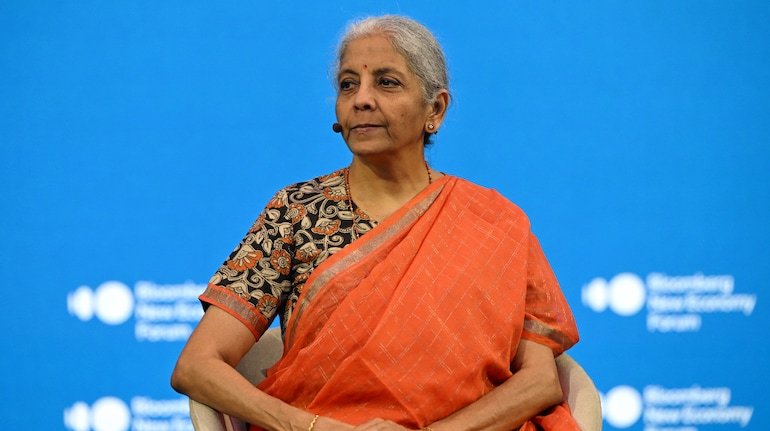
Finance Minister Nirmala Sitharaman has expressed hope that the ongoing differences within the Tata Group over Tata Sons will be resolved amicably through discussions between the parties. She urged the group’s leadership to handle the sensitive commercial and business issues internally, restore normalcy and avoid allowing disagreements to unfold publicly.
Speaking at the FE Leadership Awards in Mumbai on Monday, Sitharaman said the matter involved complex commercial interests and required business judgement and cordiality. She acknowledged the Tata Group’s contribution to India’s economy and its reputation as a global brand, while emphasising the importance of reaching an internal settlement.
Her remarks come as the Tata Group faces differences over the reappointment of Tata Sons chairman N Chandrasekaran and the question of whether the holding company should be listed on the stock market. The disagreements involve Tata Sons’ board and its controlling shareholder, Tata Trusts.
Sitharaman Calls for Dialogue to Resolve Tata Sons Differences
Sitharaman described the situation as delicate, noting that the issues required considerable commercial and business understanding. Rather than commenting on the merits of the competing positions, she said the parties should engage in discussions and find a mutually acceptable resolution.
She highlighted the Tata Group’s importance to the Indian economy, referring to its contribution to building a major global brand and the range of activities in which its companies are involved. She also acknowledged the contribution of the Parsi community to the development of the Tata name.
The Finance Minister said the group’s commercial interests and institutional significance made an amicable settlement particularly important. She urged those involved to talk through their differences and bring the situation back to normalcy as soon as possible.
Emphasising the need for mature leadership, Sitharaman said public disagreements of this nature were not desirable. She added that the issue was sensitive and that she did not want to make a hurried judgement about the internal dispute.
Her comments reflected the government’s expectation that the parties would resolve their differences through dialogue rather than allowing the disagreements to become a prolonged public controversy.
Tata Group Faces Differences Over Chairman’s Reappointment
The internal dispute has brought attention to the governance of Tata Sons, the principal holding company of the Tata Group. The disagreements concern the reappointment of N Chandrasekaran as chairman and the future ownership and listing structure of Tata Sons.
The question of Chandrasekaran’s tenure has become a point of contention among stakeholders. Differences have also emerged over the process followed by the Tata Sons board and the role of Tata Trusts in decisions concerning the holding company.
Tata Trusts is the controlling shareholder of Tata Sons, giving it a central role in the group’s ownership and governance structure. The relationship between the trusts and the holding company’s board is therefore important to decisions affecting the wider conglomerate.
The disagreement has also raised questions about how the group’s leadership should balance the interests of its shareholders, charitable trusts and operating businesses.
Tata Sons Listing Debate Adds to Internal Tensions
Another major issue dividing stakeholders is whether Tata Sons should list its shares on the stock market. The Tata Sons board has favoured a listing in the context of regulatory requirements, while Tata Trusts has explored alternatives that could allow the company to avoid going public.
The listing question is significant because Tata Sons occupies a central position in the group’s corporate structure. A public listing could change how the holding company is valued and how its ownership and governance are viewed by investors and regulators.
The Reserve Bank of India’s regulatory framework is an important part of the discussion. Tata Sons’ classification and regulatory obligations have brought the listing question into focus, creating differences over how the company should proceed.
For Tata Trusts, the issue also involves the long-term implications of changing the holding company’s ownership structure. The trusts’ position and the board’s approach will need to be reconciled through discussions among the relevant stakeholders.
Sitharaman did not take a position on whether Tata Sons should be listed. Instead, she stressed that the commercial and business considerations involved should be handled through dialogue within the group.
Finance Minister Says Public Disagreements Should Be Avoided
In her remarks, Sitharaman urged the group’s leadership to resolve the matter quickly and restore normalcy. She questioned the need for such a sensitive internal disagreement to continue playing out in public.
Her statement that the group should not be publicly airing its differences reflected concern about the effect of the dispute on the organisation’s image and leadership. She said the maturity of the group’s leadership should be reflected in an early settlement.
The Tata name carries considerable recognition in India and international markets. Its businesses operate across several sectors, making the group’s reputation relevant not only to its shareholders but also to employees, customers, investors and other stakeholders.
However, Sitharaman stopped short of commenting on the specific positions taken by Tata Trusts or the Tata Sons board. She described the matter as sensitive and maintained that it should be settled by the parties involved.
Sitharaman Criticises Congress Over Its Approach to the Issue
Alongside her comments on the Tata dispute, Sitharaman criticised the Congress party over its approach to issues raised by the Opposition. She questioned how political parties sustain public support when they pursue matters through both judicial proceedings and street protests.
The Finance Minister said that when an opposition party takes an issue to the courts and also raises it through public demonstrations, it must continually assess whether its position is receiving public support.
She argued that political parties have a responsibility to evaluate public response to the issues they choose to pursue. Sitharaman also said that opposition parties should consider the consequences of taking up matters through multiple channels.
Her comments were part of a broader criticism of the Congress party’s handling of legal and political issues. She did not elaborate on a specific judicial proceeding in the remarks provided.
Congress Criticism Focuses on Supreme Court Proceedings
Sitharaman further criticised the Congress party for what she described as repeatedly pursuing matters through the courts and subsequently apologising after observations from the Supreme Court.
She said the party had not appeared to learn lessons from such episodes, adding that repeated apologies following judicial observations were unfortunate.
Her remarks reflected the government’s criticism of the Opposition’s approach to legal disputes and public campaigning. However, the comments represented Sitharaman’s political assessment rather than a judicial finding about the Congress party’s conduct.
The Finance Minister also drew on her experience of having served in the Opposition, saying that political parties must be conscious of the responsibilities involved when raising issues before the public and the courts.
Why the Tata Sons Dispute Matters
The disagreement has wider significance because Tata Sons sits at the centre of one of India’s largest business groups. Decisions concerning its leadership, governance and ownership structure can have implications for the group’s companies and stakeholders.
The chairman’s reappointment is linked to questions about corporate decision-making and the relationship between the holding company and its controlling shareholder. Meanwhile, the listing debate involves regulatory compliance, ownership considerations and the long-term structure of the group.
For investors and market participants, the outcome could influence perceptions of governance and stability across the Tata Group. For employees, business partners and other stakeholders, an extended dispute could create uncertainty around leadership and strategic priorities.
At the same time, the group has a complex institutional structure, with charitable trusts playing a significant role in its ownership. Any settlement will therefore need to account for the interests and responsibilities of the different parties involved.
Early Resolution Remains the Focus
Sitharaman’s remarks underline the importance she places on an internal resolution of the Tata Sons dispute. She has urged the group’s leadership to use dialogue and business judgement to settle the differences and restore normalcy.
She has not endorsed either side’s position on the chairman’s reappointment or the proposed listing. Instead, her message has focused on the need to protect the group’s institutional standing while allowing the parties to resolve their commercial and governance concerns.
The next steps will depend on discussions among Tata Sons, Tata Trusts and the relevant stakeholders. Until an agreement is reached, the questions surrounding leadership and the holding company’s listing status are likely to remain central to the group’s internal deliberations.
For breaking news and live news updates, like us on Facebook or follow us on Twitter and Instagram. Read more on Latest Business on thefoxdaily.com.





COMMENTS 0