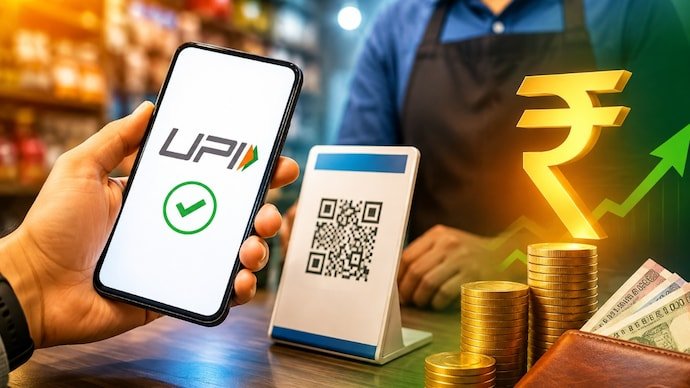
India‘s Unified Payments Interface (UPI), which has transformed Digital Payments by enabling free and instant money transfers, could be approaching one of its biggest policy changes since its launch. The government has introduced amendments to the Payment and Settlement Systems Act in Parliament that would create a legal framework allowing Merchant Discount Rate (MDR) to be imposed on certain UPI transactions if policymakers decide to do so in the future.
Importantly, the proposed amendment does not introduce any immediate charges. Instead, it gives the government the legal authority to implement MDR later through subsequent policy decisions. Officials are still evaluating different approaches, and no final decision has been taken regarding the fee structure, implementation timeline or the categories of transactions that may eventually be covered.
If implemented, the move would mark a significant shift in India’s digital payments ecosystem, where UPI transactions have remained free for both consumers and merchants since the government removed MDR on UPI payments to encourage widespread digital adoption.
What Has the Government Proposed?
The proposed amendment, introduced in Parliament by Finance Minister Nirmala Sitharaman, seeks to modify the Payment and Settlement Systems Act by enabling the future introduction of Merchant Discount Rate on UPI payments.
At present, the amendment serves only as an enabling legal provision. It does not automatically impose charges on any transaction.
According to the available information, discussions within the government are still ongoing regarding:
- Whether MDR should be introduced.
- The rate that may apply.
- Which transactions should be covered.
- Whether the fee should depend on transaction value or merchant size.
Until these decisions are formally announced, the existing fee-free UPI system will continue unchanged.
What Is Merchant Discount Rate (MDR)?
Merchant Discount Rate, commonly known as MDR, is a processing fee paid by merchants to banks and payment service providers whenever customers make digital payments.
Rather than being charged to consumers, MDR is typically deducted from the amount received by the merchant.
This fee helps cover costs associated with:
- Payment processing.
- Banking Infrastructure.
- Transaction security.
- Technology development.
- Payment network operations.
Credit card and debit card transactions already attract MDR in many cases, whereas UPI merchant transactions have remained exempt under the current policy.
Could Consumers Be Charged?
Based on the information currently available, consumers are unlikely to pay any additional charges if MDR is eventually introduced.
The proposals under discussion focus on fees payable by merchants rather than customers.
One proposal reportedly being considered involves applying an MDR of between 0.3% and 0.5% on UPI transactions exceeding Rs 2,000.
However, the proposal is expected to apply only to businesses with an annual turnover exceeding Rs 1.5 crore, meaning smaller merchants could continue to enjoy fee-free UPI acceptance.
No final decision has been announced regarding these figures.
Alternative Proposal Under Discussion
Government officials are reportedly examining another possible approach that would determine MDR eligibility based on a merchant’s annual turnover instead of the value of individual transactions.
Under such a model, policymakers would seek to ensure that any future merchant charges primarily affect larger businesses rather than neighborhood shops, street vendors and small retailers that rely heavily on UPI.
The government has not confirmed which approach, if any, it intends to adopt.
Why Is MDR Being Considered Now?
The discussion around MDR has been ongoing within India’s digital payments industry for several years.
Payment companies and industry executives have argued that operating UPI services without merchant fees creates challenges for maintaining a sustainable Business model.
According to industry participants cited in the available information, the absence of MDR limits their ability to:
- Invest in payment infrastructure.
- Develop new technologies.
- Expand digital payment services.
- Strengthen cybersecurity and operational resilience.
Supporters of a limited MDR argue that charging fees only on select high-value merchant transactions could provide revenue while preserving UPI’s affordability for everyday users.
How Large Is India’s UPI Ecosystem?
The proposal comes at a time when UPI continues to expand rapidly.
According to official data cited in the available information, the platform processed:
| UPI Performance (July) | Figure |
|---|---|
| Total Transactions | 23.6 billion |
| Total Transaction Value | Rs 29.9 trillion |
These figures underline UPI’s position as one of the world’s largest real-time payment systems.
Digital payment applications such as PhonePe and Google Pay continue to account for a substantial share of UPI transactions across the country.
Why High-Value Transactions Matter
Although transactions above Rs 2,000 represent only a small percentage of total merchant UPI payments, they account for a disproportionately large share of payment value.
According to an analysis cited in the source, payments exceeding Rs 2,000 account for:
- Approximately 4% of merchant UPI transaction volume.
- About 67% of the total value processed through merchant UPI.
This concentration explains why policymakers and industry stakeholders are examining high-value payments as a possible starting point if MDR is introduced.
Potential Impact on the Digital Payments Industry
The available information cites an analysis by brokerage firm Jefferies suggesting that introducing MDR on this segment could generate annual revenue of between Rs 5,000 crore and Rs 10,000 crore for the digital payments industry.
Such revenue could potentially benefit companies involved in payment processing and digital payment infrastructure.
However, this represents an analytical estimate rather than a government projection, and any actual financial impact would depend on the final policy adopted.
How UPI Differs From Card Payments
One reason UPI has achieved widespread adoption is its cost structure.
| Payment Method | Merchant Processing Fee |
|---|---|
| UPI (Current System) | No MDR |
| Credit Cards | Merchants generally pay processing charges |
| Debit Cards | Lower processing charges depending on bank and payment network |
The absence of merchant charges has encouraged businesses of all sizes to adopt UPI as a preferred payment method, contributing significantly to its rapid expansion across India.
What This Could Mean for Businesses
If MDR is eventually introduced, the impact is expected to differ across merchant categories.
Large businesses handling substantial volumes of high-value UPI transactions could see additional payment processing costs.
Small merchants and neighborhood retailers, however, may remain exempt if policymakers adopt the proposals currently under discussion.
The final design of any MDR framework will determine how costs are distributed across the digital payments ecosystem.
Balancing Growth and Affordability
The debate over MDR reflects a broader policy challenge.
On one hand, India has successfully promoted digital payments by eliminating transaction charges on UPI. On the other, payment companies argue that sustainable investment in infrastructure requires reliable revenue streams.
The government’s eventual decision will likely seek to balance continued digital payment adoption with the financial sustainability of banks, payment service providers and Fintech companies that support the ecosystem.
Whether a limited MDR achieves that balance without affecting user adoption will depend on the details of any future policy.
What Happens Next?
The proposed amendment currently remains only a legal enabling provision.
The government has not announced whether Merchant Discount Rate will actually be introduced, what the final fee might be or when any such change could take effect.
Officials continue to examine multiple implementation models, including transaction-value thresholds and turnover-based criteria, before reaching a final decision.
Until then, India’s UPI system will continue to operate under the existing framework, allowing consumers and merchants to make and receive digital payments without MDR. Any future changes would require further government decisions after the legal framework has been established, making it important for businesses and payment service providers to monitor upcoming policy announcements.
For breaking news and live news updates, like us on Facebook or follow us on Twitter and Instagram. Read more on Latest Technology on thefoxdaily.com.






COMMENTS 0