India‘s Unified Payments Interface (UPI) completed 10 years on Tuesday, marking a milestone for a Digital Payments system that has changed how millions of people send and receive money.
Prime Minister Narendra Modi marked the anniversary by describing UPI as a major turning point in India’s digital payments journey and highlighting the scale at which the system now operates. He also invited citizens to share their experiences of using UPI and explain how it has affected their daily lives.
Launched on August 25, 2016, UPI has evolved from a relatively new payment mechanism into one of the central components of India’s digital payments infrastructure. Its growth has been particularly striking in the number and frequency of transactions taking place through the platform.
Official figures show that annual UPI transaction volume rose from 1.78 crore transactions in 2016-17 to more than 24,162 crore in 2025-26. Transaction value increased from Rs 0.07 lakh crore to about Rs 314 lakh crore over the same period.
Those figures tell only part of the story. The more important change is that digital payments have become routine for transactions ranging from a small purchase at a neighbourhood shop to larger payments between individuals and businesses.
UPI turns 10 after transforming India’s payment habits
Before UPI, digital payments in India existed through several channels, including cards, bank transfers and mobile wallets. What UPI introduced was an interoperable system designed to allow different banks and payment applications to communicate through a common infrastructure.
That interoperability became one of its defining strengths.
A consumer does not necessarily need to know which bank a recipient uses before making a payment. Similarly, merchants can accept payments from customers using different participating banks or applications.
The system supports both person-to-person and person-to-merchant payments, making it useful for everyday transactions as well as broader commercial activity.
The result has been a significant shift in India’s payment culture. A smartphone and a bank-linked UPI account can now provide a simple way to transfer money without requiring cash to change hands.
From 1.78 crore transactions to more than 24,000 crore
The growth of UPI can be seen most clearly in its transaction numbers.
| Financial year | Annual UPI transaction volume | Annual transaction value |
|---|---|---|
| 2016-17 | 1.78 crore | Rs 0.07 lakh crore |
| 2025-26 | More than 24,162 crore | About Rs 314 lakh crore |
Based on these official figures, annual transaction volume increased by almost 13,000 times over the decade, while the value of transactions increased by more than 4,000 times.
The difference between volume and value is important. UPI’s enormous transaction count reflects the growing use of the platform for small, frequent payments. A customer buying a few groceries and a Business transferring a much larger amount can both use the same underlying payment infrastructure.
This has helped turn digital payments from something associated primarily with online commerce into an everyday financial tool.
Why UPI became so widely used
UPI’s success cannot be explained by a single feature. Its growth came from the combination of an interoperable infrastructure, widespread smartphone adoption, bank-account connectivity and the development of multiple consumer-facing payment applications.
Its design also reduced some of the friction associated with traditional bank transfers.
Instead of requiring users to repeatedly enter detailed bank-account information, UPI-enabled payments can be initiated through identifiers and interfaces designed for quick transactions. QR codes have also made digital payments practical for small merchants WHO may not operate traditional card-payment terminals.
This has been particularly significant for India’s vast network of small retailers and service providers.
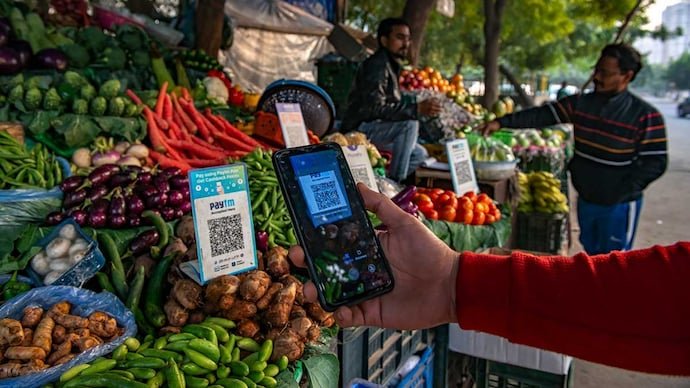
A street vendor, local shopkeeper, restaurant or independent service provider can display a QR code and accept digital payments directly into a bank account. For consumers, the same mechanism works across many different types of businesses.
UPI’s role in India’s Digital Public Infrastructure
The government describes UPI as one of the most successful pillars of India’s Digital Public Infrastructure.
The concept of digital public infrastructure is based on creating foundational systems that can support a wide range of services. UPI’s role is particularly important because it provides a common payments layer that banks, financial Technology companies and consumers can use.
Its open and interoperable design has allowed multiple players to build applications and services around the underlying payment infrastructure.
This is different from a closed payment network controlled by a single company. The UPI ecosystem connects participating banks and payment providers, allowing users to transact across institutional boundaries.
That structure has helped create competition at the application level while maintaining a common payments rail underneath.
How UPI changed the experience for small merchants
One of UPI’s most visible effects can be found outside large shopping centres and E-commerce websites.
Digital payments have become increasingly common among small businesses, including neighbourhood stores and informal-sector merchants.
QR-code payments are particularly useful because merchants do not necessarily need sophisticated point-of-sale equipment to receive money electronically. A printed code can be enough to give customers a digital payment option.
For businesses, digital records of transactions can also be useful for maintaining accounts and tracking payments, although the advantages vary depending on how merchants manage their finances.
For customers, UPI can reduce dependence on cash and make it easier to pay exact amounts. That convenience has helped digital payments become part of routine spending rather than a specialised financial service.
UPI and financial inclusion
The growth of UPI is also closely linked to the broader goal of financial inclusion.
A digital payments system can be useful only when people have access to the underlying banking and communications infrastructure. India’s expansion of bank-account access, mobile connectivity and digital identity has helped create the environment in which systems such as UPI can operate at scale.
UPI does not by itself solve every barrier to financial inclusion. Access to smartphones, reliable connectivity, digital literacy and banking services still varies across communities.
Nevertheless, the platform has lowered some of the practical barriers to making electronic payments once a user has access to a participating bank account and compatible device.
This is particularly important for consumers who previously depended heavily on cash for everyday transactions.
The technology is designed for real-time payments
At its core, UPI is a real-time payment system. Transactions can move between participating banks without requiring users to wait for conventional banking settlement processes.
That speed matters for everyday commerce. A merchant can receive confirmation of payment almost immediately, while a consumer can complete a transaction without handing over cash or using a physical card.
The system also allows payment applications to offer different user interfaces while connecting to the same underlying network.
That combination of common infrastructure and competing applications has been an important part of UPI’s growth.
What the numbers say about India’s digital shift
The rise from 1.78 crore annual transactions in 2016-17 to more than 24,162 crore in 2025-26 represents an extraordinary change in the frequency with which Indians use digital payments.
It is also worth considering what the numbers mean in practical terms.
A very large transaction count does not mean every payment is a large financial transaction. In fact, UPI’s widespread use for small-value purchases is one of the reasons its transaction volume has expanded so dramatically.
The platform has therefore become less of an occasional alternative to cash and more of a routine payment method.
The approximately Rs 314 lakh crore transaction value recorded in 2025-26 further illustrates the scale of economic activity flowing through the system.
However, transaction value should not be interpreted as the amount of new economic activity created by UPI. Many digital payments simply represent transactions that would previously have been completed through cash or another payment channel.
The more meaningful measure of UPI’s impact is the change in how those transactions are conducted.
UPI’s next challenge: building a sustainable ecosystem
The extraordinary growth of UPI also creates new questions about the economics of digital payments.
Running a nationwide real-time payment infrastructure requires substantial investment in technology, Cybersecurity, fraud prevention, customer support and network reliability.
At the same time, consumers have become accustomed to UPI as a low-friction payment method.
This creates a difficult balance for banks and payment companies. They need sustainable business models without undermining the convenience and accessibility that helped UPI become so successful.
The development of monetisation models is therefore likely to become increasingly important as the ecosystem matures.
Security becomes more important as usage grows
The larger UPI becomes, the more important Security and fraud prevention become.
A payment system used for millions of everyday transactions inevitably becomes an attractive target for fraudsters.
Users therefore need to understand basic safety practices, including protecting their UPI PIN and being cautious about unfamiliar payment requests, links and requests to share sensitive information.
A UPI PIN is used to authorise transactions and should not be disclosed to another person. Users should also remember that receiving money does not normally require entering a UPI PIN.
As digital payments become more deeply integrated into daily life, technological safeguards and user awareness have to develop together.
What UPI’s first decade means for India
UPI’s first decade represents more than the success of a payments product. It demonstrates how shared digital infrastructure can change consumer behaviour when it combines interoperability with simplicity.
The system has made digital payments accessible across a wide range of settings, from large businesses to small neighbourhood shops. It has also created a common platform on which banks and financial technology companies can build consumer-facing services.
That does not mean UPI has eliminated cash, nor does it remove the need for traditional banking services. Instead, it has become another fundamental layer of India’s financial system.
The challenge now is different from the one UPI faced in 2016. The priority is no longer simply convincing people to try digital payments. It is maintaining reliability, security, affordability and accessibility while the system continues to expand.
What comes after UPI’s 10-year milestone?
The next phase of UPI’s development is likely to be defined less by whether people use digital payments and more by how deeply those payments become integrated into the broader economy.
That includes improving the experience for merchants, strengthening protections against fraud, expanding access for people who remain outside the digital economy and ensuring that the institutions supporting the system can operate sustainably.
UPI’s decade-long journey shows how quickly payment habits can change when infrastructure, banking access and technology come together. The platform that began in 2016 with relatively modest transaction volumes now handles a scale of activity measured in tens of thousands of crores of transactions each year.
For Prime Minister Modi, the anniversary is a moment to celebrate that transformation. For consumers and businesses, it is a reminder of how much India’s everyday financial experience has changed in just 10 years.
The bigger test for UPI’s second decade will be whether it can preserve the simplicity that made it popular while becoming even more secure, resilient and useful as India’s digital economy grows.
For breaking news and live news updates, like us on Facebook or follow us on Twitter and Instagram. Read more on Latest India on thefoxdaily.com.






COMMENTS 0