- Why Jindal Framed India’s Future Around the China Gap
- The Message Was About More Than Business
- The BUILD Framework Became the Core of the Address
- Lessons From Steve Jobs and Personal Failure
- Ahmedabad University Positioned Itself Around Future-Ready Education
- Artificial Intelligence Was a Major Theme Too
- India’s Economic Moment Is Creating a New Generation Narrative
- The “India First” Message Reflects a Larger Corporate Shift
- The Convocation Reflected the Growing Confidence of Indian Institutions
- Conclusion: Sajjan Jindal’s Speech Captured India’s Larger Economic Mood
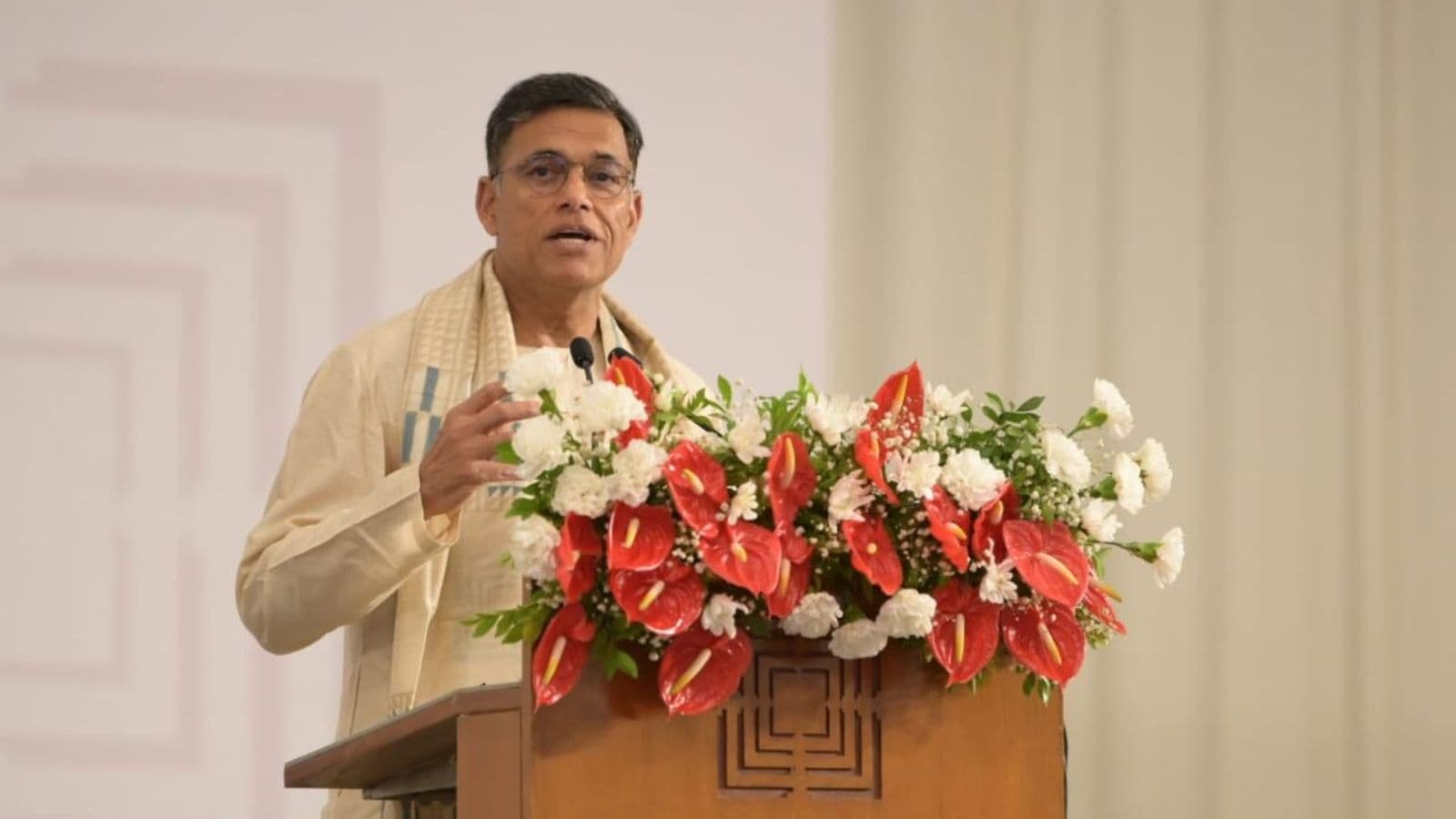
At a time when India is increasingly positioning itself as a global Manufacturing, Technology and economic powerhouse, JSW Group Chairman Sajjan Jindal delivered a message that went far beyond a traditional convocation speech.
Addressing graduating students at Ahmedabad University, Jindal described India not merely as an emerging consumer economy but as a national project requiring builders, innovators and long-term thinkers.
“India is not a market, it is a mission,” he said while speaking about the country’s future economic trajectory and the enormous opportunity available to the next generation.
The statement quickly emerged as the defining line of the convocation because it captured a broader shift taking place in India’s business and policy narrative: the idea that the country is moving from being viewed primarily as a consumption-driven economy toward becoming a nation focused on infrastructure, manufacturing, technology and strategic global influence.
Why Jindal Framed India’s Future Around the China Gap
One of the central themes of Jindal’s address was the economic gap between India and china.
While India now has a population comparable to China’s and remains one of the fastest-growing major economies globally, its GDP is still significantly smaller.
Jindal argued that this gap should not be viewed pessimistically.
Instead, he presented it as one of the largest opportunities available to young Indians entering the workforce today.
“Think about what that gap means, the scale of what needs to be built,” he told students.
The comment reflects a growing belief among Indian industrial leaders that the coming decades could define whether India successfully transforms itself into a manufacturing and innovation powerhouse capable of competing with China in scale and influence.
| India’s Opportunity According to Jindal | Why It Matters |
|---|---|
| Large population base | Massive workforce and consumer potential |
| Lower GDP compared to China | Room for rapid economic expansion |
| Infrastructure demand | Huge long-term investment opportunities |
| Manufacturing ambitions | Potential global supply chain shift |
His remarks also align with broader national conversations around “Make in India,” supply chain diversification and India’s ambitions to emerge as a major industrial and technology hub.
The Message Was About More Than Business
Although Jindal is one of India’s most prominent industrialists, his speech was not purely about corporate success or economic growth.
Instead, he framed nation-building as a responsibility for the graduating class.
He challenged students to think beyond individual careers and ask whether their work strengthens India itself.
“Does what I do make India stronger?” he asked.
That framing reflects a broader trend in Indian Corporate Leadership where economic growth is increasingly linked to national development goals, infrastructure expansion and strategic self-reliance.
In recent years, many Indian business leaders have emphasized:
- Domestic manufacturing expansion
- Technology innovation
- Energy transition
- Infrastructure building
- Global competitiveness
Jindal’s speech fit squarely within that larger narrative.
The BUILD Framework Became the Core of the Address
Jindal structured his speech around the word “BUILD,” turning it into a broader philosophy for leadership and nation-building.
He urged students to:
- Build with boldness
- Uphold integrity
- Put India first
- Lead through difficulty
- Design for legacy
The framework combined entrepreneurship, ethics and resilience rather than focusing solely on professional achievement.
That approach resonated particularly strongly because India’s startup and business ecosystem has increasingly emphasized rapid growth, while conversations around ethics, sustainability and long-term institution building have become equally important.
Jindal appeared to argue that the next generation must balance ambition with responsibility.
Lessons From Steve Jobs and Personal Failure
One of the more practical aspects of the speech involved Jindal discussing setbacks and failure.
He referenced Steve Jobs’ return to apple as an example of leadership during difficult periods.
Jindal also shared his own experience involving product rejection in Australia, using it to emphasize the importance of confronting problems directly instead of avoiding them.
The inclusion of personal setbacks added a more grounded tone to the address.
Convocation speeches often focus heavily on inspiration, but Jindal’s comments reflected a growing recognition within business leadership that resilience and adaptability matter as much as initial success.
For graduates entering an uncertain Global Economy shaped by AI disruption, geopolitical shifts and technological change, that message likely carried particular relevance.
Ahmedabad University Positioned Itself Around Future-Ready Education
The convocation also highlighted how Indian universities are increasingly repositioning themselves around interdisciplinary learning, innovation and research-driven Education.
Ahmedabad University leadership used the event to emphasize how higher education itself is evolving rapidly.
Vice Chancellor Pankaj Chandra said the university is expanding:
- Academic disciplines
- Research infrastructure
- Faculty recruitment
- Global collaborations
- Innovation-focused programmes
The university also highlighted several new initiatives introduced over the past year, including:
- Bloomberg Lab
- Tinkerers’ Lab
- Institute of Manufacturing and Economy
These initiatives reflect how Indian universities are increasingly trying to bridge academic learning with industry, entrepreneurship and applied research.
Artificial Intelligence Was a Major Theme Too
Another significant aspect of the convocation was the focus on Artificial Intelligence and the changing nature of work.
Ahmedabad University Chancellor Sanjay Lalbhai spoke about how technologies like AI are fundamentally reshaping the global professional landscape.
His remarks highlighted a growing concern across higher education worldwide: preparing students for jobs and industries that may evolve dramatically over the next decade.
Lalbhai emphasized that future graduates will need:
- Technological understanding
- Ethical reasoning
- Critical thinking
- Reflective leadership
- Adaptability
This reflects a broader shift in global education philosophy where technical expertise alone is no longer considered sufficient.
Universities increasingly view interdisciplinary thinking and ethical judgment as essential in an AI-driven world.
India’s Economic Moment Is Creating a New Generation Narrative
One reason Jindal’s speech attracted attention is because it tapped into a wider national mood.
India is currently experiencing a unique economic and geopolitical moment.
The country is simultaneously:
- Expanding infrastructure rapidly
- Attracting manufacturing investment
- Developing semiconductor ambitions
- Growing its startup ecosystem
- Increasing global diplomatic influence
At the same time, global companies are increasingly seeking alternatives to China-centered supply chains.
That combination has created enormous optimism regarding India’s long-term economic trajectory.
Jindal’s remarks essentially positioned students as participants in that transformation rather than merely observers.
The “India First” Message Reflects a Larger Corporate Shift
The repeated emphasis on “India first” also reflects changing priorities among many Indian conglomerates.
Large business groups increasingly see themselves as contributors to national strategic goals rather than purely commercial enterprises.
Areas receiving heavy corporate investment now include:
- Green energy
- Steel manufacturing
- Electric mobility
- Infrastructure
- Digital technology
- Semiconductor ecosystems
JSW Group itself has expanded aggressively across multiple sectors aligned with India’s long-term industrial ambitions.
That context helps explain why Jindal framed economic growth as a mission instead of merely a market opportunity.
The Convocation Reflected the Growing Confidence of Indian Institutions
The event also showcased the growing confidence among Indian educational institutions themselves.
Ahmedabad University awarded 923 degrees across management, engineering, arts and sciences disciplines.
Students were recognized for achievements in:
- Engineering innovation
- Scientific research
- Design competitions
- International academic presentations
- Motorsport engineering competitions
That growing emphasis on global participation and interdisciplinary achievement reflects how Indian universities increasingly aim to position themselves within international research and innovation ecosystems.
Conclusion: Sajjan Jindal’s Speech Captured India’s Larger Economic Mood
Sajjan Jindal’s convocation address ultimately resonated because it captured a broader shift taking place in India’s economic and cultural narrative.
His message was not simply about careers, salaries or entrepreneurship.
It was about scale.
Scale of opportunity.
Scale of responsibility.
And scale of ambition.
By describing India as “a mission” rather than merely a market, Jindal framed the country’s future as a generational project requiring builders, innovators and resilient leaders capable of thinking beyond short-term success.
Whether India ultimately succeeds in narrowing the economic gap with China remains uncertain.
But speeches like this reveal something important: many of India’s business and academic leaders increasingly believe the coming decades could define the country’s place in the global order.
And they are urging the next generation to help shape that outcome directly.
For breaking news and live news updates, like us on Facebook or follow us on Twitter and Instagram. Read more on Latest India on thefoxdaily.com.






COMMENTS 0