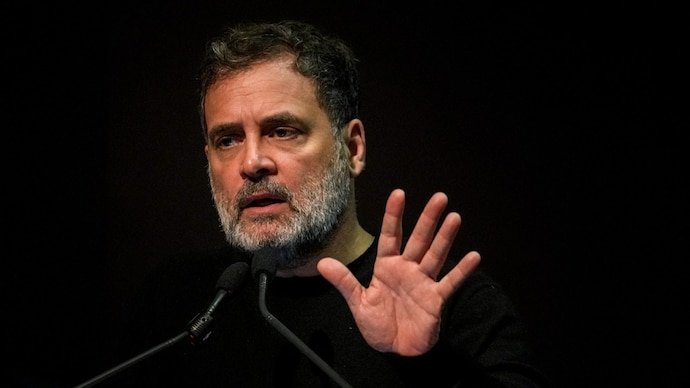
Congress MP and Leader of Opposition Rahul Gandhi has launched the ‘Satyagraha’ digital platform, an initiative aimed at bringing together people and groups involved in issue-based protests across the country.
The platform seeks to provide a common Space for individuals and movements raising concerns over what they describe as injustice, with Gandhi saying that people fighting for their rights often find themselves isolated. The initiative is intended to help organise these separate struggles and explore ways of supporting them.
Announcing the platform, Gandhi said that protests involving Gen Z, students, farmers, Adivasis, Dalits and women often have different causes and individual stories, but could become more visible when brought together through a common platform.
The initiative also draws on the political and social legacy associated with Mahatma Gandhi’s use of satyagraha, a concept centred on truth and non-violent resistance. Rahul Gandhi has used that ethos to encourage people facing grievances to register their movements through the new digital platform.
What Is Rahul Gandhi’s Satyagraha Digital Platform?
The Satyagraha digital platform has been presented as a mechanism for people to share details of protests and movements taking place across India. Rather than focusing on a single issue, the platform is designed to collect different forms of public grievances and issue-based campaigns in one place.
Gandhi said people fighting for their rights are frequently forced to fight alone. According to his message, the platform is intended to address that isolation by helping different movements become part of a broader network.
The initiative invites individuals and groups involved in protests to share their stories and provide information about the issues they are pursuing. The stated objective is to understand these struggles, organise them and determine how support could potentially be provided.
Participants are asked to visit the Satyagraha website, fill out a form and enrol their movement. Gandhi said the team behind the initiative would then remain in contact with participants.
Rahul Gandhi Appeals to People Facing Injustice
Gandhi’s announcement framed the platform around the idea that people facing similar or different forms of injustice can benefit from collective action. He highlighted several groups, including young people, students, farmers, Adivasis, Dalits and women, as examples of communities involved in struggles across the country.
The Congress leader argued that an individual voice can be easier to silence when it remains isolated. The proposed platform therefore seeks to create a digital connection between people WHO may otherwise be pursuing their grievances separately.
The initiative is not described as a platform for a single protest or campaign. Instead, it is intended to accommodate different movements and allow their concerns to be documented and brought together.
This makes the platform’s proposed role broader than simply providing information about demonstrations. Its stated purpose includes helping organise movements and working with participants to explore possible ways of addressing the problems they have raised.
‘Truth Is Our Greatest Weapon’: Gandhi Invokes Bapu
While announcing Satyagraha, Gandhi invoked the legacy of Mahatma Gandhi, whom he referred to as ‘Bapu’. He connected the new digital initiative with the principle of standing together in support of truth.
Gandhi’s message emphasised that truth becomes more powerful when people collectively stand behind it. The reference to satyagraha places the new platform within a historical tradition associated with peaceful resistance and public mobilisation.
The digital initiative, however, represents a modern form of organising. Instead of relying only on physical meetings, demonstrations or local networks, participants can use an online platform to communicate their grievances and register their movements.
The combination of a historically significant political concept with a digital organising mechanism reflects the broader purpose of the initiative: connecting individual grievances with a larger network of people and movements.
How People Can Enrol Their Movements
The process outlined by Gandhi is designed to be relatively simple. People who believe they are fighting against an injustice are encouraged to visit the Satyagraha website and provide details through an online form.
After submitting their information, participants can enrol their movement on the platform. Gandhi said the team would review the submissions and remain in contact to explore whether it could help organise the protests or support efforts to resolve the issues involved.
The approach places the people raising an issue at the centre of the process. Instead of prescribing a single cause, the platform seeks to allow different groups to describe their own concerns and explain the nature of their struggles.
Gandhi also said filling out the form would take only a short amount of time, presenting the registration process as accessible to people who may not have an established political organisation behind them.
Why Digital Platforms Matter for Public Movements
Digital platforms have changed how public campaigns can organise, communicate and reach wider audiences. Social Media and online forms can allow individuals to connect with others without first creating a formal organisation or physical network.
For local movements, digital visibility can also make it easier to share information about an issue beyond the immediate area where it originated. A grievance that begins with a small group can potentially reach a wider audience when people can document and share their experiences online.
The Satyagraha initiative is built around this organising potential. By bringing different movements into one digital space, it seeks to create a structured channel through which concerns can be identified and connected.
At the same time, collecting diverse movements on a single platform presents its own organisational challenge. Different groups may have different demands, priorities and methods of protest. The stated aim of the initiative is therefore not necessarily to make all movements identical, but to organise and connect them while retaining the individual stories behind each issue.
From Individual Grievances to Collective Action
A central theme of Gandhi’s announcement is the transition from isolated complaints to collective visibility. His message suggests that people fighting for their rights can find greater strength when their struggles are recognised and connected with others.
The platform could therefore function as a repository of issue-based movements, allowing organisers and participants to present their concerns in a structured manner. The information collected could also help identify common themes among otherwise separate campaigns.
For example, student, farmer, women’s or tribal movements may arise from very different circumstances. However, the people involved may share a broader concern about access to rights, public services, representation or government decisions. Bringing such movements together could provide a wider picture of the issues being raised by citizens.
The platform’s stated objective is to work with these movements rather than simply document them. Gandhi said the team would seek to understand what participants were fighting for and determine whether it could help support their efforts.
Satyagraha Name Draws on India’s History of Protest
The name of the initiative carries significant historical meaning in India. Satyagraha is associated with Mahatma Gandhi’s philosophy of resistance based on truth and non-violence.
By adopting the name for a digital platform, Rahul Gandhi is linking a contemporary method of organising with a concept deeply associated with India’s freedom movement.
The reference also reinforces the message delivered during the launch. Gandhi’s appeal was not limited to registering protests; it emphasised standing together with what people believe to be truthful and just.
The platform’s modern digital format distinguishes it from the forms of mobilisation associated with the historical satyagraha movements. Its role is instead to provide an online mechanism for documenting, connecting and potentially organising contemporary issue-based campaigns.
Groups Mentioned in the Platform’s Launch Message
Gandhi specifically referred to several sections of society while explaining the purpose of Satyagraha. These included Gen Z, students, farmers, Adivasis, Dalits and women.
The reference to multiple groups indicates that the platform is intended to cover a broad range of public issues rather than concentrating on one category of protest.
Each group can face different concerns and circumstances, and Gandhi stressed that every struggle has its own story. The platform’s proposed role is to bring those individual accounts into a common space without necessarily reducing them to a single issue.
This approach also puts emphasis on the experiences of people involved in movements. Participants are being encouraged to explain their own grievances, rather than relying solely on political organisations or outside groups to define their concerns.
Congress Leader Seeks to Build a Network of Movements
Rahul Gandhi’s announcement presents Satyagraha as an organising effort as much as a digital registration platform. The intention is to identify movements, bring information about them together and establish communication with people involved.
The next stage will depend on how many individuals and groups use the platform and what kinds of issues they submit. The range of movements could determine the nature and scale of the network that develops around it.
For the Congress leader, the broader idea is that people should not have to pursue their grievances entirely on their own. By creating a common digital space, the initiative seeks to make individual struggles more visible and potentially connect them with wider public action.
What the Satyagraha Initiative Seeks to Achieve
The platform’s launch comes with a clearly stated objective: to help people fighting against perceived injustice organise their movements and explore ways of receiving support.
Gandhi has invited individuals to share their stories, enrol their movements and remain connected with the initiative. The process is intended to make it possible for smaller or less-organised campaigns to bring their concerns to a wider platform.
Its effectiveness will ultimately depend on how the platform is used and whether the people who register their movements receive meaningful organisational support. The diversity of issues involved could also make coordination a significant part of the initiative’s future work.
For now, Satyagraha represents an attempt to translate the idea of collective resistance into a digital organising model. By combining online registration with Gandhi’s appeal for people to stand together, the platform seeks to connect individual grievances with broader issue-based movements across India.
The initiative’s central message is that a struggle does not necessarily have to remain isolated. Through the new digital platform, Rahul Gandhi is asking people who believe they are fighting injustice to document their experiences, enrol their movements and explore the possibility of collective action.
For breaking news and live news updates, like us on Facebook or follow us on Twitter and Instagram. Read more on Latest India on thefoxdaily.com.






COMMENTS 0