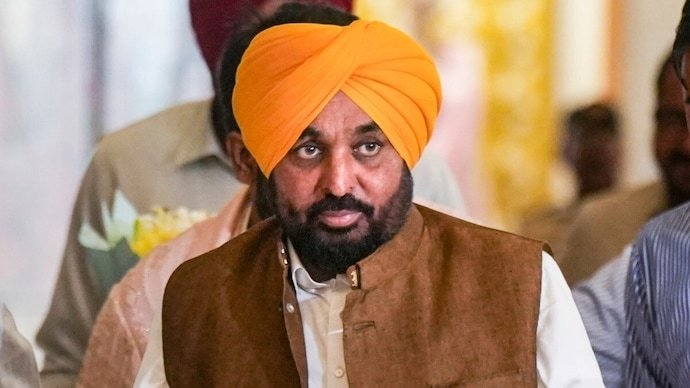
The Punjab and Haryana High Court has ordered a Central Bureau of Investigation (CBI) probe into allegations of corruption involving people connected to Punjab Chief Minister Bhagwant Mann‘s office, after the Enforcement Directorate (ED) raised concerns with the state police over alleged irregularities in government dealings.
The allegations include claims of corruption in transfers and postings, Change of Land Use (CLU) matters and other government-related activities. One of the people named in the ED’s communications is Rajbir Singh Ghuman, an Officer on Special Duty (OSD) to Chief Minister Bhagwant Mann.
The matter reached the High Court after the ED repeatedly sought action from the Punjab Police but alleged that no FIR had been registered on the basis of its communications. Advocate Nikhil Saraf subsequently filed a Public Interest Litigation (PIL), seeking judicial intervention and action on the allegations.
The High Court has now transferred the matter to the CBI, which will examine the allegations raised by the ED.
What Are the Corruption Allegations Against Mann’s Aide?
The case stems from an Enforcement Directorate investigation into a money-laundering matter involving a housing society and alleged irregularities in obtaining Change of Land Use permissions.
During that investigation, the agency reportedly came across information that it said pointed to a broader network involving private individuals and people connected to government processes in Punjab.
The ED alleged that irregularities were involved in obtaining CLU permissions and that fake consent letters were used during the process. The agency also flagged the alleged involvement of individuals linked to the Punjab Chief Minister’s Office.
According to the allegations placed before authorities, the network was not limited to land-use permissions. The ED also raised concerns about alleged influence over transfers and postings of government officials and other administrative matters.
Rajbir Singh Ghuman, an OSD to Chief Minister Bhagwant Mann, was among the individuals named in the agency’s communications to the Punjab DGP.
The allegations remain allegations and are now subject to investigation. A CBI probe is intended to establish whether offences were committed, WHO may have been involved and what evidence exists to support or contradict the claims.
ED Wrote to Punjab Police Over Alleged Transfer and Posting Racket
The ED sent communications to the Punjab Director General of Police raising concerns about what it described as widespread corruption involving government transfers and postings, CLU-related matters and other dealings.
The agency sought police action against several people named in its communications.
In material later placed before the High Court, the ED alleged that private intermediaries were being used to influence government decisions. The allegations included claims involving transfers and postings of officials and access to government processes.
The agency’s allegations also extended to other forms of government intervention, making the matter broader than a dispute involving a single CLU permission.
The ED’s communications became central to the PIL because the petitioner argued that the state police had failed to take appropriate action despite receiving information from a central investigating agency.
How the Housing Society Investigation Led to the Larger Probe
The allegations concerning Mann’s office emerged during an ED investigation into a separate money-laundering case involving a housing society.
That investigation included allegations of irregularities surrounding CLU permissions. The agency reportedly examined how permissions were obtained and alleged that fake consent letters were used in the process.
As investigators followed the trail, they allegedly identified links involving private individuals and people connected with government processes.
The ED subsequently communicated its concerns to the Punjab Police and sought action over the alleged activities.
This is significant because the CBI investigation ordered by the High Court will not be limited simply to determining whether irregularities occurred in a particular land-use matter. It will also examine the broader allegations raised by the ED concerning transfers, postings and alleged influence over government decisions.
ED Alleged a Network of Private Intermediaries
According to the allegations placed before the court, private individuals allegedly acted as intermediaries between people seeking government decisions and individuals connected to the Chief Minister’s Office.
The ED’s case, as reported in court proceedings, included allegations concerning the use of intermediaries to influence transfers and postings of government officials and facilitate other government-related approvals.
The agency also alleged that such activities involved financial benefits and other forms of consideration.
These claims will now form part of the CBI’s investigation. The agency will have to independently examine the evidence rather than treating the ED’s allegations as established facts.
That distinction is important because the High Court’s decision to order a probe does not amount to a finding that corruption occurred or that the individuals named by the ED are guilty of any offence.
Why the Case Reached the Punjab and Haryana High Court
The ED had approached the Punjab DGP over the allegations and sought police action. However, according to the proceedings before the High Court, the agency’s communications did not result in the action it was seeking from the state police.
Advocate Nikhil Saraf subsequently filed a PIL, alleging inaction by the Punjab authorities.
The petition sought judicial intervention over the allegations raised by the ED and questioned why the material provided by the central agency had not resulted in a police case and investigation.
The High Court examined the communications and material placed before it before deciding to transfer the matter to the CBI.
The decision effectively shifts the investigation from the state police to the central agency, which will now examine the allegations and evidence surrounding the case.
What Will the CBI Investigate?
The CBI probe is expected to examine several interconnected allegations raised during the ED’s investigation.
- Alleged corruption involving transfers and postings of government officials.
- Alleged irregularities in Change of Land Use permissions.
- Claims involving fake consent letters in the CLU process.
- The alleged role of private individuals acting as intermediaries.
- The alleged involvement of people connected with the Punjab Chief Minister’s Office.
- Whether government processes were influenced in exchange for financial or other benefits.
The investigation will also have to establish whether the allegations are supported by documentary, financial, electronic or witness evidence.
If the CBI finds evidence of criminal wrongdoing, further legal action could follow. If the evidence does not substantiate particular allegations, those claims would have to be assessed accordingly.
Bhagwant Mann Rejected the Allegations
The allegations have triggered a political dispute in Punjab, with Chief Minister Bhagwant Mann rejecting them as baseless.
Mann has maintained that there was no truth in the allegations against his government and questioned the credibility of the claims being made against his administration.
The Chief Minister has also accused the BJP-led central government of using investigative agencies such as the ED and CBI to target political opponents.
He has alleged that central agencies are being used to defame, threaten and suppress opposition leaders and political rivals.
Those are political allegations made by Mann and do not establish the merits of the underlying corruption allegations. The CBI investigation will now provide a separate process through which the claims can be examined on the basis of evidence.
Punjab Government Pushed Back Against the ED Claims
The Punjab government has also rejected the allegations raised by the ED.
Mann has maintained that his government has nothing to hide and has described the accusations as politically motivated.
The dispute therefore involves two competing positions. The ED has alleged that its investigation uncovered information pointing to corruption and sought action from the Punjab Police, while the Punjab government has rejected the allegations and questioned the motives behind the agency’s intervention.
The High Court’s order does not resolve that political dispute. Instead, it establishes a new investigative route by placing the allegations before the CBI.
Why the CBI Probe Is Significant
The transfer of the matter to the CBI is significant because the allegations involve people connected with the office of a sitting Chief Minister and concern the functioning of government processes.
Transfers and postings are an important part of public administration, while CLU permissions can have substantial implications for landowners, developers and other parties seeking changes in land use.
Allegations that such processes were manipulated for private benefit therefore raise questions about the functioning of administrative systems and the safeguards designed to prevent corruption.
At the same time, allegations alone cannot establish that government decisions were improperly influenced. The purpose of the investigation will be to determine what actually happened and whether the conduct identified by investigators meets the legal threshold for criminal action.
ED’s Role and the CBI’s Next Step
The ED’s involvement began through its money-laundering investigation. The agency’s examination of the housing society case reportedly brought to light allegations that extended beyond the original matter.
The ED then communicated its concerns to the Punjab DGP and sought action against several individuals.
With the High Court now directing a CBI probe, the central investigative agency will have to examine the material independently and determine the scope of any criminal investigation.
The CBI’s role will be different from the ED’s. While the ED investigates offences under the Prevention of Money Laundering Act and traces proceeds of Crime in cases falling within its jurisdiction, the CBI investigates criminal offences assigned to it under the applicable legal framework.
The two agencies can therefore examine connected aspects of the same set of events from different legal perspectives.
What the High Court Order Does Not Establish
The High Court’s decision to order a CBI investigation should not be treated as a finding of guilt against Bhagwant Mann, Rajbir Singh Ghuman or any other person named in the allegations.
A probe is an investigative process. Its purpose is to establish facts, collect evidence and determine whether criminal offences have occurred.
The allegations raised by the ED must therefore remain distinguished from facts that may ultimately be established through investigation or judicial proceedings.
Similarly, the political claims surrounding the case should be separated from the criminal investigation. Mann’s allegations about the use of central agencies are part of the political response to the ED’s actions, while the CBI probe will focus on the underlying allegations and available evidence.
What Happens Next in the Punjab Corruption Case?
The CBI will now examine the allegations that were placed before the Punjab and Haryana High Court. Investigators are expected to assess the material supplied by the ED and examine the claims concerning transfers, postings, CLU permissions and people allegedly connected with the Chief Minister’s Office.
The investigation may involve examination of government records, communications, financial transactions and statements from individuals connected to the alleged activities, depending on the evidence available to investigators.
The central question will be whether the allegations can be supported by evidence and whether any conduct identified during the investigation amounts to an offence under the law.
For the Punjab government, the order adds a new layer of scrutiny to allegations it has rejected as politically motivated. For the ED, the CBI investigation provides an avenue for the allegations it raised with the state police to be examined through a central criminal investigation.
The case will therefore move into a new phase, with the CBI tasked with determining the facts behind the allegations and the roles, if any, of the individuals named in the ED’s communications.
For breaking news and live news updates, like us on Facebook or follow us on Twitter and Instagram. Read more on Latest India on thefoxdaily.com.






COMMENTS 0