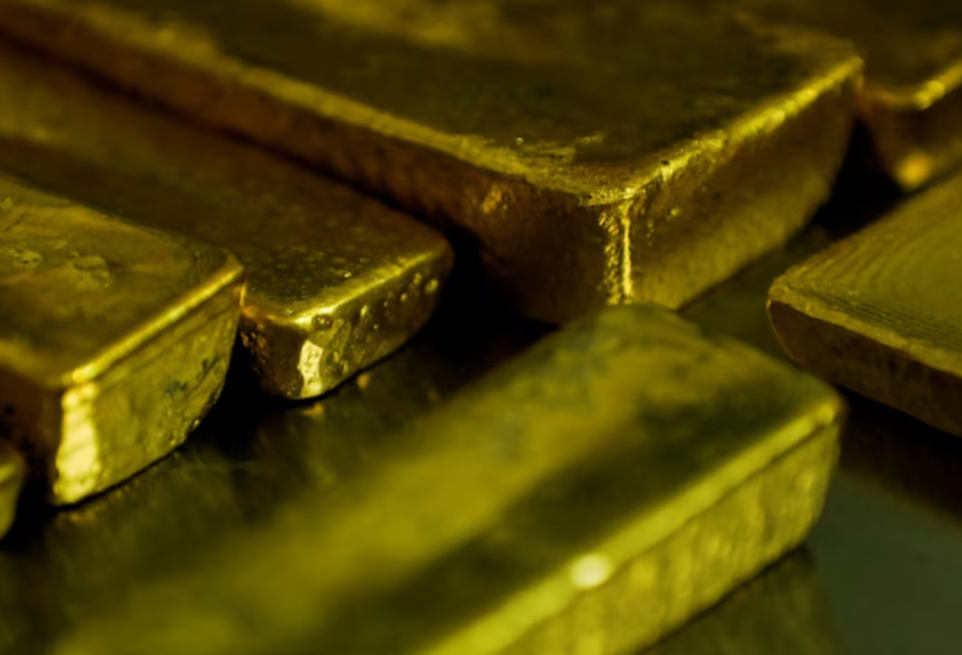
Gold Falls Ahead of the Federal Reserve Meeting
Gold Prices declined on Monday as rising oil prices strengthened expectations for a U.S. Federal Reserve interest-rate hike this week. Higher energy costs have revived inflation concerns, while financial markets are increasingly positioning for tighter monetary policy from major central banks.
Spot gold fell 0.5% to around $4,327.09 per ounce, while U.S. gold futures declined 0.9% to approximately $4,367.50. The move came after gold recorded its third consecutive weekly decline on Friday.
The immediate pressure on bullion is coming from rising yields and expectations for higher interest rates. Gold does not generate interest income, so higher yields can make interest-bearing assets comparatively more attractive.
Why Gold Is Under Pressure From Higher Rate Expectations
Gold is often considered a hedge against inflation and economic uncertainty. However, the relationship between gold and interest rates is more complicated.
When investors expect central banks to raise interest rates, government bond yields can increase. Higher yields raise the opportunity cost of holding gold because investors can earn income from assets such as bonds while gold itself does not pay interest.
That dynamic is currently weighing on gold as markets prepare for the Federal Reserve’s upcoming policy decision.
Tim Waterer, chief market analyst at KCM Trade, said rising energy prices and increasing rate expectations ahead of the Fed and Bank of Japan meetings were creating a clear yield-related headwind for gold.
Markets Price in 87% Chance of Fed Rate Hike
Investor expectations for a Federal Reserve rate increase have strengthened sharply following the latest U.S. inflation data.
Markets are now pricing in an approximately 87% probability of a Fed rate hike at the September policy meeting, according to the CME FedWatch Tool. That compares with about 67% before last week’s inflation report.
The expected move is a 25-basis-point increase. The Federal Reserve’s decision is scheduled for Tuesday and Wednesday, making the meeting one of the most important events for financial markets this week.
| Market Factor | Latest Development | Potential Impact on Gold |
|---|---|---|
| Fed rate expectations | 87% probability of a hike | Negative as higher rates support yields |
| Oil prices | Rose more than 2% | Creates inflation concerns but also geopolitical support |
| U.S. inflation | August consumer prices accelerated | Strengthens expectations for tighter policy |
| U.S. Treasury yields | Higher yields remain a key headwind | Reduces relative appeal of non-yielding gold |
| Geopolitical tensions | Middle East risks remain elevated | Can support gold as an uncertainty hedge |
U.S. Inflation Data Strengthens the Case for Tightening
The latest inflation data have played an important role in changing expectations for U.S. monetary policy. Consumer prices accelerated in August, while a key measure of underlying inflation recorded its largest monthly increase in four months.
These developments have increased concerns that inflation may not be cooling quickly enough. For the Federal Reserve, persistent inflation can make it more difficult to justify an extended period of lower interest rates.
The situation becomes even more complicated when energy prices are rising at the same time. A sustained increase in crude oil prices can feed into transportation and production costs, potentially creating additional inflationary pressure.
Oil Prices Surge Above $100
Oil prices rose more than 2% on Monday, adding another major factor to the global inflation outlook. Fresh Houthi strikes on Saudi Arabia and Iranian attacks on ships in the Gulf intensified concerns about energy supplies.
The latest developments came after the closure of a key Saudi oil pipeline, increasing anxiety about the reliability of regional energy infrastructure and transportation routes.
Higher crude prices can have an indirect effect on gold through monetary policy. If energy costs contribute to higher inflation, central banks may remain more willing to keep interest rates elevated or raise them further.
This creates a difficult environment for gold: geopolitical risks can increase demand for safe-haven assets, but higher rates and yields can simultaneously reduce bullion’s investment appeal.
Middle East Tensions Provide Some Support for Gold
Despite the decline in prices, gold continues to have an important role as an uncertainty hedge. Ongoing tensions in the Middle East can encourage investors to maintain exposure to assets perceived as defensive.
The postponement of a meeting between Iran and other Gulf states also suggested that diplomatic efforts to ease tensions had encountered difficulties.
If geopolitical risks intensify, investors could return to gold even if interest rates remain high. This creates a competing set of forces for the precious metal.
In the short term, interest-rate expectations may dominate price movements. But persistent geopolitical uncertainty could provide a floor for demand if investors seek protection against unexpected market shocks.
Gold Faces a Battle Between Yields and Safe-Haven Demand
The current gold market can be understood through two opposing forces.
- Higher interest rates: Usually create pressure on gold because bullion does not pay interest.
- Higher bond yields: Increase the relative attractiveness of income-generating assets.
- Inflation: Can support gold because investors often use it as a long-term store of value.
- Geopolitical uncertainty: Can increase safe-haven demand.
- Oil-price increases: Can support inflation concerns while simultaneously increasing expectations for tighter monetary policy.
The balance between these forces will determine whether gold can stabilize after its recent weekly declines.
Bank of Japan Rate Decision Adds Another Headwind
The Federal Reserve is not the only central bank attracting attention. The Bank of Japan is also expected to raise interest rates on Friday, as persistent inflation and resilient economic activity increase expectations for further policy tightening.
A simultaneous tightening bias from major central banks can push global bond yields higher. For gold investors, that can create additional pressure because the opportunity cost of holding non-yielding bullion increases.
However, central-bank divergence and geopolitical developments can produce significant currency movements, which may also influence gold prices because bullion is predominantly priced in U.S. dollars.
Gold’s Recent Performance Shows a More Challenging Environment
Monday’s decline followed gold’s third consecutive weekly loss. That sequence suggests that the metal has been facing sustained pressure rather than experiencing only a one-day reaction.
The major change in the market environment has been the strengthening expectation that interest rates may remain higher than previously anticipated. As investors adjust portfolios to reflect that possibility, gold can face selling pressure.
Nevertheless, the metal’s longer-term outlook depends on several variables beyond one Federal Reserve meeting. Inflation trends, real interest rates, central-bank demand, currency movements and geopolitical developments can all influence gold prices.
Silver, Platinum and Palladium Also Decline
Other precious metals also moved lower on Monday.
Spot silver declined 1% to approximately $63.80 per ounce. Platinum slipped 0.2% to around $1,792.59, while palladium fell 0.4% to approximately $1,293.86.
The broad weakness across precious metals indicates that higher-rate expectations were affecting the wider metals complex, rather than gold alone.
| Metal | Reported Price | Daily Move |
|---|---|---|
| Gold | $4,327.09 per ounce | -0.5% |
| U.S. gold futures | $4,367.50 per ounce | -0.9% |
| Silver | $63.80 per ounce | -1.0% |
| Platinum | $1,792.59 per ounce | -0.2% |
| Palladium | $1,293.86 per ounce | -0.4% |
What the Federal Reserve Decision Could Mean for Gold
The Federal Reserve’s decision will be the central focus for gold traders this week. The rate decision itself will matter, but the Fed’s communication about future policy could be even more important.
If policymakers raise rates and signal that additional increases could follow, Treasury yields and the dollar could receive support, potentially creating further pressure on gold.
If the Fed delivers the expected increase but indicates that the move is limited and future decisions will depend heavily on incoming economic data, gold could find some relief.
The market reaction will therefore depend on both the immediate rate decision and expectations for the next stages of monetary policy.
Key Factors Gold Investors Should Watch
Several developments could determine gold’s direction following the Federal Reserve meeting:
- Federal Reserve interest-rate decision and forward guidance
- U.S. Treasury yields and real interest rates
- Future U.S. inflation readings
- Oil prices and global energy supply disruptions
- U.S. dollar movements
- Middle East geopolitical developments
- Bank of Japan policy signals
- Investor demand for defensive assets
Conclusion: Gold Faces Rate Pressure but Geopolitics Could Limit the Downside
Gold prices slipped on Monday as rising oil prices increased inflation concerns and strengthened expectations for a Federal Reserve rate hike. Spot gold fell 0.5% to around $4,327.09 per ounce, while markets priced an 87% chance of a 25-basis-point Fed increase this week.
The main short-term challenge for gold is the combination of higher oil prices, persistent inflation concerns and rising interest-rate expectations. Higher yields reduce the relative appeal of an asset that does not generate interest income.
However, gold still has support from geopolitical uncertainty. Continuing tensions in the Middle East and risks surrounding global energy supplies could encourage investors to retain safe-haven exposure.
The result is a market pulled in two directions: higher rates are creating a yield headwind, while inflation and geopolitical risks are keeping demand for gold alive. The Federal Reserve’s decision and guidance this week could determine which of these forces dominates the next phase of the gold market.
For breaking news and live news updates, like us on Facebook or follow us on Twitter and Instagram. Read more on Latest Business on thefoxdaily.com.






COMMENTS 0