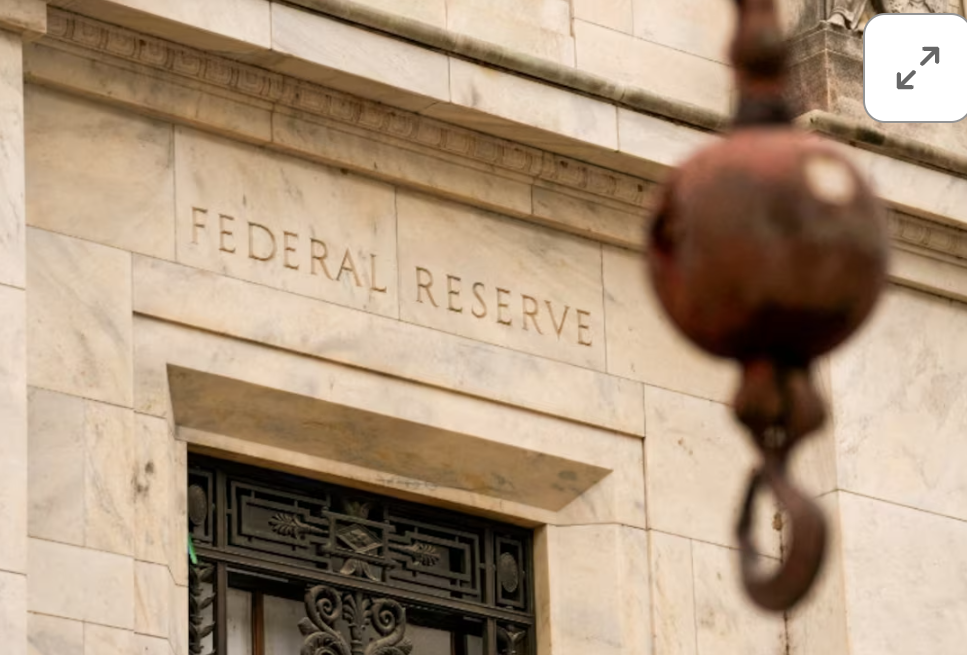
Goldman Sachs has reversed its earlier forecast and now expects the U.S. Federal Reserve to raise interest rates by 25 basis points at its September meeting. The shift places Goldman among a growing group of Wall Street institutions that believe the central bank may need to tighten monetary policy again as inflation risks become more pronounced.
The change is notable because Goldman Sachs had previously expected the Federal Reserve to leave interest rates unchanged in September. According to the firm’s latest assessment, however, financial markets are increasingly pricing in a rate increase, making a pause potentially more surprising for investors.
Goldman’s revised view does not necessarily mean that its assessment of the underlying U.S. economy has changed dramatically. Instead, the brokerage said market pricing was the primary reason behind the forecast adjustment. Recent oil-price gains and stronger-than-expected producer inflation have nevertheless added another layer of pressure for policymakers.
Why Goldman Sachs Now Expects a 25-Basis-Point Hike
The Federal Reserve’s interest-rate decisions are influenced by inflation, employment, economic growth and financial conditions. The latest developments have increased attention on inflation, particularly because energy prices can affect transportation, production and consumer costs across the economy.
Goldman Sachs said market expectations are now strongly tilted toward a September increase. Policymakers may also be reluctant to surprise financial markets with an unexpected decision to keep rates unchanged after investors have increasingly positioned for tighter policy.
A 25-basis-point rate hike would increase the federal funds target range by 0.25 percentage points. While such a move is relatively small, it can influence borrowing costs throughout the economy, including loans, corporate financing and other interest-sensitive financial products.
| Factor | Why It Matters |
|---|---|
| Goldman Sachs forecast | 25-basis-point Fed rate hike in September |
| Previous Goldman view | Rates unchanged in September |
| Market probability | About 87% chance of a quarter-point hike |
| Previous market probability | About 70% before the latest data |
| Key inflation concern | Higher producer prices and oil above $100 a barrel |
| Another hike | Markets are also pricing in an increase in December |
Oil Prices Above $100 Add to Inflation Risks
One of the most important developments behind the changing interest-rate outlook is the sharp increase in crude oil prices. Oil prices have moved above $100 a barrel, creating concerns that higher energy costs could keep inflation elevated for longer.
Higher oil prices can affect the economy through several channels. More expensive fuel increases transportation costs, while businesses facing higher energy and logistics expenses may pass some of those costs on to consumers. This can make it harder for inflation to return quickly to the Federal Reserve’s desired level.
The oil-price shock is particularly important for central banks because energy costs can influence inflation expectations. If households and businesses begin to anticipate persistently higher prices, broader inflation pressures can become more difficult to control.
Goldman Sachs indicated that the recent oil-price surge could make some Federal Reserve policymakers more willing to support additional tightening.
Producer Price Data Raises Fresh Inflation Concerns
The change in Goldman’s forecast also comes after stronger-than-expected U.S. producer price data. The producer price index measures price changes received by domestic producers and is closely watched as an indicator of inflationary pressure within the supply chain.
Higher producer prices do not automatically translate into higher consumer inflation. Businesses can absorb some increases through lower margins or productivity improvements. However, persistent increases can eventually feed into prices paid by consumers.
This is why stronger producer inflation has attracted attention at a time when oil prices are also rising. Together, the developments could make the path toward lower inflation more difficult.
Markets Now See a High Probability of a September Hike
Financial markets have rapidly adjusted their expectations for the Federal Reserve. According to the latest market pricing cited in the report, investors are assigning an 87% probability to a 25-basis-point rate hike in September, compared with approximately 70% before the latest economic data releases.
This change in expectations is important because financial markets respond not only to what the Federal Reserve does but also to what investors believe policymakers will do next.
If a rate increase is already widely anticipated, keeping rates unchanged could potentially create a larger market reaction than delivering the expected hike. This is one reason Goldman believes market pricing itself has become an important factor in the September decision.
December Rate Hike Also Enters the Picture
The market is not only pricing a possible September increase. Investors are also expecting another rate hike in December.
If both moves occur, monetary policy would become more restrictive than previously expected. The significance would depend on how the Federal Reserve communicates its longer-term intentions and whether inflation continues to remain elevated.
However, market pricing is not a guarantee of future policy. Expectations can change quickly when new employment, inflation, consumer spending or financial-market data are released.
What a Fed Rate Hike Could Mean for the U.S. Economy
A Federal Reserve rate increase generally makes borrowing more expensive. Higher interest rates can affect households and businesses by increasing the cost of financing.
- Consumers: Borrowing costs can rise for some loans and credit products.
- Businesses: Higher financing costs can influence investment and expansion decisions.
- Housing: Interest-rate-sensitive housing activity can face additional pressure.
- Bonds: Expectations for higher rates can push short-term yields higher.
- Stocks: Higher discount rates can affect valuations, particularly for companies whose expected earnings are further in the future.
- Dollar: Expectations for tighter U.S. monetary policy can support the dollar relative to other currencies, although exchange rates depend on many factors.
The overall impact therefore depends on the reason for the rate increase. A hike designed to prevent persistent inflation may be viewed differently from a hike occurring because the economy is overheating strongly.
Why the Fed Faces a Difficult Policy Balance
The Federal Reserve faces a difficult balancing act between controlling inflation and avoiding unnecessary damage to economic growth.
If policymakers keep rates too low while inflationary pressures are strengthening, price pressures could become more persistent. On the other hand, raising rates too aggressively could weaken economic activity and employment.
The latest oil-price increase makes this challenge more complicated because energy-driven inflation can come from outside traditional domestic demand pressures. The Fed cannot directly control global oil production or geopolitical developments, but it must consider how those developments affect inflation expectations and broader economic conditions.
Goldman’s Forecast Is Significant for Wall Street
Goldman Sachs is one of the most closely followed financial institutions on Wall Street, so a change in its Federal Reserve forecast can attract considerable attention from investors and analysts.
More importantly, Goldman is not making the change in isolation. The revised forecast comes as market expectations have also moved toward tighter policy.
The combination suggests that investors are becoming more concerned about the possibility that inflation will remain above comfortable levels for longer than previously expected.
Oil, Inflation and Interest Rates Are Now Closely Connected
The latest market environment highlights the connection between energy markets and monetary policy. A sharp rise in crude prices can increase inflation expectations, which can influence bond yields and interest-rate forecasts.
Those changing expectations can then affect equity markets, currencies and borrowing costs. In other words, an oil-price shock can have consequences far beyond the energy sector.
This connection is particularly important if elevated oil prices persist rather than quickly reversing. A temporary spike may have a limited effect on underlying inflation, while a prolonged increase could create broader economic pressure.
What Investors Will Watch Next
Investors will closely monitor upcoming U.S. inflation and economic indicators for evidence of whether the latest price pressures are temporary or becoming more persistent.
The Federal Reserve’s communication will be equally important. Markets will want to understand whether a September hike would represent a one-time adjustment or the beginning of a renewed tightening cycle.
Key areas to watch include:
- Future inflation readings
- Producer and consumer price trends
- Crude oil prices and energy-market disruptions
- Employment and wage data
- Federal Reserve statements and projections
- Bond-market expectations
- Market pricing for the December meeting
September Fed Decision Could Set the Tone for the Rest of 2026
Goldman Sachs’ forecast change underscores how quickly expectations can shift when inflation and energy-market risks increase. Just recently, the firm expected the Federal Reserve to leave rates unchanged. It now anticipates a 25-basis-point increase.
The change also demonstrates that monetary policy expectations are being influenced by both economic data and financial-market pricing. With markets assigning an 87% probability to a September hike and also anticipating another increase in December, investors are preparing for a potentially more restrictive policy path.
Conclusion: Goldman Turns More Hawkish as Inflation Risks Return
Goldman Sachs now expects the Federal Reserve to raise interest rates by 25 basis points in September, reversing its previous call for no change. The shift is largely driven by market pricing, but stronger producer inflation and crude oil prices above $100 a barrel have strengthened the case for caution on inflation.
The key question now is whether the latest price pressures prove temporary or persistent. If oil prices remain elevated and inflation data continue to surprise on the upside, expectations for additional Fed tightening could strengthen further. If those pressures ease, policymakers may have more flexibility to pause.
For investors, the September Fed decision will therefore be important not only because of the size of the rate move, but because of what policymakers signal about the months that follow.
For breaking news and live news updates, like us on Facebook or follow us on Twitter and Instagram. Read more on Latest Business on thefoxdaily.com.






COMMENTS 0