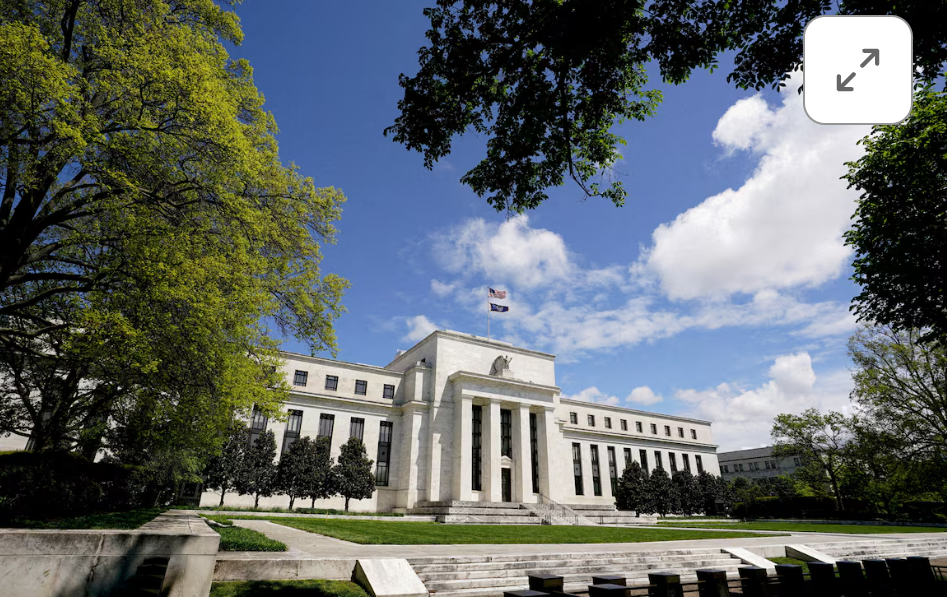
Goldman Sachs expects another Federal Reserve rate hike in October 2026, revising its earlier view that the U.S. central bank had completed its tightening cycle after September’s quarter-point increase. The change follows a more hawkish-than-expected policy signal from the Federal Reserve, which indicated that additional tightening could still be required to bring inflation back toward its 2% target.
The latest forecast places Goldman Sachs among the first major Wall Street institutions to anticipate consecutive Fed rate hikes. The Federal Reserve raised its policy rate by 25 basis points on Wednesday, taking the target range to 3.75%–4.00%.
Goldman’s revised outlook is based largely on the Fed’s updated economic projections and policymakers’ guidance. The projections showed a strong majority of officials expecting at least one more rate increase during 2026, creating what Goldman described as a “two-hike baseline” for the year.
Goldman Sachs Changes Its Fed Rate Forecast
Before the latest Federal Reserve meeting, Goldman Sachs had expected the September rate increase to mark the end of the central bank’s tightening cycle. The investment bank has now changed that assessment and expects another 25-basis-point hike in October.
The revision reflects the tone of Wednesday’s Federal Reserve meeting. According to Goldman, the meeting delivered a stronger hawkish signal than expected, particularly through policymakers’ interest-rate projections and comments about the amount of monetary accommodation that remains in the economy.
The bank believes October is the most likely timing for another move because Federal Reserve officials linked additional tightening to a faster return of inflation toward the central bank’s 2% objective.
| Fed outlook | Latest development |
|---|---|
| September 2026 | Rates raised by 25 basis points |
| Current target range | 3.75%–4.00% |
| Goldman Sachs October forecast | Additional 25-basis-point hike |
| Goldman’s previous view | September hike would complete the tightening cycle |
| Market-implied October probability | About 50% for another quarter-point increase |
| Goldman’s 2026 baseline | Two rate hikes |
Why the September Fed Meeting Was More Hawkish
Goldman Sachs identified several elements behind its change in expectations.
Rate projections point to another increase
The Federal Reserve’s updated rate projections showed that a strong majority of policymakers expected at least one additional rate increase during 2026.
This matters because the projections provide an indication of how officials collectively view the appropriate path for monetary policy. While the projections are not a promise of future action, they can significantly influence financial-market expectations.
Neutral interest rate was revised higher
Goldman also pointed to an upward revision to the estimated neutral interest rate. The neutral rate is the level of interest rates that policymakers believe neither significantly stimulates nor restricts economic activity over the longer term.
A higher estimate of the neutral rate can influence how officials assess whether current monetary policy is sufficiently restrictive.
Fed Chair Kevin Warsh’s comments
Goldman also highlighted repeated comments from Federal Reserve Chair Kevin Warsh describing the September move as having removed only a limited amount of monetary restraint or accommodation.
The wording suggests that policymakers may not view the September reduction in monetary restriction as the end of the policy adjustment process.
What Is a Hawkish Fed Policy?
A hawkish Federal Reserve generally refers to a policy stance that places greater emphasis on controlling inflation, including through higher interest rates or maintaining restrictive rates for longer.
Higher interest rates can reduce borrowing and spending by households and businesses. Over time, that can moderate demand and help reduce inflationary pressure.
The trade-off is that tighter monetary policy can also slow economic activity. Higher borrowing costs may affect housing, business investment, consumer credit and financial markets.
That balance is central to the Fed’s policy decisions. The central bank must assess inflation, employment, economic growth and financial conditions before deciding whether additional rate increases are appropriate.
Markets Price Roughly 50% Chance of October Hike
Financial markets have also adjusted their expectations following the Fed’s latest signal.
According to the CME Group’s FedWatch tool cited in the report, traders see roughly a 50% probability of another quarter-point rate increase in October. That represents a significant increase after policymakers signalled that additional tightening could be necessary.
Market expectations can change quickly as new inflation, employment and economic-growth data are released. Therefore, the current probability should be viewed as a market-implied estimate rather than a confirmed Federal Reserve decision.
The gap between a 50% market probability and an actual policy decision is important. Investors will continue to evaluate incoming data and speeches from Fed officials before the October meeting.
Goldman and Bank of America See More Tightening
Goldman Sachs is not alone in expecting a more aggressive path for U.S. monetary policy.
Bank of America Global Research is also expecting further rate increases, with its forecast calling for hikes in both October and December.
Goldman’s revised projection therefore places it closer to the more hawkish end of major Wall Street forecasts. The difference between the two banks is primarily the number and timing of expected moves.
| Institution or market | Current outlook mentioned in the report |
|---|---|
| Goldman Sachs | 25-basis-point hike expected in October |
| Bank of America Global Research | Hikes expected in October and December |
| CME FedWatch market pricing | About 50% chance of an October quarter-point hike |
| Federal Reserve | September rate increased to 3.75%–4.00% |
Why Inflation Remains Central to the Fed Outlook
The Federal Reserve’s 2% inflation target remains the key reference point behind the possibility of additional tightening.
If inflation remains above target for an extended period, policymakers may be concerned that price pressures could become more persistent. Higher interest rates can be used to restrain demand and reduce the risk that elevated inflation becomes embedded in wages, prices and expectations.
Goldman’s interpretation is that the Fed’s latest language indicates policymakers want inflation to return to 2% in a timely manner. That interpretation has led the bank to move its expected next rate increase forward to October.
However, the actual policy path will depend on the economic data available before the next meeting. A significant change in inflation or labour-market conditions could alter expectations.
What Another Fed Rate Hike Could Mean for Borrowers
An additional 25-basis-point increase would raise the cost of borrowing across parts of the financial system, although the effect would vary by product and how quickly lenders pass changes through to customers.
Consumers with variable-rate loans could face higher interest expenses. Businesses refinancing debt could also encounter higher financing costs.
Fixed-rate borrowers would generally be less immediately affected by a change in the policy rate, although broader market interest rates can influence the cost of new borrowing.
The impact would also depend on how long rates remain elevated rather than simply the size of one individual increase.
Impact on Stock and Bond Markets
Expectations of higher interest rates can influence both equity and bond markets.
Higher Treasury yields can increase the discount rate used to value future corporate earnings. This can be particularly relevant for companies whose valuations depend heavily on expected earnings far into the future.
Bond prices generally move inversely to yields. If investors expect policy rates to remain higher, yields on some government and corporate bonds can rise, potentially putting pressure on existing bond prices.
At the same time, higher interest rates can eventually create more attractive yields for investors purchasing newly issued fixed-income securities.
Global Central Banks Are Also in Focus
The Federal Reserve is not the only major central bank being watched by global investors this week.
The Bank of England is scheduled to announce its policy decision later on Thursday, while the Bank of Japan is due to make its decision on Friday.
These decisions could provide additional information about the direction of global monetary policy. Differences between central banks can influence currencies, bond yields and international capital flows.
For investors, the combination of U.S., U.K. and Japanese policy decisions makes this an important period for assessing whether major economies are moving toward tighter or looser financial conditions.
Why Consecutive Rate Hikes Matter
If the Fed raises rates again in October, it would represent consecutive increases following the September move. That would send a different policy signal from a scenario in which September marked the final hike and the central bank subsequently paused.
A sequence of increases could indicate that policymakers believe inflationary pressures require additional restraint. Conversely, if the Fed pauses, markets could interpret the decision alongside the latest economic data and guidance to determine whether the tightening cycle is nearing its end.
The distinction is important for financial markets because expectations about the future path of interest rates often influence asset prices before the actual policy decision occurs.
Key Data to Watch Before the October Meeting
- Inflation data: Measures of consumer and underlying inflation will be closely monitored.
- Labour-market data: Employment and wage trends can influence the Fed’s assessment of economic conditions.
- Economic growth: Signs of stronger or weaker demand could affect the case for additional tightening.
- Fed communication: Speeches and interviews from policymakers may clarify their views on the October decision.
- Treasury yields: Bond-market movements will show how investors are adjusting to the changing rate outlook.
- FedWatch pricing: Market-implied probabilities may shift significantly as new information becomes available.
Goldman Sachs October Fed Hike Forecast: What Comes Next?
Goldman Sachs has now moved from expecting the September rate increase to be the final hike of the cycle to forecasting another 25-basis-point increase in October.
The change reflects the Federal Reserve’s latest projections, its higher neutral-rate estimate and the hawkish tone of policymakers’ communication. The Fed has already raised its target range to 3.75%–4.00%, while markets are assigning roughly even odds to another quarter-point increase in October.
Still, an October hike is not guaranteed. Market pricing is an estimate, and Federal Reserve officials will have additional economic data before the next meeting. Inflation, employment, growth and financial conditions will all contribute to the decision.
For markets, the central question now shifts from whether September marked the end of tightening to how much additional restraint the Federal Reserve may ultimately consider necessary to return inflation toward its 2% objective.
For breaking news and live news updates, like us on Facebook or follow us on Twitter and Instagram. Read more on Latest Business on thefoxdaily.com.






COMMENTS 0