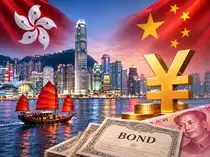
Hong Kong has launched its first benchmark index tracking offshore yuan-denominated bonds, marking a significant step towards expanding the international use of China’s currency and deepening the city’s dim sum Bond Market. Developed in collaboration with Bloomberg, the HKEX Offshore RMB Bond Index is designed to give global investors a transparent reference for measuring the performance of offshore renminbi debt securities.
The initiative comes as demand for yuan-denominated financing grows and Hong Kong strengthens its position as a major international financial centre. By creating a recognised benchmark, the city aims to make offshore yuan bonds more accessible to institutional and retail investors while encouraging the development of new investment products.
The index was launched on November 16, 2026, by Hong Kong Exchanges and Clearing (HKEX). Bloomberg Index Services Limited will act as its administrator and calculation agent, bringing its fixed-income pricing, analytics and index-management capabilities to the initiative. :chatgpt-content-reference{index=”0″}
What Is the HKEX Offshore RMB Bond Index?
The HKEX Offshore RMB Bond Index is designed to measure the performance of eligible offshore renminbi-denominated fixed-income securities issued in Hong Kong’s market infrastructure.
It covers three broad categories of debt: Treasury securities, government-related bonds and corporate bonds. Eligible securities must be listed on the Stock Exchange of Hong Kong, lodged with the Central Moneymarkets Unit (CMU), or meet the relevant listing and settlement requirements.
The index provides investors with a common benchmark for evaluating offshore yuan bonds instead of relying on individual securities or fragmented market information. This can make it easier for asset managers to compare performance, assess market movements and develop investment strategies.
According to HKEX, the index uses a transparent, rules-based methodology. It is calculated daily and rebalanced monthly, while eligible securities must meet defined requirements relating to currency, maturity, issuer category and outstanding amount. :chatgpt-content-reference{index=”1″}
Bloomberg Partnership Could Support New Investment Products
HKEX has partnered with Bloomberg to administer, calculate and commercialise the new benchmark. The collaboration is also expected to support the development of a broader family of offshore yuan bond indices.
The initial index suite includes benchmarks covering different maturity periods, including one-to-three-year, three-to-five-year, one-to-five-year and five-year-plus bonds. Additional indices will focus on investment-grade securities and specific issuer categories.
These benchmarks could provide the foundation for new exchange-traded funds (ETFs), index funds and other investment products. Asset managers could use them to create passive investment strategies or measure the performance of actively managed offshore yuan portfolios.
Several asset managers have already expressed interest in developing products linked to the new benchmarks. However, interest in launching such products should not be confused with confirmation that all proposed ETFs or funds are already available to investors. :chatgpt-content-reference{index=”2″}
Dim Sum Bond Market Gains Importance in Hong Kong
Dim sum bonds are renminbi-denominated bonds issued outside mainland China. They allow companies, financial institutions and government-related entities to raise funds in yuan through offshore financial markets.
Hong Kong has developed into the world’s leading offshore renminbi financial centre, providing infrastructure for bond issuance, trading, clearing and settlement. Its financial connections with mainland China and international investors make it an important location for offshore yuan financing.
The market has expanded as more issuers consider yuan-denominated debt as an alternative to borrowing in other currencies. Issuers can access investors seeking exposure to renminbi assets, while investors gain opportunities to diversify their fixed-income portfolios.
HKEX said offshore yuan bond issuance exceeded RMB 590 billion during the first nine months of 2026, excluding certificates of deposit. Since 2024, Hong Kong has consistently accounted for more than half of exchange-listed offshore yuan bonds globally. :chatgpt-content-reference{index=”3″}
New Index Covers 305 Bonds Worth Around CNH 864 Billion
The initial benchmark has a substantial pool of eligible securities. Bloomberg’s data at the end of October 2026 indicated that the index universe would include 305 bonds with a combined market value of approximately CNH 864 billion.
Government-related securities accounted for 49.59% of the universe, followed by corporate bonds at 29.19% and Treasury securities at 21.22%.
Issuers from mainland China and Hong Kong represented the largest regional exposure, accounting for 88.49% of the index universe. Securities from the United States represented 5.17%, while Singapore accounted for 1.98%.
This composition highlights the benchmark’s strong connection to the Chinese and Hong Kong financial markets while also reflecting participation from overseas issuers. The index’s coverage could gradually become more significant as the offshore yuan bond market expands and attracts a wider range of borrowers. :chatgpt-content-reference{index=”4″}
Why Hong Kong Wants to Expand Global Yuan Use
The launch forms part of Hong Kong’s broader efforts to strengthen the international role of the renminbi. China has been working to expand the currency’s use in cross-border trade, investment and financial transactions, while Hong Kong provides an offshore platform connecting mainland markets with global capital.
A deeper offshore bond market can support this objective by giving international investors more opportunities to hold and trade yuan-denominated assets.
However, the availability of investment opportunities alone does not guarantee wider international adoption. Investors also consider liquidity, currency volatility, access to financial markets, regulatory conditions and the ability to manage exchange-rate exposure.
A recognised benchmark can help address one part of this challenge by improving transparency and making the market easier to evaluate. It can also provide asset managers with a consistent reference when developing yuan-focused investment products.
How the Index Could Attract Global Investors
One of the main challenges in developing an international bond market is providing investors with reliable information about available securities and their performance. A benchmark can help reduce this information gap by establishing consistent rules for selecting and measuring eligible bonds.
For institutional investors, the index could serve several purposes. Pension funds, insurance companies and asset managers may use it to compare portfolio returns, evaluate market risks or build investment strategies focused on offshore yuan debt.
Retail investors could also gain indirect access if asset managers introduce ETFs or index funds linked to the benchmark. Such products could make it easier to obtain diversified exposure to offshore renminbi bonds without purchasing individual securities.
The availability of index-linked products could also improve the secondary market. Greater participation may encourage more trading activity, although actual liquidity will depend on investor demand, market-making activity and the range of securities available.
What the Index Means for Bond Issuers
The new benchmark could also benefit companies and government-related entities that issue yuan-denominated debt outside mainland China.
A more visible and measurable offshore bond market may help issuers reach investors who follow recognised fixed-income benchmarks. If index-linked funds attract additional capital, eligible securities could receive greater attention from international asset managers.
For corporate borrowers, a broader investor base could create more financing opportunities. Companies may be able to diversify their funding sources and reduce dependence on borrowing in a single currency.
However, the impact on borrowing costs will not be automatic. Interest rates, credit quality, currency expectations and market liquidity will continue to influence the terms available to individual issuers.
Risks and Challenges Facing the Offshore Yuan Bond Market
Despite the potential benefits, the launch of a benchmark does not remove the risks associated with offshore yuan investments.
Currency risk: International investors holding yuan-denominated bonds remain exposed to exchange-rate movements. Changes in the value of the renminbi against the dollar, euro or other currencies can affect returns when investments are converted back into an investor’s home currency.
Liquidity conditions: Some bonds may trade less frequently than major government securities in developed markets. Lower trading activity can make it more difficult for investors to buy or sell securities at favourable prices.
Interest-rate movements: Changes in Chinese monetary policy and global interest rates can influence bond valuations. When market yields rise, the prices of existing fixed-rate bonds generally come under pressure.
Credit risk: Corporate and government-related bonds carry different levels of repayment risk. Investors will need to assess the financial position of issuers rather than relying only on an index’s overall performance.
Regulatory and market access: Differences in financial regulations, investment restrictions and cross-border capital arrangements could influence how easily international investors access offshore yuan assets.
Hong Kong Strengthens Its Position as an Offshore Financial Hub
The index launch is part of a wider effort by Hong Kong to expand its fixed-income market and strengthen its role in international finance.
The city has been developing financial products and infrastructure connected to offshore renminbi trading. Initiatives involving bond futures, collateral arrangements and cross-border investment channels are intended to make yuan-denominated assets more accessible to global market participants.
The development of a recognised bond benchmark adds another component to this financial infrastructure. It connects the primary bond market, where issuers raise funds, with the secondary investment market, where investors trade existing securities and assess portfolio performance.
For Hong Kong, the objective is not simply to increase bond issuance. It is also to create a deeper market in which investors can access securities, compare returns and develop investment products through established financial channels.
What Investors Should Watch Next
The long-term success of the HKEX Offshore RMB Bond Index will depend on whether it attracts sustained investor participation and encourages the creation of investable products.
- ETF and fund launches: Investors will be watching which asset managers introduce products linked to the new benchmark and when those products become available.
- Market liquidity: Trading volumes and participation from institutional investors will help determine whether the index contributes to a more active secondary market.
- Bond issuance: Continued growth in offshore yuan debt issuance could expand the range of securities available to investors.
- International participation: Greater involvement from overseas institutions would indicate whether the benchmark is helping broaden demand beyond mainland China and Hong Kong.
- Currency developments: Renminbi exchange-rate movements and changes in China’s financial policies will remain important factors influencing international investor interest.
Hong Kong’s Yuan Bond Index Marks a New Stage in Market Development
Hong Kong’s first offshore yuan bond index represents an important development for the city’s dim sum bond market and China’s broader efforts to internationalise the renminbi.
By collaborating with Bloomberg, HKEX has introduced a benchmark designed to improve transparency, support investment analysis and provide a foundation for ETFs, index funds and other financial products.
The initial universe of 305 bonds, valued at approximately CNH 864 billion at the end of October, gives the benchmark a substantial starting base. However, its long-term influence will depend on whether asset managers launch linked products, issuers continue expanding supply and global investors increase their participation.
The index alone cannot guarantee greater international use of the yuan or eliminate currency and liquidity risks. Nevertheless, it provides an additional market tool that could make offshore renminbi bonds easier to assess, access and incorporate into global investment portfolios.
For Hong Kong, the bigger objective is to move beyond being a major centre for yuan bond issuance and develop a more complete investment ecosystem capable of attracting sustained international capital.
For breaking news and live news updates, like us on Facebook or follow us on Twitter and Instagram. Read more on Latest Business on thefoxdaily.com.






COMMENTS 0