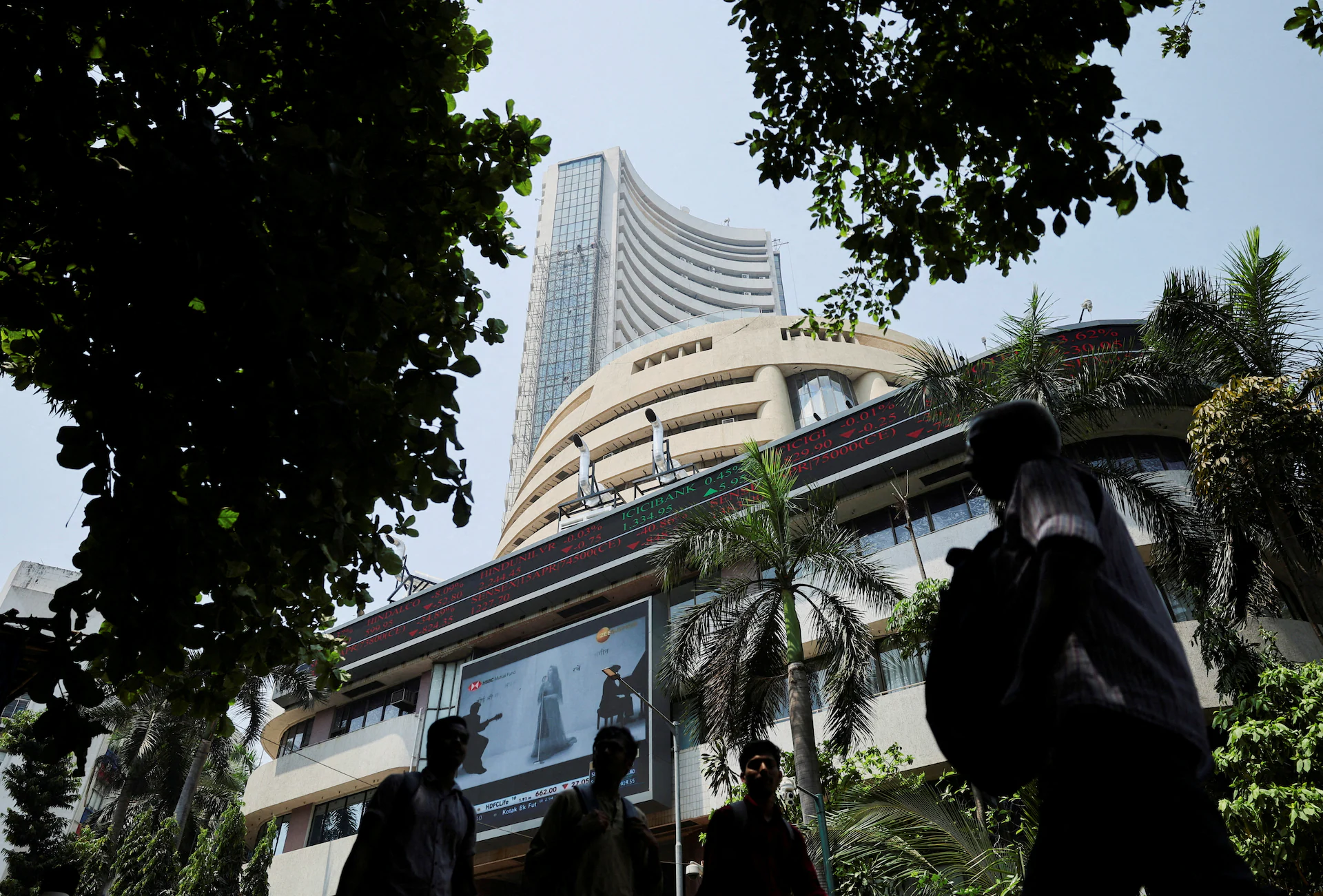
India’s Zetwerk Manufacturing Businesses made a weak Stock Market debut on Friday, with shares falling below their initial public offering (IPO) price after an early premium listing. Investors appeared concerned about the company’s continued losses and its reliance on third-party suppliers, despite its presence across multiple industrial and consumer goods sectors.
Backed by Peak XV Partners and Accel India, Zetwerk operates a manufacturing platform that serves customers across industries, including renewable energy, electronics and infrastructure. Its client list includes wind turbine manufacturer Siemens Gamesa, Acer India, NTPC Renewable Energy and the Indian Air Force.
Zetwerk shares were trading at Rs 147.40 at 10:23 a.m. IST, giving the company a market valuation of approximately Rs 251.7 billion, or $2.65 billion. The stock had initially listed at a premium of 5.5% to its IPO issue price of Rs 151 before slipping into negative territory.
The market debut comes during an active year for India’s primary market, where hundreds of companies have raised billions of dollars through public offerings. Zetwerk’s listing also comes as investors assess the prospects of businesses seeking public capital amid concerns about profitability, supplier dependence and sustainable growth.
Zetwerk Shares Fall Below the IPO Issue Price
Zetwerk’s stock market debut initially appeared positive, with shares opening at a premium of 5.5% to the issue price of Rs 151. However, the early gains did not last, and the stock subsequently fell below its IPO price during Friday’s trading session.
At 10:23 a.m. IST, the shares were trading at Rs 147.40. At that level, the stock was approximately 2.38% below the issue price, indicating that investors were willing to trade the shares at a discount to the price established during the public offering.
The company’s valuation stood at around Rs 251.7 billion, equivalent to approximately $2.65 billion at the reported exchange rate. The valuation reflects the market price of Zetwerk’s shares during the session rather than a fixed value for the business.
The movement from an initial premium to a price below the issue level highlights the uncertainty that can surround newly listed companies. Although an IPO establishes an offer price based on the public issue process, the stock’s subsequent performance depends on trading demand, investor expectations and perceptions of the company’s financial prospects.
In Zetwerk’s case, concerns about its losses and dependence on third-party suppliers were identified as factors weighing on investor sentiment. The company’s manufacturing platform and large order book may offer growth opportunities, but investors must also consider the costs and risks associated with its operating model.
Why Are Investors Concerned About Zetwerk?
Analysts have pointed to a combination of growth potential and business risks in their assessment of Zetwerk. The company operates across multiple industries and has developed a manufacturing platform designed to serve a range of industrial and consumer goods customers.
However, the business remains loss-making, and its reliance on third-party suppliers has emerged as a concern. These factors may influence how investors evaluate the company’s ability to translate its business activity into sustainable profits.
In a note published last week, analysts at SMC Global Securities highlighted Zetwerk’s operating model and growth prospects while drawing attention to its financial and supplier-related challenges.
“Zetwerk’s unique hybrid platform, multi-industry resilience, and large order book support long-term growth potential… However, it is still loss-making (and) relies heavily on third-party suppliers,” the analysts said.
The assessment captures the central question surrounding Zetwerk’s public-market debut: whether its scale, customer relationships and order book can eventually translate into consistent profitability.
Continued Losses Remain a Key Issue
Zetwerk reported revenue from operations of Rs 41.18 billion for the April-June quarter. Despite the scale of its reported operating revenue, the company recorded a loss of Rs 641.29 million during the same period.
The figures show that the company generated substantial operating revenue but did not report a profit for the quarter. Investors evaluating the IPO may therefore focus on the relationship between revenue growth, operating costs and the company’s ability to improve its financial performance.
Revenue alone does not establish whether a business model is financially sustainable. A company can generate significant sales while continuing to incur losses if its expenses, supplier costs and other operating requirements exceed the income it retains.
For Zetwerk, a key issue will be whether its manufacturing platform can expand while improving profitability. The supplied figures establish the company’s revenue and loss for the April-June quarter but do not provide enough information to determine when it might become profitable.
The market debut suggests that at least some investors remain cautious about paying the IPO price for a company that has yet to report profits.
Dependence on Third-Party Suppliers
Another concern identified by analysts is Zetwerk’s reliance on third-party suppliers. The company manufactures industrial and consumer goods through a business model that involves coordinating manufacturing requirements across different industries.
This approach can allow a business to serve a broad customer base without relying exclusively on manufacturing assets that it owns and operates directly. However, it also makes supplier relationships an important part of the operating model.
Reliance on external suppliers can expose a manufacturing platform to potential challenges involving production schedules, costs, quality standards and the availability of manufacturing capacity. The extent of these risks depends on the company’s contracts, supplier network and operational controls, details that are not specified in the supplied report.
SMC Global Securities identified supplier dependence as one of the factors investors should consider alongside Zetwerk’s growth prospects. The concern does not mean that the business model cannot succeed, but it highlights an area that may influence how the company manages expansion and profitability.
What Does Zetwerk Do?
Zetwerk Manufacturing Businesses operates in the industrial and consumer goods manufacturing sector. Its business involves serving customers across multiple industries, giving the company exposure to a variety of manufacturing requirements rather than depending entirely on one product category.
The company counts several prominent organisations among its clients, including Siemens Gamesa, Acer India, NTPC Renewable Energy and the Indian Air Force.
These customer relationships illustrate the range of sectors in which Zetwerk operates. Siemens Gamesa is associated with wind turbines, Acer India operates in electronics and computing products, NTPC Renewable Energy is active in renewable energy, and the Indian Air Force represents a defence-related customer.
Serving customers in different industries can provide a manufacturing business with opportunities to diversify its sources of demand. However, the presence of multiple industries also requires the company to manage different production requirements, supplier relationships and customer expectations.
Analysts cited Zetwerk’s multi-industry resilience as one of the factors supporting its long-term growth potential. Its large order book was also identified as a positive element in the company’s business outlook.
Nevertheless, the available information does not quantify the order book or specify how much revenue the company expects to generate from existing orders. The long-term implications of its customer relationships will depend on its ability to fulfil orders and manage the costs associated with doing so.
Zetwerk IPO Subscription: Issue Oversubscribed 3.06 Times
Zetwerk’s IPO received total subscriptions of 3.06 times the number of shares offered, according to the supplied report. The level of subscription indicates that investor demand exceeded the shares available in the public offering, although demand varied across investor categories.
Qualified institutional buyers led the subscription figures, bidding for 4.73 times the shares reserved for their category. Non-institutional investors subscribed 1.4 times their allotted portion, while retail investors subscribed to just 0.73 times the shares reserved for them.
The figures show that institutional demand was stronger than retail participation. Qualified institutional buyers, a category that includes eligible institutional investors, accounted for the strongest subscription relative to their reserved allocation.
Non-institutional investors also subscribed beyond their allotted portion, while retail investors did not subscribe to the full number of shares reserved for them.
The overall subscription of 3.06 times indicates that the IPO attracted demand in aggregate. However, the different subscription levels across investor categories demonstrate that participation was not uniform.
What the Subscription Figures Indicate
IPO subscription data provides an indication of demand during the public offering, but it does not guarantee that a stock will rise after listing. Investors may apply for shares based on different expectations, investment strategies and assessments of a company’s prospects.
Zetwerk’s subscription figures were led by qualified institutional buyers, whose bids reached 4.73 times the shares reserved for them. The retail category, by comparison, reached 0.73 times its allocation.
The stock’s subsequent fall below the issue price shows why IPO subscription levels and listing performance should be viewed separately. Even when an offering attracts overall demand in excess of the available shares, trading after listing can reflect changing assessments of valuation and business risks.
For Zetwerk, the concerns highlighted by analysts included its losses and reliance on third-party suppliers. These considerations may remain relevant to investors evaluating the company’s longer-term prospects after its market debut.
Zetwerk Raises Rs 22.51 Billion From Anchor Investors
Before the public issue, Zetwerk raised Rs 22.51 billion from anchor investors. The investors included Capital Group, BlackRock and Goldman Sachs, according to the supplied report.
Anchor investors participate in the IPO process before the public offering opens for general subscription. Their participation can form an important part of the capital-raising process and may provide information about institutional interest in an offering.
Zetwerk’s anchor fundraising took place ahead of its public listing, with the company securing Rs 22.51 billion from this investor group.
However, anchor participation should not be interpreted as a guarantee of strong aftermarket performance. The stock’s market price can move above or below the issue price once trading begins, as demonstrated by Zetwerk’s debut.
The company’s early trading performance also illustrates that institutional participation during an IPO does not eliminate concerns about profitability, supplier dependence or valuation.
India’s IPO Market Remains Active in 2026
Zetwerk’s listing comes during a busy period for India’s primary market. Data from the London Stock Exchange Group, or LSEG, showed that as many as 246 companies had raised $13.54 billion in 2026 up to the period covered by the report.
The figures point to substantial activity in the country’s public fundraising market, with companies continuing to seek capital through IPOs and other equity-market transactions.
For businesses, listing on the stock market can provide access to public investors and create opportunities to raise funds for future plans. For investors, IPOs offer access to companies at the point when their shares begin trading publicly, although the associated risks vary according to each business’s financial position and growth prospects.
Zetwerk’s debut adds to this active market environment. Its performance also illustrates the importance of investors evaluating a company’s financial results and operating model rather than relying solely on the level of demand during the IPO process.
Although India’s primary market has seen significant fundraising activity, the available figures do not establish that all newly listed companies have delivered positive returns. Individual listing outcomes depend on factors specific to each company and the conditions affecting its shares.
Jio Platforms IPO Adds to India’s Busy Listing Calendar
Another major development in India’s primary market was the opening of bidding for an IPO from Jio Platforms, the company associated with billionaire Mukesh Ambani. The supplied report described it as the country’s largest-ever IPO, with bidding underway at the time.
The Jio Platforms offering highlights the scale of activity taking place in India’s IPO market during 2026. Large public offerings can attract significant attention from investors and contribute to the broader conversation about equity fundraising and market valuations.
However, Zetwerk and Jio Platforms operate in different businesses, and the supplied report does not provide a direct comparison of their financial performance, valuations or IPO structures. The reference to Jio Platforms primarily places Zetwerk’s listing within the wider context of an active primary market.
With multiple companies raising capital and major offerings attracting investor attention, the performance of newly listed shares remains an important point of interest for market participants.
Zetwerk’s Valuation Stands at Approximately $2.65 Billion
At a share price of Rs 147.40, Zetwerk’s market capitalisation was approximately Rs 251.7 billion, equivalent to around $2.65 billion. The valuation was recorded at 10:23 a.m. IST on Friday, according to the supplied report.
Market capitalisation is calculated by multiplying a company’s share price by the number of shares outstanding. Because the share price changes during trading, a company’s market value can also rise or fall after listing.
Zetwerk’s valuation therefore reflected its trading price at the time of the reported market update. The figure should not be treated as a permanent valuation or as a direct measure of the company’s profitability.
For investors, assessing a company’s valuation generally involves considering several factors, including revenue, profits or losses, growth expectations, competitive position and operating risks.
In Zetwerk’s case, analysts identified its manufacturing platform, multi-industry presence and large order book as factors supporting its growth potential. At the same time, its continuing losses and reliance on external suppliers remain important considerations.
The combination of these factors helps explain why investors may take different views of the company’s prospects. Some may focus on the opportunities created by its manufacturing network, while others may place greater weight on the challenges involved in achieving sustainable profitability.
What Investors May Watch After Zetwerk’s Listing
Following the market debut, Zetwerk’s financial performance and execution of its business strategy are likely to remain important areas of attention for investors assessing the company.
One key consideration is whether the company can improve its profitability while maintaining revenue growth. Its reported operating revenue of Rs 41.18 billion for the April-June quarter demonstrates the scale of its business activity, while the loss of Rs 641.29 million highlights the difference between generating revenue and earning a profit.
Another factor is the company’s management of third-party suppliers. Since analysts have identified supplier dependence as a risk, investors may pay attention to how Zetwerk manages manufacturing relationships and fulfils customer orders.
The company’s order book is another element of its growth outlook. SMC Global Securities cited the large order book as a factor supporting long-term potential, although the supplied report does not provide a value for it or details about the timing of expected revenue.
Investors may also examine the company’s ability to serve customers across different industries. Its presence in sectors ranging from electronics to renewable energy and defence-related manufacturing offers exposure to varied customer requirements, but the financial contribution of each sector is not specified in the available information.
Finally, trading performance after listing will continue to reflect market participants’ expectations and assessments of the business. The initial premium followed by a fall below the IPO price demonstrates that investor sentiment can change quickly during a newly listed company’s first trading session.
Conclusion: Zetwerk Debuts Below Issue Price Despite IPO Demand
Zetwerk Manufacturing Businesses slipped below its IPO issue price during its Friday market debut, trading at Rs 147.40 at 10:23 a.m. IST after initially listing at a premium of 5.5%. At that price, the company was valued at approximately Rs 251.7 billion, or $2.65 billion.
Backed by Peak XV Partners and Accel India, Zetwerk serves customers across industrial and consumer goods manufacturing, including Siemens Gamesa, Acer India, NTPC Renewable Energy and the Indian Air Force. Analysts have highlighted its manufacturing platform, presence across multiple industries and large order book as potential drivers of long-term growth.
However, the company remains loss-making and relies heavily on third-party suppliers, concerns identified by SMC Global Securities. Zetwerk reported operating revenue of Rs 41.18 billion and a loss of Rs 641.29 million for the April-June quarter.
The IPO was subscribed 3.06 times overall, led by qualified institutional buyers, while the company raised Rs 22.51 billion from anchor investors before the public issue. Its listing took place amid a busy Indian IPO market in which 246 companies had raised $13.54 billion in 2026, according to LSEG data cited in the report.
Zetwerk’s performance after listing will depend on how investors assess its growth opportunities alongside its financial and operational challenges. Its market debut underscores that strong aggregate IPO demand does not necessarily translate into sustained gains once shares begin trading publicly.
For breaking news and live news updates, like us on Facebook or follow us on Twitter and Instagram. Read more on Latest World on thefoxdaily.com.






COMMENTS 0