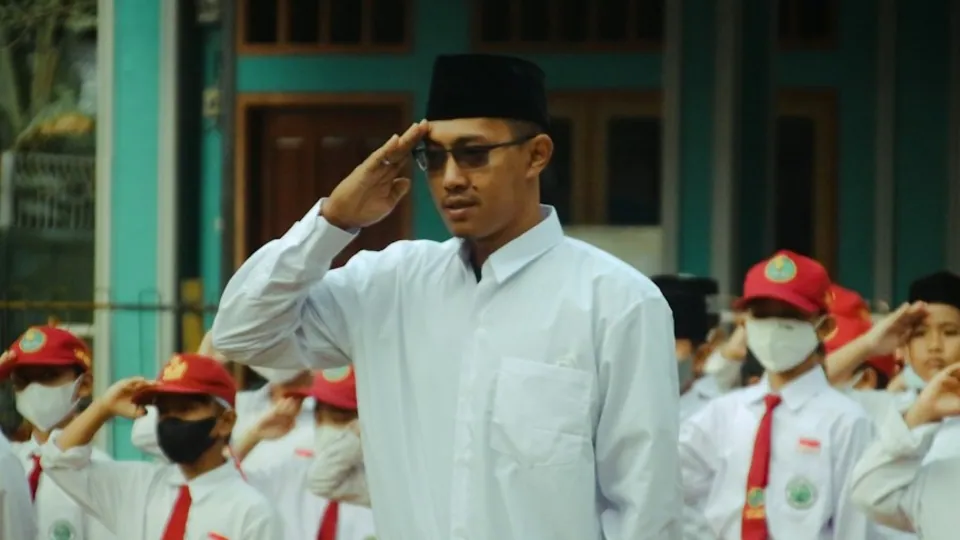
Indonesia’s Vice-President Gibran Rakabuming Raka has resigned amid mounting pressure over his educational qualifications, escalating a Political Crisis that threatens to fracture the alliance between President Prabowo Subianto and former president Joko Widodo. The resignation marks a dramatic development in a dispute that has moved from questions about university admission and electoral eligibility to a wider confrontation involving parliament, the presidency and influential political figures.
Gibran, the 39-year-old son of former president Widodo, submitted his resignation to Prabowo on November 11, 2026, according to his political aide Budi Arie Setiadi. He subsequently submitted his resignation letter to parliament’s upper house on November 12, bringing the constitutional process for filling the vacant vice-presidential position into focus.
The decision followed court rulings that invalidated the educational equivalence certificate Gibran had used to satisfy the academic requirements for the 2024 election. Around 120 lawmakers from eight political parties had also backed a parliamentary initiative challenging his eligibility and potentially opening the way for impeachment.
Although the immediate dispute concerns his educational documents, the political consequences are much broader. Gibran’s departure could weaken the relationship between Prabowo and Widodo, whose support helped bring the current president to power. The breakdown of that partnership could reshape Indonesia’s political balance during the remaining years of Prabowo’s presidency.
Why Indonesia’s Vice-President Gibran Rakabuming Raka Resigned
Gibran’s resignation followed a series of legal challenges concerning the educational qualification he presented when registering as Prabowo’s running mate in 2023. Indonesian election law requires presidential and vice-presidential candidates to have completed senior high school or an equivalent level of education.
Gibran studied abroad and relied on an education equivalency certificate to demonstrate that he met the requirement. The certificate was accepted during the 2024 election process, allowing him to contest the vice-presidential election alongside Prabowo.
However, the validity of the document became the subject of legal proceedings. On October 30, 2026, Indonesia’s Supreme Court accepted an appeal challenging the certificate and annulled the education equivalence document issued for Gibran.
The court found that the available evidence did not establish that Gibran had obtained a foreign diploma or certificate that could serve as the basis for equivalence with an Indonesian senior high school qualification. The ruling also followed a separate Constitutional Court decision that questioned whether his educational documents met the requirements for the 2024 election.
The Supreme Court instructed the Education Ministry to withdraw the equivalency certificate. This created a serious political problem for Gibran because the document had been used to demonstrate that he fulfilled the educational requirement for his candidacy.
Gibran’s resignation came after the legal developments intensified pressure on his position. His political aide confirmed that he had tendered his resignation to Prabowo, while parliamentary sources said the resignation letter would be submitted to the upper house for further action.
120 Lawmakers Backed a Move That Could Have Led to Impeachment
The pressure on Gibran increased sharply on November 11, when approximately 120 lawmakers from eight parliamentary factions supported a proposal challenging his continued eligibility to serve as vice-president.
The initiative used the House of Representatives’ constitutional right to express an opinion, a parliamentary mechanism that can lead to an investigation and potentially an impeachment process. Lawmakers argued that the court rulings over Gibran’s educational documents raised questions about whether he continued to meet the constitutional requirements for office.
Mardani Ali Sera, one of the lawmakers who signed the proposal, argued that Gibran no longer met the requirements for serving as vice-president. The parliamentary initiative gathered support from across the political spectrum, increasing the pressure on the administration to address the dispute.
The Indonesian Democratic Party of Struggle, or PDI-P, played an important role in advancing the move. Its parliamentary faction supported the use of the House’s right to express an opinion, helping bring the number of lawmakers backing the initiative to approximately 120.
Parliament had scheduled a plenary session to advance the proposal. However, news of Gibran’s resignation changed the immediate political situation, even as lawmakers continued to consider the constitutional implications of the court rulings.
The impeachment initiative and resignation are separate constitutional developments. The resignation does not automatically establish that parliament’s allegations were proven, while the parliamentary process would have required additional legal and institutional steps before any final removal from office.
How Indonesia’s Vice-Presidential Replacement Process Works
Gibran’s resignation has triggered questions about how Indonesia will fill the vice-presidential position for the remaining period of the current administration. Under the country’s constitutional framework, parliament’s upper house, the People’s Consultative Assembly, has a role in processing the vacancy and electing a replacement.
After receiving the resignation, the upper house must convene to formally address the vacancy. It then communicates with the president, who is expected to submit two candidates for consideration.
The upper house will subsequently choose one of the nominees to serve as vice-president. According to Coordinating Minister for Legal Affairs Yusril Ihza Mahendra, the election process is expected to take place within 60 days under the applicable procedure.
Prabowo will therefore have significant influence over the selection of his next deputy because he is responsible for proposing the two candidates. His choice could also reveal the political direction he intends to take following the deterioration of his relationship with Widodo.
The replacement will serve the remaining portion of the current vice-presidential term, which is scheduled to continue until 2029. The new selection will also take place under renewed scrutiny of the eligibility requirements, including the educational qualifications that became central to Gibran’s departure.
Prabowo and Jokowi’s Political Alliance Begins to Unravel
Gibran’s resignation has exposed the growing distance between Prabowo and his predecessor, Joko Widodo, widely known as Jokowi. The two politicians once represented a powerful electoral partnership, but their relationship has come under increasing strain during Prabowo’s presidency.
Widodo defeated Prabowo in the presidential elections of 2014 and 2019, serving as Indonesia’s president for two consecutive terms. Their political rivalry appeared to end when Prabowo joined Widodo’s administration as defence minister.
After Widodo became constitutionally barred from seeking another term, he backed Prabowo as his preferred successor. Prabowo selected Gibran, Widodo’s eldest son, as his running mate for the 2024 presidential election.
The partnership proved electorally successful. The Prabowo-Gibran ticket won with approximately 58.8 per cent of the vote, benefiting from Widodo’s popularity and the promise of continuity in government.
For many voters, the alliance appeared to offer political stability after years of competition between the two leaders. However, the relationship has become increasingly difficult to maintain as disagreements over policy, political influence and the direction of the administration have emerged.
The vice-presidential controversy has added another source of tension. Gibran’s position was closely associated with his father’s political legacy, while the legal challenges and resignation have placed that legacy under renewed scrutiny.
Wiretapping Scandal Further Damaged Relations Between Prabowo and Jokowi
The dispute over Gibran’s qualifications is unfolding alongside a separate scandal involving alleged illegal surveillance of Prabowo’s telephone communications. The investigation has implicated several senior police officials, including former National Police Chief Listyo Sigit Prabowo, who was subsequently appointed as Prabowo’s chief of staff.
Authorities arrested Listyo on November 3, alleging that he had been involved in an operation that used police surveillance capabilities to monitor the president’s communications. Investigators have also identified other senior officers in connection with the alleged operation.
Listyo had a longstanding relationship with Widodo. Before becoming national police chief, he served as police chief in Solo, the Central Java city where Widodo built his political career as mayor. After Widodo became president, Listyo rose through the police hierarchy and eventually became one of the country’s most influential law enforcement officials.
The connection has intensified suspicions among people close to Prabowo, although authorities have not established that Widodo ordered or knew about the alleged surveillance. The former president has not been named as a suspect in the investigation.
The case has nevertheless deepened the political divide because it involves an official closely associated with the previous administration and allegations that the current president was illegally monitored.
The wiretapping investigation and Gibran’s educational dispute are separate cases. However, their simultaneous development has created a difficult political environment for Prabowo and increased questions about the influence of his predecessor’s political network.
Rivalries Between Indonesia’s Police and Military Add to Security Concerns
The deterioration in relations between Prabowo and Widodo has also raised concerns about the country’s security institutions. Indonesia’s police and military have historically maintained separate organisational structures, but their relationship has been shaped by periods of rivalry and competition over authority.
The police were separated from the military in 1999 during Indonesia’s post-authoritarian reforms. Since then, the two institutions have developed distinct responsibilities, although tensions have periodically emerged over their roles and influence.
Prabowo is a former army special-forces commander and has longstanding connections within the military. Widodo, by contrast, relied heavily on the police during his presidency, with Listyo among the senior officials who became closely associated with his administration.
This institutional background has made the wiretapping scandal particularly sensitive. If political disagreements deepen, concerns could emerge over whether officials within different security organisations might become aligned with competing political camps.
On the evening of Listyo’s arrest, Prabowo ordered approximately 21,000 troops to deploy urgently to Jakarta, according to the supplied account. The deployment highlighted the administration’s concern about the security environment as the investigation unfolded.
There is no confirmed evidence that the police and military are preparing for a direct confrontation. Nevertheless, the possibility that political disputes could affect relations between powerful security institutions is an important concern for Indonesia’s stability.
Economic Uncertainty Adds Pressure on Prabowo’s Government
The political crisis is developing at a difficult time for Indonesia’s economy. Prabowo’s administration has faced criticism over its economic policies, fiscal priorities and the implementation of major government programmes.
His populist policy agenda, including the free school meals programme, has attracted public attention and scrutiny over its costs and implementation. Questions about government spending and fiscal management have also contributed to uncertainty among investors.
Investor sentiment towards Indonesia has weakened amid concerns about the government’s broader policy direction and its ability to manage public finances. Scrutiny of the country’s economic outlook has also increased, including concerns about possible stock-market classification risks raised by global index provider MSCI.
Political instability can complicate economic decision-making because investors generally look for predictable policies, institutional stability and clear government priorities. A prolonged dispute between the president and a former leader who retains considerable political influence could make the outlook more difficult to assess.
Gibran’s resignation does not automatically mean that Indonesia’s economic policies will change. However, the political consequences could influence the administration’s priorities, its parliamentary relationships and the way it manages competing interests within its governing coalition.
Why Gibran’s Rise to Power Was Controversial
Gibran’s political journey had attracted controversy even before he became vice-president. One of the central disputes concerned the minimum age requirement for presidential and vice-presidential candidates.
When candidate registration opened in 2023, Gibran was 36 years old, below the standard minimum age of 40. A Constitutional Court ruling on October 16, 2023, however, created an exception for candidates younger than 40 who had previously held an elected regional leadership position.
Gibran had been elected mayor of Surakarta in 2020 and therefore qualified under the exception. The ruling cleared the way for Prabowo to select him as his running mate.
The decision attracted criticism because the Constitutional Court was led at the time by Anwar Usman, who was related to Widodo through marriage and was Gibran’s uncle. Usman was subsequently removed from his position as chief justice following an ethics ruling concerning his failure to recuse himself from the case.
The controversy over the age requirement was followed by questions about Gibran’s educational qualifications. Although his equivalency certificate was accepted during the 2024 election process, later court proceedings challenged the evidence supporting it.
The latest Supreme Court decision has therefore brought renewed attention to the circumstances surrounding his candidacy. Critics argue that the dispute raises fundamental questions about whether election requirements were applied consistently.
What Gibran’s Resignation Means for Indonesia’s Political Future
Gibran’s departure creates an immediate vacancy in the country’s second-highest constitutional office, but its consequences extend beyond the replacement process. The next vice-president will be selected at a time when Prabowo’s relationship with Widodo is under serious strain.
The president’s two nominees will provide an indication of which political figures he trusts to support his administration during the remaining years of his term. The selection could also influence relationships within the governing coalition and the balance between political groups that previously supported the Prabowo-Widodo partnership.
For Widodo, the resignation of his son represents a significant setback to the political arrangement that helped secure the 2024 election victory. It also raises questions about how much influence the former president will retain over the current administration.
For Prabowo, the challenge will be to manage the transition without allowing the dispute to destabilise government institutions or distract from economic and policy priorities. He must also ensure that the replacement process follows constitutional requirements and does not create further controversy.
The political consequences will depend partly on whether the two leaders attempt to repair their relationship or move towards a more open confrontation. Analysts have warned that the breakdown of their partnership could have long-term effects across Indonesia’s political and security establishment.
What Happens Next After Gibran’s Resignation?
The immediate focus is on the formal processing of Gibran’s resignation and the procedure for selecting a replacement. The upper house must address the vacancy and request two nominations from Prabowo before holding an election within the prescribed period.
The parliamentary impeachment initiative also forms part of the wider constitutional debate. Although Gibran has resigned, lawmakers may continue examining the legal questions surrounding his educational documents and the circumstances under which he became eligible to contest the 2024 election.
The separate wiretapping investigation will continue to influence the political atmosphere. Authorities still need to establish who authorised the alleged surveillance, how it was carried out and whether additional officials were involved. The investigation has not established that Widodo directed the operation.
Indonesia now faces a potentially difficult political transition. What began as a dispute over a vice-president’s educational certificate has become part of a much larger struggle over political influence, institutional accountability and the future of an alliance that helped determine the country’s leadership.
Gibran’s resignation may resolve the immediate question of his continued position, but it does not settle the tensions between Prabowo and Jokowi. The choice of a new vice-president, the outcome of the wiretapping investigation and the response of parliament will help determine whether Indonesia can contain the political fallout or faces a prolonged period of uncertainty.
For breaking news and live news updates, like us on Facebook or follow us on Twitter and Instagram. Read more on Latest World on thefoxdaily.com.






COMMENTS 0