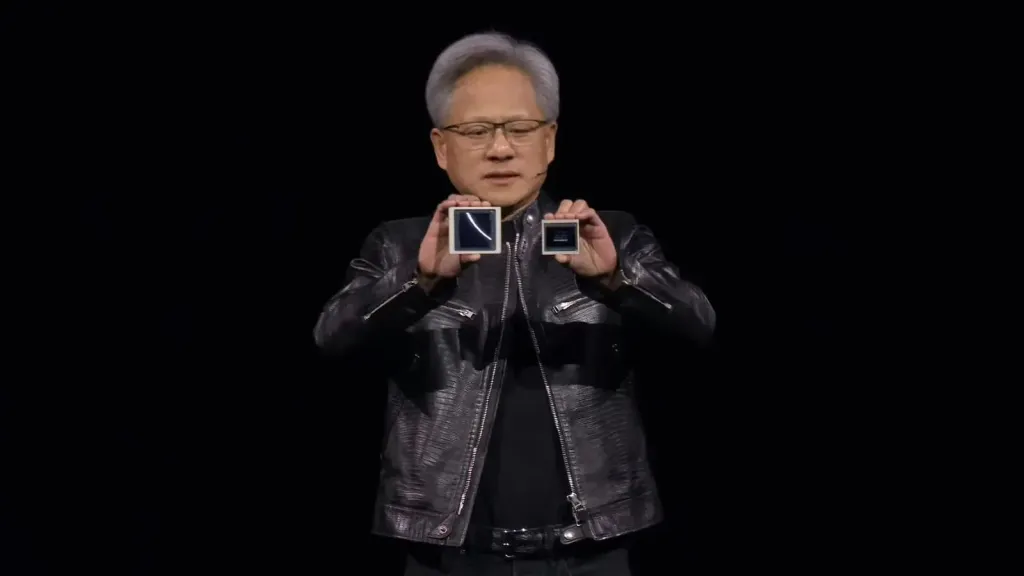
The US government concluded that Nvidia chief executive Jensen Huang did not pose a national security threat, helping pave the way for his reinstatement at the world’s most influential artificial intelligence chipmaker. However, the assessment has raised questions about how American officials reached that conclusion without conducting a formal criminal or counterintelligence investigation into Huang himself.
According to reporting by Reuters, Attorney General Todd Blanche relied on evidence gathered during ongoing investigations into two Nvidia customers, Super Micro Computer and Singapore-based Megaspeed International. Both companies have faced scrutiny over suspected efforts to divert advanced semiconductor technology to China.
The Justice Department reportedly found no evidence that Huang had knowingly helped transfer sensitive chip technology to China or acted as an agent of the Chinese government. But the absence of a direct investigation into the Nvidia chief executive has become a central point of controversy, particularly because US intelligence agencies had gathered information about Alice Huang, a former Megaspeed executive whose alleged connections to Chinese intelligence triggered national security concerns.
President Donald Trump and Vice President JD Vance received Blanche’s assessment and communicated the administration’s position to Nvidia’s board. The board subsequently reinstated Huang as president and CEO on November 23, reversing its earlier decision to keep him away from the company’s top leadership position.
The episode raises a significant question about the relationship between national security investigations, corporate governance and political intervention: how could the government conclude that a technology executive posed no security risk when it had not directly investigated him?
How Did the US Government Reach Its Assessment on Jensen Huang?
The assessment was not the result of a conventional investigation into Huang’s personal conduct, communications or possible involvement in the alleged transfer of restricted AI chips. Instead, it relied on findings from separate investigations involving companies that had commercial connections to Nvidia.
According to people familiar with the matter cited by Reuters, Blanche concluded that the available evidence did not establish wrongdoing by Huang. He reportedly briefed Trump and Vance that the Justice Department had no evidence showing that the Nvidia CEO had committed a crime or posed a national security threat.
The distinction is important. A government assessment that officials have not found evidence of wrongdoing is not necessarily the same as a formal investigation that has examined every allegation and conclusively ruled out misconduct.
The available reporting indicates that investigators examined suspected chip diversion involving Nvidia customers, while intelligence agencies separately collected information about Alice Huang. They did not open a formal criminal or counterintelligence investigation into Jensen Huang before his return to the CEO position.
1. No Formal DOJ Investigation Into Jensen Huang
The most significant detail in the assessment is that the Justice Department did not formally investigate Jensen Huang before Trump pushed for his reinstatement at Nvidia.
Reuters reported that there was no direct criminal investigation into Huang and no counterintelligence probe examining whether he had knowingly assisted Chinese intelligence or enabled the transfer of sensitive American technology to China.
Counterintelligence investigations and criminal investigations serve different purposes. A criminal investigation generally seeks evidence of potential violations of law and can lead to charges and prosecution. A counterintelligence investigation focuses on identifying, monitoring and neutralising foreign intelligence threats, including attempts to obtain sensitive information or influence important institutions.
In Huang’s case, the absence of both types of direct investigation means that the government’s assessment was based on information gathered elsewhere rather than a comprehensive examination of him as a potential security threat.
That does not establish that Huang committed wrongdoing. It also does not mean that the government formally exonerated him after investigating every allegation. The conclusion was narrower: officials reportedly had no evidence at that point to establish that he had broken the law or presented a national security risk.
2. FBI Provided Defensive Briefings to Nvidia
Although there was no formal investigation into Huang, the Federal Bureau of Investigation reportedly provided Nvidia with at least two defensive briefings about Chinese espionage tactics.
A law enforcement official familiar with the briefings told Reuters that the sessions were intended to inform Nvidia about methods used by foreign intelligence services to target American companies and obtain sensitive information.
However, important details about these briefings remain unclear. It has not been established whether they were routine security engagements provided to major American technology companies or specifically addressed concerns involving Alice Huang and her alleged connections to Chinese intelligence.
It is also unclear whether Jensen Huang personally attended the briefings or received the information directly.
Defensive briefings are not necessarily evidence that a company or its executives are under investigation. US law enforcement and intelligence agencies regularly warn businesses about espionage risks, particularly when they operate in sectors involving sensitive technology, intellectual property and national security.
Such warnings are designed to help companies identify suspicious approaches, protect confidential information and report potential foreign intelligence activity. They can also provide investigators with information if a company subsequently fails to address known risks.
In this case, the existence of the briefings demonstrated that Nvidia had received warnings about Chinese espionage methods. But their precise connection to the allegations surrounding Alice Huang and Jensen Huang remains uncertain.
3. Investigations Into Super Micro Computer and Megaspeed International
The foundation of Blanche’s assessment was the Justice Department’s ongoing investigations into two companies associated with Nvidia’s advanced computing technology: Super Micro Computer and Megaspeed International.
Both companies came under scrutiny over suspected efforts to divert advanced AI chips to China, potentially bypassing US export controls designed to restrict Beijing’s access to powerful computing technology.
The investigations were significant because Nvidia’s advanced graphics processing units (GPUs) are among the most important components used to build large-scale artificial intelligence systems. These chips provide the computing power needed to train sophisticated AI models and operate advanced data centres.
Washington has imposed restrictions on exports of certain advanced semiconductors to China because of concerns that the technology could strengthen China’s military capabilities, surveillance systems and strategic AI development.
Megaspeed International and the Alice Huang connection
Megaspeed International, a Singapore-based computing company, became a focus of US scrutiny after authorities identified suspicious activity involving potential semiconductor diversion.
Alice Huang, a former Megaspeed executive, became central to the controversy after reports alleged that she had connections to a senior Chinese intelligence official. US intelligence agencies reportedly gathered information about her, while investigators examined the company’s suspected role in the movement of advanced Nvidia chips.
The US Commerce and Justice departments issued a joint statement on November 16, 2026, outlining the background of the Megaspeed investigation. According to the statement, the Commerce Department began investigating the company in 2024 over potential export-control violations.
In May 2025, Commerce Department investigators requested records from Nvidia concerning direct or indirect sales to Megaspeed. Nvidia placed Megaspeed on its no-sell list in June 2025.
That same month, investigators from the Commerce Department’s Bureau of Industry and Security, working with Singaporean law enforcement, conducted an on-site end-use check at Megaspeed and interviewed Alice Huang. The Justice Department subsequently took the lead role in the criminal investigation.
These developments established that Megaspeed was the subject of a substantial US enforcement effort. They did not, however, establish that Jensen Huang personally participated in any alleged illegal activity.
Super Micro Computer’s role in the wider investigation
Super Micro Computer, a major server manufacturer that uses advanced computing components, was also under investigation over suspected chip diversion to China.
The company was relevant because advanced Nvidia chips are often integrated into servers and data-centre systems rather than sold only as standalone components. Investigators examining the movement of restricted computing technology therefore had reason to scrutinise the supply chains and customers involved in building and distributing such systems.
The investigations into Super Micro and Megaspeed provided the Justice Department with information about potential export-control violations involving Nvidia technology. According to Reuters, officials relied on these investigations when concluding that they had no evidence Huang had knowingly helped transfer sensitive technology to China.
Importantly, investigations into a company’s customers do not automatically establish the personal conduct of Nvidia’s CEO. The government’s assessment was based on the evidence available from those cases, not a direct investigation into Huang.
4. What Did the US Intelligence Agencies Know About Alice Huang?
The allegations involving Alice Huang added a counterintelligence dimension to the controversy. Reports described her as a former Megaspeed executive who was suspected of having connections to Chinese intelligence.
US intelligence agencies reportedly collected information about Alice Huang, but officials familiar with the matter said they did not have information that justified opening a counterintelligence investigation into Jensen Huang himself.
The alleged relationship between the two became particularly sensitive because of Nvidia’s position in the global semiconductor industry. The company develops advanced chips that are essential to the artificial intelligence sector, making its technology strategically important to the United States and its competition with China.
However, an alleged personal relationship with someone suspected of having intelligence connections does not, by itself, establish that an individual knowingly assisted a foreign government or transferred confidential information.
The allegations also need to be distinguished from confirmed findings. The available information does not establish that Alice Huang was formally proven to be a Chinese intelligence operative, or that Jensen Huang knowingly participated in espionage or illegal chip transfers.
The controversy nevertheless raised questions about whether Nvidia’s leadership and internal controls were sufficiently protected against potential foreign intelligence approaches.
5. Todd Blanche Briefed Trump and JD Vance
Attorney General Todd Blanche reportedly briefed President Trump and Vice President JD Vance on the Justice Department’s assessment of Huang.
According to people familiar with the discussions, Blanche told the administration that the department had no evidence showing that Huang had committed a crime or posed a national security threat. The conclusion was understood to be subject to change if ongoing investigations produced new information.
Trump and Vance then communicated the administration’s position to Nvidia’s board as the company considered whether Huang should return to the leadership position he had left earlier in November.
The intervention was significant because the board had previously decided against immediately reinstating Huang. Its concerns included the national security allegations and the need to assess whether his return would be appropriate for a company operating at the centre of US technology policy.
Trump later said he had spoken directly to the board and helped persuade directors to bring Huang back. He described his intervention as important to the decision.
The sequence of events raised questions about the extent to which the administration’s assessment influenced a private company’s corporate governance decision, particularly while investigations involving Nvidia’s customers remained open.
6. Nvidia Board Reinstated Jensen Huang as CEO
Nvidia announced on November 23, 2026, that its board had unanimously voted to reinstate Jensen Huang as president, CEO and board director, effective immediately.
In its announcement, the company said the board had held discussions and meetings with Huang and was satisfied with his candour and ability to lead Nvidia. It also said it had received input from senior levels of the US government and was confident that his reinstatement did not pose a national security risk.
The company had earlier formed a committee consisting solely of independent directors to examine reports that Huang had been the target of a foreign intelligence effort. The committee retained independent legal counsel, and Nvidia said the investigation would continue after his return.
The board also established a separate National Security and Export Control Committee to oversee trade compliance and related risks. The company said it would engage advisers with national security expertise and search for a chief compliance officer responsible for overseeing compliance.
These steps indicate that the reinstatement did not bring the broader controversy to an end. Nvidia continued to face questions about export-control compliance, the allegations surrounding Alice Huang and the possibility that restricted chips had reached China through customers or intermediaries.
7. What Did Todd Blanche and JD Vance Say Publicly?
Blanche described Nvidia as a “good corporate citizen” during a press conference on November 24, while declining to provide a detailed explanation of how the government had reached its assessment of Huang.
His comments came amid questions about the apparent gap between the administration’s confidence in Huang and the absence of a direct investigation into the Nvidia CEO.
Vice President JD Vance also defended the government’s position, saying officials had told the administration that Huang was not under investigation and that there was no evidence he had committed a crime or needed a pardon.
The distinction between being under investigation and being cleared of wrongdoing is central to the controversy. If a person has not been formally investigated, the absence of charges cannot be treated as the result of a completed investigation that disproved every allegation.
The administration’s position was that it had no evidence to justify treating Huang as a national security threat at that time. It did not mean that all investigations involving Nvidia’s customers or the alleged intelligence connections had been concluded.
Why the Decision Has Raised National Security Questions
The controversy matters because Nvidia occupies an unusually important position in the global AI industry. Its advanced GPUs are used by technology companies, research institutions, governments and data-centre operators to develop and operate powerful artificial intelligence systems.
Access to these chips has become a major part of the strategic competition between Washington and Beijing. US export controls are intended to prevent certain advanced computing capabilities from reaching Chinese entities that could use them for military or other sensitive purposes.
Any suspected diversion of restricted chips therefore raises questions about supply-chain monitoring, corporate oversight and the ability of enforcement agencies to identify indirect transfers.
The Huang case adds another layer: whether personal relationships involving senior executives can create vulnerabilities that foreign intelligence services might exploit. Even without evidence of criminal conduct, companies operating in sensitive sectors are expected to take potential espionage risks seriously.
Critics of the administration’s approach may argue that a direct counterintelligence assessment should have been completed before the government offered assurances to Nvidia’s board. Others may point out that investigators should not treat an executive as a security threat without evidence simply because of an alleged personal relationship.
The central issue is whether the available investigations provided a sufficiently strong basis for the government’s conclusion, particularly while important questions remained unresolved.
Was Jensen Huang Completely Cleared of All Allegations?
No. The available reporting does not establish that Huang was formally cleared through a completed investigation into his personal conduct or possible counterintelligence exposure.
The Justice Department reportedly did not open a formal investigation into him before his reinstatement. Its assessment relied on information from investigations involving Super Micro Computer and Megaspeed International, which did not produce evidence that Huang had knowingly helped transfer sensitive technology to China.
Nvidia’s independent board investigation into reports of a foreign intelligence effort was also continuing after his return. Government investigations into suspected chip diversion involving Megaspeed and other companies remained active.
Huang’s reinstatement therefore represents a corporate decision supported by assurances from the Trump administration, rather than a final legal determination resolving every allegation surrounding him or Nvidia’s business relationships.
What Happens Next for Nvidia and the US Chip Investigation?
The continuing investigations into Megaspeed and suspected semiconductor diversion remain important for determining whether restricted Nvidia technology reached unauthorised users in China. The outcome could have implications for export-control enforcement, technology supply chains and the responsibilities of companies selling advanced computing systems.
Nvidia has said it will continue cooperating with government investigations and inquiries. Its newly established national security and export-control oversight arrangements are intended to strengthen compliance and provide the board with greater supervision of sensitive business risks.
Huang’s return also does not remove the political scrutiny surrounding the decision. Members of Congress have raised questions about the administration’s handling of the allegations and the role played by the Justice Department in providing assurances to the company’s board.
Ultimately, the key unanswered questions concern what investigators can establish about the suspected chip diversion, whether Alice Huang had any intelligence connections, and whether Nvidia’s internal controls adequately protected sensitive technology.
For now, the US government’s position is that it has no evidence Jensen Huang committed a crime or poses a national security threat. But because that assessment was reached without a direct formal investigation into him, it remains a narrower conclusion than a comprehensive clearance. The distinction will continue to matter as the investigations and Nvidia’s internal review move forward.
For breaking news and live news updates, like us on Facebook or follow us on Twitter and Instagram. Read more on Latest World on thefoxdaily.com.



COMMENTS 0