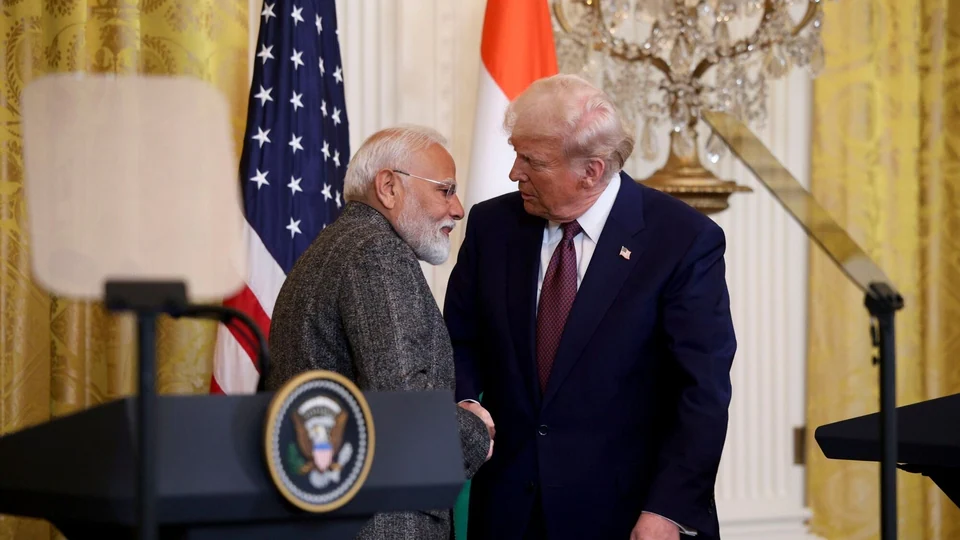
India’s trade relationship with the United States has faced repeated tariff changes since President Donald Trump announced his global “Liberation Day” measures on April 2, 2025. What began with a 26% reciprocal tariff on Indian goods escalated into a combined 50% rate after Washington imposed an additional penalty linked to India’s purchases of Russian oil.
The situation changed again in February 2026, when New Delhi and Washington announced a framework for an interim trade agreement. The US agreed to reduce its reciprocal tariff on India from 25% to 18% and remove the additional 25% penalty linked to Russian oil purchases. A subsequent US Supreme Court ruling invalidated the administration’s use of emergency powers to impose broad tariffs, prompting Washington to introduce a temporary global duty under a different legal provision.
In July 2026, the Trump administration turned to Section 301 of the Trade Act of 1974 to impose a separate 10% tariff on Indian goods following an investigation into forced-labour import restrictions. Now, another Section 301 investigation has produced a fresh proposal targeting what Washington describes as structural excess capacity in manufacturing.
On November 25, 2026, the Office of the United States Trade Representative (USTR) proposed tariffs of up to 25% on Indian goods under the latest investigation. It also indicated that the proposed rate could be adjusted to 17% if India concludes a reciprocal trade agreement with the United States that addresses the issues raised in the investigation.
The latest proposal does not simply replace every existing tariff. Different duties have been imposed under different legal authorities, and the treatment of existing Section 301 and Section 232 tariffs, along with product-specific exemptions, will determine the final amount payable on individual imports.
US Tariff Timeline: How India’s Rates Changed From 2025 to 2026
April 2, 2025: Trump Announces 26% Liberation Day Tariff on India
On April 2, 2025, Trump announced his “Liberation Day” tariff programme, introducing reciprocal duties on imports from several trading partners. India was assigned a headline tariff rate of 26%, comprising the 10% baseline tariff and a 16-percentage-point reciprocal component.
The administration justified the measure by arguing that trading partners maintained higher barriers against American exports than the United States imposed on their goods. Trump also criticised India’s tariff structure, describing the country as a “maharaja of tariffs” during his announcement.
The 26% figure was the initial announced rate, but it did not remain in place for long. Washington subsequently paused the additional reciprocal component for India and several other trading partners as it pursued negotiations.
April 9, 2025: US Suspends the Additional Reciprocal Tariff for 90 Days
Just days after the Liberation Day announcement, the Trump administration announced a 90-day suspension of the higher reciprocal tariffs for several countries, including India. The suspension was intended to provide time for trade negotiations and discussions over market access.
During this period, the 10% baseline tariff continued to apply to covered imports, while the additional 16-percentage-point reciprocal component was suspended. The pause was initially scheduled to run until July 9, 2025.
For Indian Exporters, the temporary suspension offered some relief from the higher announced rate. However, it did not resolve the underlying trade disagreements or establish a permanent arrangement between the two governments.
July 31, 2025: Trump Announces a 25% Tariff on Indian Goods
As the 90-day suspension period approached its end, Washington announced a revised tariff rate of 25% on Indian goods on July 31, 2025. The measure was scheduled to take effect on August 7.
The new rate replaced the earlier 26% Liberation Day figure for the covered imports. The announcement reflected the administration’s continuing concerns over trade barriers and the lack of a completed agreement with New Delhi.
Although the 25% rate was lower than the original 26% headline figure, the dispute soon escalated further because of a separate disagreement over India’s purchases of Russian crude oil.
August 2025: Additional 25% Penalty Takes Total Tariff to 50%
In August 2025, Trump announced an additional 25% tariff on Indian imports, citing India’s purchases of Russian oil and accusing New Delhi of indirectly supporting Moscow’s war in Ukraine through its energy trade.
The additional duty was separate from the earlier reciprocal tariff. With the 25% reciprocal measure and the additional 25% penalty combined, the headline tariff burden on covered Indian goods rose to 50%.
The measure represented a major escalation in the trade dispute because it linked India’s energy-import decisions to the cost of accessing the American market. Indian officials defended the country’s energy policy, arguing that decisions on crude oil purchases were guided by national interests, energy security and market conditions.
The higher tariff rate placed additional pressure on Indian exporters, particularly businesses competing with suppliers from countries facing lower US duties. It also complicated efforts to conclude a bilateral trade agreement that could provide greater certainty to businesses on both sides.
February 7-9, 2026: India and US Announce Trade Framework and Reduce Tariffs
A major shift came in February 2026, when India and the United States announced a framework for an interim agreement on reciprocal and mutually beneficial trade.
The joint statement issued on February 7 outlined the broad direction of negotiations, including improved market access, tariff reductions and cooperation on trade and supply chains. The framework was part of wider negotiations towards a bilateral trade agreement launched in February 2025.
Under the arrangement announced by the White House, the US agreed to reduce the reciprocal tariff on Indian goods from 25% to 18%. Washington also agreed to remove the additional 25% duty imposed over India’s Russian oil purchases, following India’s stated commitment to stop directly or indirectly importing Russian Federation oil.
The removal of the additional penalty took effect for covered goods entering the United States from February 7, 2026. The White House described the changes as part of a broader effort to address trade imbalances and strengthen economic and strategic cooperation.
The February framework was a significant improvement compared with the 50% headline rate that had applied after the August 2025 escalation. However, it was an interim framework rather than the completion of every element of a final bilateral trade agreement.
February 20, 2026: US Supreme Court Invalidates Trump’s IEEPA Tariffs
Another major change followed on February 20, 2026, when the US Supreme Court ruled that the International Emergency Economic Powers Act (IEEPA) did not authorise the president to impose tariffs in the manner used by the Trump administration.
The ruling invalidated the legal basis for the broad emergency-power tariffs introduced through the Liberation Day programme and the separate IEEPA-based measures, including the additional tariff linked to India’s Russian oil purchases.
The decision did not eliminate every tariff imposed by the United States. Duties introduced under other laws, including Section 232 of the Trade Expansion Act of 1962 and Section 301 of the Trade Act of 1974, operate under separate legal authorities and were not automatically cancelled by the ruling.
For India, the decision meant that the earlier IEEPA-based tariff structure could no longer continue in the same form. Washington subsequently turned to another provision of trade law to maintain a temporary tariff on imports from multiple countries.
February 2026: Trump Introduces a Temporary 10% Global Tariff Under Section 122
Following the Supreme Court ruling, the Trump administration announced a fresh 10% tariff on imports from countries around the world under Section 122 of the Trade Act of 1974.
Section 122 allows the US president to impose temporary import surcharges of up to 15% to address certain international balance-of-payments problems. Such measures are limited to a maximum period of 150 days unless Congress authorises an extension.
The temporary 10% duty provided the administration with an alternative legal mechanism after the Supreme Court invalidated its use of IEEPA for the earlier broad tariffs.
However, the Section 122 measure was not a permanent replacement for the previous tariff framework. Its statutory time limit meant Washington would need to allow it to expire, seek congressional approval for an extension or rely on other trade authorities.
June-July 2026: US Opens a Separate Section 301 Investigation Into Forced-Labour Imports
Washington subsequently pursued another route through Section 301 of the Trade Act of 1974. In June 2026, the USTR advanced investigations into whether several economies, including India, had failed to impose and effectively enforce prohibitions on imports of goods produced using forced labour.
The investigation examined the trade policies and enforcement systems of multiple economies. The US argued that insufficient restrictions on forced-labour goods could distort competition and disadvantage American producers that were required to comply with domestic import prohibitions.
On July 23, 2026, the USTR announced its final action under the investigation, imposing a 10% Section 301 tariff on covered Indian products, subject to specified exemptions. India was placed in a lower tariff category after it adopted a forced-labour import prohibition during the investigation.
The final 10% rate was lower than the 12.5% rate initially proposed for India in June. The additional duty became applicable from July 24, 2026, under the relevant implementation arrangements.
This was a separate Section 301 action and should not be confused with the later investigation into structural excess capacity. The two proceedings examined different issues: one focused on forced-labour import restrictions, while the other addressed manufacturing capacity and industrial policies.
July 24, 2026: Temporary Section 122 Tariff Reaches Its Expiry
The temporary global tariff introduced under Section 122 was subject to a 150-day statutory limit. The measure reached its scheduled expiry on July 24, 2026, without a congressional extension.
Its expiration did not mean that all US Tariffs on Indian goods disappeared. The separate Section 301 duty arising from the forced-labour investigation remained applicable to covered products, while other duties imposed under different trade laws continued according to their respective rules.
This distinction is central to understanding the latest tariff dispute. A country can face several different tariff measures at the same time, but their application depends on the legal authority, product coverage, exemptions and rules governing whether duties are cumulative or adjusted against one another.
October 2026: Trump Waives Additional Russia-Related Tariff Measures
In October 2026, the Trump administration waived additional Russia-related tariff measures after determining that their continued application was not required in the national interest of the United States.
The move followed the earlier removal of the additional 25% penalty imposed on India over Russian oil purchases. It reflected the administration’s changing approach to using tariffs as an instrument of pressure in its dealings with countries maintaining economic relations with Moscow.
The October decision did not settle the wider trade dispute between India and the United States. Negotiations over market access, reciprocal trade commitments and other policy differences remained ongoing.
November 25, 2026: USTR Proposes Up to 25% Tariff Under New Section 301 Investigation
The latest development came on November 25, 2026, when USTR announced findings in investigations involving 14 economies over what it described as structural excess capacity and production in manufacturing sectors.
India was among the economies covered by the investigation, alongside China, the European Union, Japan, South Korea, Taiwan, Singapore, Malaysia, Indonesia, Thailand, Vietnam, Bangladesh and others.
The USTR determined that India’s policies and practices relating to manufacturing capacity and production were unreasonable and burdened or restricted US commerce. It proposed tariffs of up to 25% on Indian goods, net of existing Section 301 tariffs, with exemptions for certain products.
However, the proposal also included a possible adjustment to 17% if India concludes an Agreement on Reciprocal Trade with the United States that addresses the findings of the investigation.
The proposal is not the same as a tariff already imposed and collected at the 25% rate. The USTR has invited public comments and outlined a process for further consideration before final action. The November announcement therefore opens another stage of the dispute rather than establishing an immediately applicable new duty at the proposed maximum rate.
Why the US Is Proposing a New 25% Tariff on India
The latest Section 301 investigation focuses on what Washington calls structural excess capacity in manufacturing. The USTR defines this as production capacity that persistently exceeds levels expected under market-oriented conditions and is created, sustained or influenced by government policies or interventions.
In its findings on India, the USTR identified several areas of concern, including industrial plans to expand manufacturing, labour protections, financial policies, market-access barriers and India’s handling of excess capacity linked to imports and foreign investment from non-market economies.
Washington argues that these practices reduce commercial opportunities for American producers, affect US manufacturing output and investment, and create economic-security risks through dependence on inputs from non-market economies.
The USTR specifically highlighted sectors such as pharmaceuticals, medical devices, steel, solar products and information and communications technology. These industries are important to global supply chains and feature prominently in US efforts to strengthen domestic manufacturing.
These findings represent the US government’s assessment under its trade law. They should not be treated as an independently established conclusion that India has excess capacity across its entire manufacturing economy.
India Rejects the Excess-Capacity Characterisation
India has said it is examining the latest USTR notice and reiterated that the country does not have structural excess capacity in any sector.
New Delhi has also maintained that trade-related concerns should be addressed through ongoing bilateral negotiations rather than measures that could complicate market access for Indian exporters.
India’s position is important because the investigation covers a wide range of manufacturing and industrial policies. The government has argued that its manufacturing expansion is intended to strengthen domestic production, attract investment, create employment and improve India’s position in global supply chains.
The disagreement therefore involves more than the numerical tariff rate. It also concerns how the two governments assess industrial policy, government support, market access and the role of foreign investment in manufacturing.
Why the Proposed Tariff Could Fall From 25% to 17%
The USTR’s proposal includes a potential reduction in the additional tariff rate to 17% if India reaches an Agreement on Reciprocal Trade with the United States that responds to the findings of the investigation.
This creates a direct connection between the latest Section 301 action and the broader trade negotiations. Washington is effectively signalling that a negotiated arrangement could result in a lower proposed tariff burden for Indian goods.
The lower rate is not automatic merely because India and the US continue to negotiate. The proposed adjustment is linked to the conclusion of an agreement that addresses the issues identified by the USTR.
The two countries had announced an interim trade framework in February 2026, but the final agreement remained incomplete as of November 25. Officials from both sides have continued to discuss outstanding issues, including market access and reciprocal commitments.
The difference between the proposed 25% and 17% rates could matter for Indian exporters competing in the US market. However, the final commercial impact will also depend on product exemptions, existing duties and the treatment of tariffs imposed under other legal authorities.
Will the New 25% Tariff Be Added to the Existing 10% Section 301 Duty?
One of the most important details in the latest proposal is that the proposed 25% rate is described as being applied net of existing Section 301 tariffs. This means the new measure is not simply presented as an additional 25 percentage points on top of the 10% duty imposed under the separate forced-labour investigation.
The USTR has also said that it will consider adjustments involving other existing Section 301 and Section 232 duties. Certain products, including specified steel, aluminium, copper, vehicle, pharmaceutical and semiconductor articles already covered by Section 232 measures, are among the proposed exemptions or exclusions identified in the notice.
Consequently, it would be misleading to describe the latest proposal as an automatic 25% addition to every existing tariff faced by Indian exporters. The final treatment will depend on the product, applicable exemptions and the adjustments adopted in the final action.
For businesses, this makes product-level classification particularly important. Two Indian exporters could face different effective tariff burdens depending on the goods they ship, the existing duties applicable to those products and whether they qualify for an exemption.
What the Tariff Changes Mean for Indian Exporters
The repeated changes in US tariff policy have created uncertainty for Indian businesses that depend on the American market. Exporters must account for duties when negotiating prices, preparing supply contracts and deciding whether to expand production for US customers.
Labour-intensive industries and manufacturers competing directly with suppliers from other countries could be particularly sensitive to changes in import costs. Higher duties can make Indian products more expensive for American buyers, potentially affecting demand and profit margins.
Pharmaceuticals, steel, solar products, medical devices and information technology-related goods also feature prominently in the latest US findings. However, the proposed exemptions mean that the impact will not be identical across all these sectors.
Businesses may respond by reviewing pricing arrangements, diversifying export destinations, sourcing inputs differently or seeking greater clarity from US importers about the duties applicable to specific products.
The uncertainty also affects investment decisions. Companies planning new manufacturing capacity for the US market may delay commitments if they cannot predict the tariff treatment that will apply when their products enter the country.
What Happens Next in the India-US Tariff Dispute?
The November 25 announcement begins a further consultation and decision-making process under Section 301. The USTR has invited interested parties to submit written comments and requests to participate in public hearings. The deadline for submissions and requests to appear is January 5, 2027, while hearings are scheduled to begin on January 25, 2027.
After considering the submissions and other relevant information, the USTR will determine the final action and the applicable tariff arrangements. The proposed 25% rate and possible 17% adjustment should therefore be treated as proposals until the process is completed and the final measures are announced.
At the same time, India and the United States must decide whether they can conclude their reciprocal trade agreement. A deal could provide a route to the lower proposed rate, but negotiations still need to address the outstanding issues identified by both sides.
The latest development shows how the US-India tariff dispute has evolved from the broad reciprocal measures announced in April 2025 into a series of separate actions under different trade laws. The removal of the Russia-related penalty and the Supreme Court’s ruling changed the earlier tariff structure, but new Section 301 investigations have introduced additional trade conditions.
For Indian exporters, the immediate concern is no longer just whether the headline tariff is 17%, 25% or 50%. The decisive factors will be the final Section 301 decision, the outcome of trade negotiations, product-specific exemptions and the way different US duties interact.
Until Washington completes the latest process and New Delhi and Washington finalise their trade agreement, the proposed 17%-25% range remains the central new uncertainty in the India-US trade relationship.
For breaking news and live news updates, like us on Facebook or follow us on Twitter and Instagram. Read more on Latest India on thefoxdaily.com.




COMMENTS 0