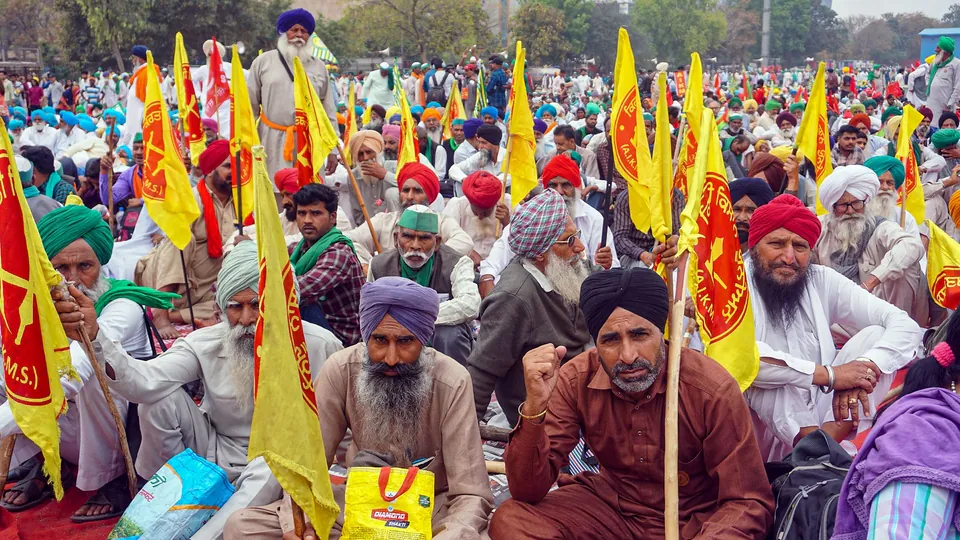
The Delhi Police has said that no permission has been granted for a proposed protest march by the Samyukta Kisan Morcha (SKM) and other activists to Jantar Mantar on Thursday, November 26, after prohibitory orders were imposed in the New Delhi district. The farmers’ organisation had planned the demonstration as part of a nationwide mobilisation marking six years since the farmers’ movement began in November 2020.
In a public notice, the police said it had received information about the proposed march from Kali Bari to Jantar Mantar but had not received an application seeking approval for the event. It clarified that no permission had therefore been granted.
The police also stated that restrictions under Section 163 of the Bharatiya Nagarik Suraksha Sanhita (BNSS), 2023, were in force across the New Delhi district. The order prohibits unauthorised gatherings, processions, demonstrations, speeches, sloganeering and dharnas. Authorities have urged the public and potential participants to follow the restrictions, warning that violations could lead to legal action.
Why Delhi Police Has Restricted the Proposed SKM March
The police notice comes ahead of the protest programme announced by the SKM for November 26. The organisation had planned a march in the national capital, with participants expected to assemble at Kali Bari on Mandir Marg before proceeding towards Jantar Mantar.
Jantar Mantar is a designated location for several demonstrations in Delhi, but protests and public gatherings remain subject to applicable permission requirements and security restrictions. The police have made clear that the proposed SKM march does not have official approval and that the existing prohibitory orders must be followed.
The distinction in the police statement is important. Authorities have said that they received information about the proposed event but no application seeking permission. The notice does not describe the situation as an application having been formally rejected. Instead, it says that no application was received and no permission was granted.
With Section 163 orders in force, an unauthorised procession or public gathering in the restricted district could invite preventive action. The police have not, in the notice, announced a specific alternative route or an approved location where the organisers could hold the demonstration.
What Section 163 of BNSS Means for Protesters
Section 163 of the Bharatiya Nagarik Suraksha Sanhita provides powers to executive magistrates to issue urgent orders in situations where immediate prevention or swift action is considered necessary to address potential danger, obstruction, disturbance of public tranquillity or threats to public safety.
Such orders can restrict particular activities, including the assembly of people, when authorities consider restrictions necessary to prevent a disturbance or other specified risks. The provision replaced Section 144 of the Code of Criminal Procedure, which was widely used by authorities to impose prohibitory orders before the BNSS came into force.
In this case, Delhi Police has said that the restrictions cover unauthorised gatherings, processions, demonstrations, speeches, sloganeering and dharnas in the New Delhi district. This means the proposed march cannot proceed as an authorised public demonstration under the existing arrangements.
Section 163 is a preventive legal provision; the imposition of restrictions does not by itself establish that a particular protest or its participants have committed an offence. However, people who violate a valid order may face legal consequences under the applicable law.
The police have appealed to residents and prospective demonstrators to cooperate with the authorities. The notice also warns that violations will invite legal action, although it does not specify the number of personnel to be deployed or the precise enforcement arrangements for the day.
Why SKM Planned the November 26 Demonstration
The proposed march forms part of a wider nationwide protest programme announced by the Samyukta Kisan Morcha. The date carries significance for the farmers’ movement because November 26, 2020, marked the beginning of the mobilisation that eventually brought large numbers of farmers to protest sites around Delhi.
The year-long agitation was primarily directed against three agricultural laws enacted by Parliament in 2020. Farmers’ organisations argued that the legislation could weaken the existing agricultural marketing system and leave cultivators more exposed to large private buyers. A major demand was a legal guarantee for minimum support prices (MSP) for agricultural produce.
The protests involved demonstrations at major entry points to the national capital, including Singhu, Tikri and Ghazipur. After months of agitation, the Union government announced that it would repeal the three farm laws. Parliament subsequently passed the repeal legislation in November 2021, and the farmers’ organisations called off the agitation after receiving written assurances from the Centre on December 9, 2021.
However, several demands raised during the movement have remained part of farmers’ organisations’ campaigns. The SKM has continued to press for action on MSP, agricultural costs, farmers’ debt and social security, among other issues.
The November 26 programme is intended to bring these demands back into public discussion through demonstrations in different parts of the country. The organisation has also planned to submit a charter of demands to President Droupadi Murmu through district collectors.
SKM’s Nationwide Protest Plan and Key Demands
According to the programme announced by the SKM, farmers were expected to hold demonstrations at around 100 locations across India on November 26. The organisation has described the mobilisation as an effort to draw attention to what it considers unresolved commitments made by the Centre following the withdrawal of the 2020-21 agitation.
The charter of demands includes several economic and policy-related issues affecting farmers and agricultural workers. Among the major demands are:
- Legal guarantee for MSP: The SKM has continued to demand a legally enforceable minimum support price framework for agricultural produce.
- Implementation of the December 2021 assurances: The organisation wants the Union government to fulfil the written commitments made to farmers before the previous agitation was withdrawn.
- Comprehensive loan waiver: The farmers’ body has called for a broad loan waiver to address the debt burden faced by cultivators.
- Compensation for families affected by suicides: It has demanded compensation of Rs 25 lakh for the families of farmers and agricultural workers who die by suicide.
- Changes to crop insurance: The SKM has proposed replacing the Pradhan Mantri Fasal Bima Yojana with a public-sector Crop and Livestock Insurance Corporation.
The organisation has also raised demands related to rural employment, minimum wages, pensions and social security. These proposals reflect a broader effort to connect agricultural concerns with the economic conditions of rural workers and households.
These are demands put forward by the farmers’ organisation. Their inclusion in the protest charter does not mean that the government has accepted or implemented them.
What Happened After the 2020 Farmers’ Movement?
The November 26 anniversary provides the political and organisational context for the latest mobilisation. The 2020 farmers’ movement became one of the largest and longest-running agricultural protests in recent Indian history, bringing together several farmers’ unions and drawing national attention to agricultural policy.
The three laws at the centre of the agitation were the Farmers’ Produce Trade and Commerce (Promotion and Facilitation) Act, the Farmers (Empowerment and Protection) Agreement on Price Assurance and Farm Services Act, and the Essential Commodities (Amendment) Act. The government argued that the reforms would expand market opportunities and give farmers additional choices in selling their produce.
Farmers’ organisations, however, raised concerns about the potential impact on regulated agricultural markets and the future of the MSP system. They also sought stronger legal protection against what they viewed as unequal bargaining power between farmers and private businesses.
Following the repeal of the laws, the demand for a legal MSP guarantee remained a central point of disagreement between farmers’ organisations and the government. The SKM has repeatedly argued that the assurances given in December 2021 should be translated into concrete policy action.
The latest protest programme is therefore not limited to commemorating the earlier agitation. It is also intended to renew pressure on the government over issues that the organisation says remain unresolved.
Delhi March Faces Restrictions as Nationwide Mobilisation Continues
The police notice creates a clear obstacle for the SKM’s proposed demonstration in central Delhi. While the organisation announced a march towards Jantar Mantar, the authorities have stated that no permission has been granted and that unauthorised processions are prohibited under the current orders.
The wider protest programme, however, is not limited to the national capital. Demonstrations have been planned at district-level locations across the country, with local organisers expected to raise the organisation’s demands through their respective programmes.
Farmers from Haryana were also expected to assemble in Bahadurgarh and proceed towards the Tikri border as part of the announced mobilisation. The Delhi Police notice specifically addresses the proposed march in the New Delhi district and should not be interpreted as a nationwide prohibition on every SKM programme.
For the authorities, the immediate issue is enforcing the prohibitory orders and preventing unauthorised gatherings in a sensitive part of the capital. For the farmers’ organisation, the anniversary mobilisation is an opportunity to renew attention on agricultural policy commitments and demands that have continued since the earlier movement.
What Happens Next?
The immediate question is whether the proposed march from Kali Bari to Jantar Mantar will take place despite the police warning. As of the public notice, Delhi Police had not granted permission and had urged potential participants to comply with Section 163 restrictions.
The police have warned that unauthorised gatherings, demonstrations and processions could lead to legal action. Any change in the arrangements would depend on subsequent decisions by the authorities and the organisers.
The broader significance of the November 26 programme will depend on the participation at district-level demonstrations and the response to the charter of demands submitted through local administrative channels. The SKM’s campaign also highlights the continuing debate over MSP, farm debt, crop insurance and the implementation of assurances made after the 2020-21 farmers’ agitation.
For now, the Delhi Police position is clear: the proposed SKM march to Jantar Mantar has not been authorised, and the prohibitory orders in the New Delhi district remain in force.
For breaking news and live news updates, like us on Facebook or follow us on Twitter and Instagram. Read more on Latest India on thefoxdaily.com.






COMMENTS 0