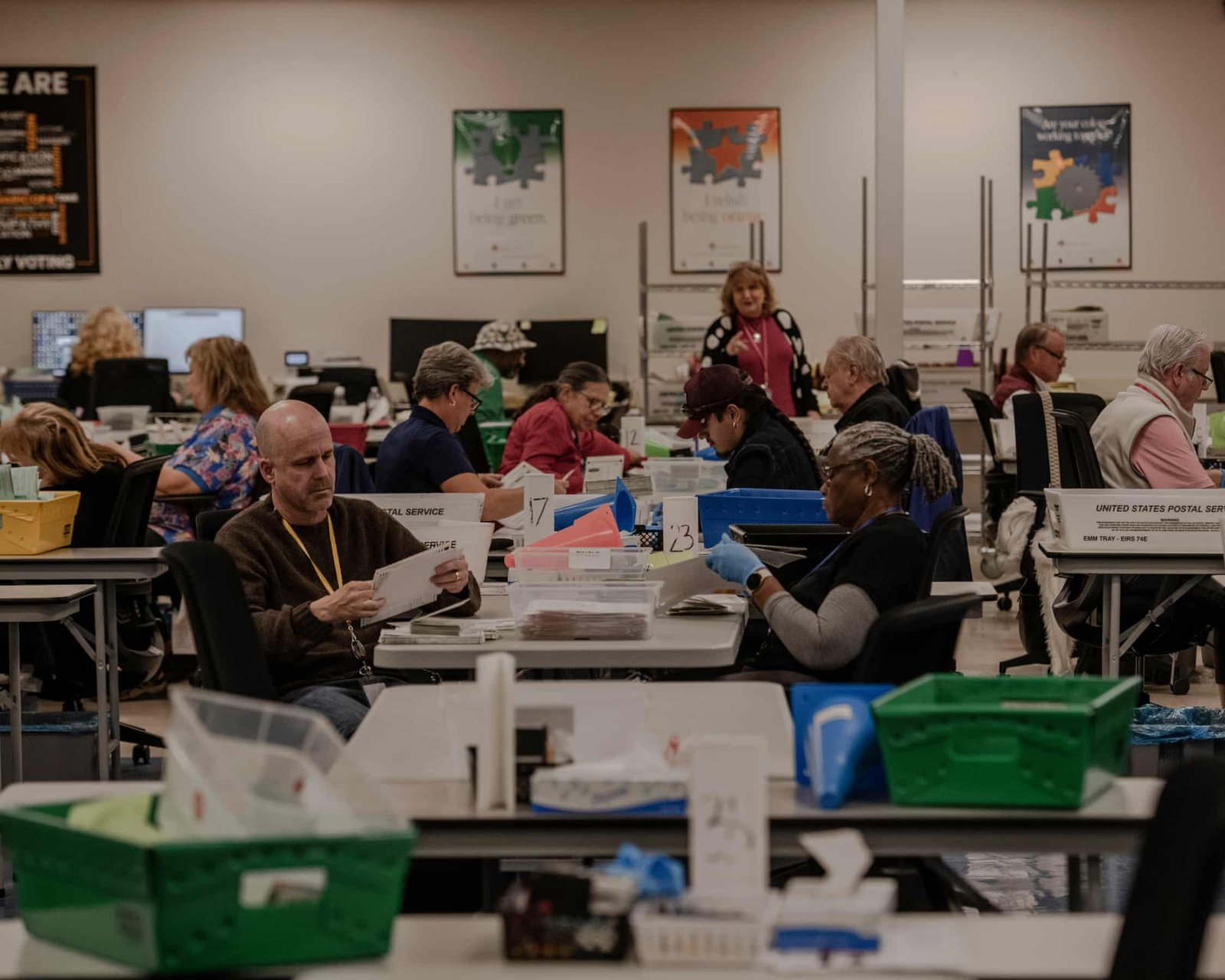
Arizona is once again at the center of America’s election debate as concerns over election integrity, political interference, and public trust resurface ahead of the state’s high-stakes midterm elections. While local officials recently resolved a long-running dispute over election administration in Maricopa County, many election experts believe the agreement has not eliminated the broader challenges facing one of the nation’s most scrutinized electoral battlegrounds.
The renewed attention follows fresh comments by President Donald Trump questioning the reliability of the U.S. election system and urging greater federal oversight of elections. Those remarks have reignited discussions about election security, misinformation, and the delicate balance between federal authority and state control over voting procedures.
Although election officials continue to emphasize that Arizona’s voting systems are designed with multiple safeguards, the political climate surrounding elections remains deeply polarized. As campaigns intensify before November’s contests, officials, voters, and political observers are closely watching whether disputes over election administration will once again dominate public debate.
Why Arizona Remains a National Election Battleground
Arizona has become one of the most politically competitive states in the United States over the past decade. Once considered a reliably Republican state, demographic changes, population growth, and increasingly competitive statewide races have transformed Arizona into a key battleground that often attracts national attention.
Maricopa County, home to Phoenix and the majority of Arizona’s voters, plays an especially significant role. Because of its size and political diversity, outcomes in the county frequently determine statewide election results.
As a result, every administrative decision involving Maricopa County’s election system receives close scrutiny from political parties, advocacy groups, and election observers.
The Dispute That Shaped Arizona’s Election Landscape
For more than a year, disagreements over election responsibilities created uncertainty within Maricopa County’s election administration. The dispute involved differing interpretations of how election duties should be divided between the County Recorder’s Office and the Board of Supervisors.
The disagreement eventually expanded into legal proceedings, public criticism, and debates over election management, prompting concerns that internal conflicts could affect public confidence ahead of major elections.
A recently negotiated settlement clarified the responsibilities of both offices, providing a clearer framework for conducting future elections. While many officials welcomed the agreement, others cautioned that resolving administrative disputes alone does not eliminate broader political challenges.
Who Is Justin Heap?
Justin Heap, elected as Maricopa County Recorder after campaigning on election reform, now oversees several important aspects of voter registration and early voting.
Supporters argue that he was elected to improve election administration and address concerns raised by voters. Critics, however, question some of his previous statements regarding election integrity and worry that partisan disagreements could continue influencing election management.
The debate surrounding his leadership reflects broader national divisions over how elections should be administered and communicated to the public.
Trump’s Latest Election Remarks
President Donald Trump recently renewed his criticism of the U.S. election system, arguing that stronger oversight is needed to ensure fair elections. He has continued expressing concerns about election procedures while calling for additional safeguards involving voter rolls and election administration.
His comments have once again placed Arizona at the center of national political discussions because of the state’s role in previous presidential elections and its continued importance in future contests.
Supporters view the calls for stricter oversight as necessary to strengthen election security, while critics argue that repeated claims without verified evidence risk undermining public confidence in democratic institutions.
Election Officials Push Back
Several Arizona election officials have rejected claims suggesting widespread problems with the state’s election system.
State officials maintain that Arizona’s elections include multiple layers of security, verification procedures, bipartisan oversight, and auditing mechanisms designed to ensure accurate vote counting.
Election administrators also emphasize that allegations should always be evaluated using verifiable evidence rather than political rhetoric.
This difference in perspective continues to shape public debate as campaigns become more competitive.
Timeline of Arizona’s Election Disputes
| Year | Key Development |
|---|---|
| 2020 | Arizona became one of the most closely contested presidential battlegrounds. |
| 2021 | Multiple reviews and audits examined election results following public controversy. |
| 2024 | Justin Heap was elected Maricopa County Recorder. |
| 2025–2026 | Legal disputes emerged over election administration responsibilities. |
| July 2026 | Settlement reached ahead of Arizona’s primary elections. |
Why Maricopa County Matters So Much
Maricopa County accounts for a significant share of Arizona’s registered voters, making it one of the most influential election jurisdictions in the United States.
Because statewide margins are often narrow, efficient election administration in the county is essential for maintaining confidence in statewide results.
Any controversy involving ballot processing, voter registration, or election procedures can quickly attract national attention due to the county’s political importance.
Federal and State Roles in Election Administration
One of the central issues raised by recent political debates concerns the balance between federal oversight and state authority.
Under the U.S. Constitution, states are primarily responsible for administering elections, while federal laws establish certain nationwide standards related to voting rights and election conduct.
This shared responsibility often becomes a point of political disagreement whenever questions arise about election security or administrative procedures.
The current discussion reflects broader debates over how much involvement the federal government should have in state-run election systems.
Why Public Trust Is Critical
Election experts consistently argue that public confidence is one of the most important foundations of democratic systems.
Even when election procedures function effectively, prolonged political disputes and misinformation can reduce trust among voters.
Maintaining confidence therefore requires:
- Transparent election procedures.
- Clear communication from officials.
- Independent oversight.
- Prompt investigation of credible complaints.
- Public access to accurate election information.
These measures help ensure that election outcomes are broadly accepted regardless of political affiliation.
Comparison: Administrative Disputes vs. Election Security
| Administrative Issue | Election Security Issue |
|---|---|
| Division of responsibilities between officials. | Protection of ballots and voting systems. |
| Court interpretation of election laws. | Safeguards against fraud or unauthorized access. |
| Operational management. | Integrity of vote counting and certification. |
Understanding this distinction is important because disagreements over administrative authority do not automatically indicate problems with election integrity itself.
Potential Impact on November Elections
Arizona voters will decide several closely contested statewide and congressional races in November, making the state’s election administration especially significant.
Political analysts believe continued public scrutiny of election procedures could influence voter turnout, campaign messaging, and legal preparedness among both major parties.
Election officials are expected to place increased emphasis on transparency, public communication, and operational readiness to reduce confusion during voting and ballot counting.
Expert Insight: The Bigger Challenge Is Public Confidence
Modern election systems rely not only on secure technology and legal safeguards but also on widespread public acceptance of verified results.
Experts note that prolonged political disputes can create uncertainty even when election processes operate according to established laws and procedures. As a result, strengthening civic education, improving transparency, and combating misinformation have become nearly as important as technical election security measures.
This broader challenge extends beyond Arizona and reflects an issue faced by many democracies around the world.
What Happens Next?
Attention now shifts toward Arizona’s upcoming elections, where officials will implement the newly agreed administrative framework while preparing for increased national scrutiny.
Several developments are expected in the coming months:
- Implementation of the new election administration agreement.
- Continued monitoring by election observers.
- Heightened public communication from election officials.
- Potential legal challenges if disputes emerge during voting.
- Increased political focus on election security throughout the campaign season.
Conclusion
Arizona remains one of the most important electoral battlegrounds in the United States, not only because of its competitive races but also because of its central role in the national conversation about election integrity. While the recent settlement in Maricopa County resolves a major administrative dispute, broader political disagreements over election security and public trust continue to shape the state’s political landscape.
As November approaches, the effectiveness of Arizona’s election system will be judged not only by its ability to conduct secure and accurate elections but also by its success in maintaining public confidence during an increasingly polarized political environment. The coming months are likely to influence both Arizona’s future elections and the broader national debate over how democracies protect trust in the electoral process.
For breaking news and live news updates, like us on Facebook or follow us on Twitter and Instagram. Read more on Latest World on thefoxdaily.com.




COMMENTS 0