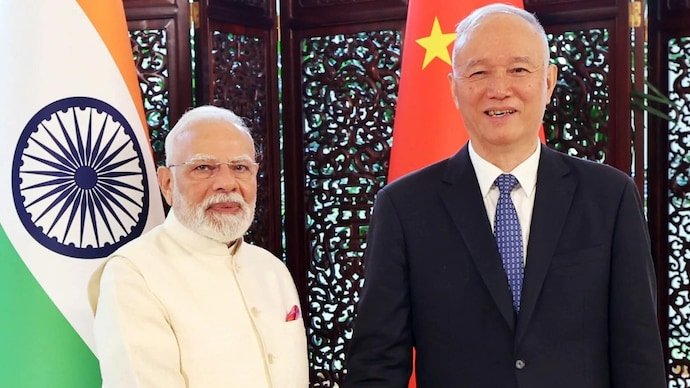
When Chinese President Xi Jinping arrived in New Delhi on September 12 for the 18th BRICS Summit, one of the most closely watched figures in his delegation was not a foreign minister or a business leader. It was Cai Qi, one of the most influential officials in china’s Communist Party and one of Xi’s closest political allies.
China’s Foreign Ministry confirmed that Xi is attending the BRICS summit in New Delhi on September 12 and 13 at the invitation of Prime Minister Narendra Modi. Cai Qi, a member of the Politburo Standing Committee and director of the General Office of the Communist Party of China Central Committee, is accompanying him, along with Foreign Minister Wang Yi.
Cai’s presence is significant because his job is much bigger than the title of a conventional government minister. As director of the party’s General Office, he sits close to the centre of China’s political machinery and manages the institution that coordinates much of the Communist Party leadership’s day-to-day work.
That makes his appearance in India particularly noteworthy at a time when New Delhi and Beijing are attempting to stabilize relations after years of military tension, diplomatic mistrust and economic restrictions.
Who is Cai Qi, Xi Jinping’s powerful aide?
Cai Qi is a veteran Communist Party official who has spent decades moving through China’s provincial and central political structures. He was born in Fujian province in 1955 and joined the Communist Party in 1975.
His political career is closely intertwined with Xi Jinping’s. The two men first worked in the southeastern province of Fujian in the 1980s and later crossed paths again in Zhejiang, where Xi became provincial party secretary. Their overlapping careers gave Cai years of exposure to Xi’s political style and priorities.
Cai’s rise accelerated dramatically in the 2010s. He moved from provincial leadership into Beijing, served in the National Security Commission system and became mayor and then Communist Party chief of Beijing.
In 2017, Cai was elevated to the Politburo after becoming Beijing’s party secretary. Five years later, he joined the seven-member Politburo Standing Committee, the highest level of political authority within the Communist Party.
He is now one of the five senior officials ranked below Xi in the current Standing Committee hierarchy, according to analyses of the Communist Party leadership structure. That makes describing him simply as a “No. 2” somewhat misleading. His influence is substantial, but his formal rank is not second in the party hierarchy.
Why Cai Qi matters so much inside China
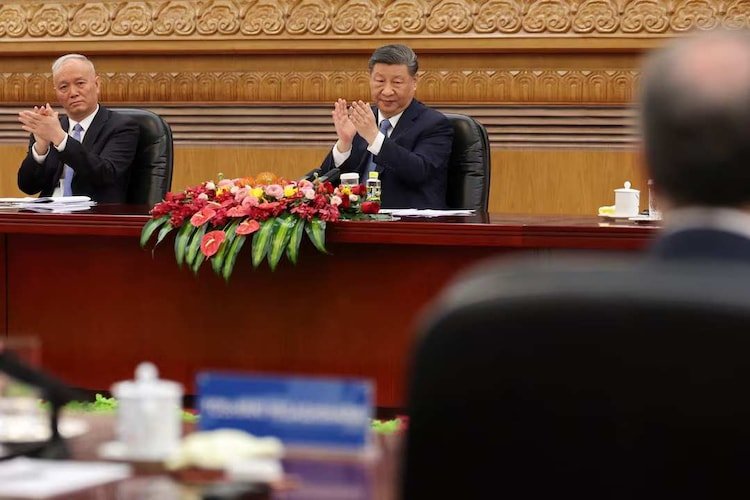
The key to understanding Cai Qi is his role as Xi Jinping’s chief of staff.
The Communist Party’s General Office is a crucial administrative and coordination hub for the party leadership. Cai’s position gives him proximity to Xi’s schedule, internal communications and the implementation of top-level party decisions.
This is very different from the public-facing role played by China’s foreign minister. Wang Yi, for example, is the more recognizable face of Chinese diplomacy. Cai operates closer to the internal machinery of political power.
His responsibilities have also expanded beyond administrative coordination. Cai is a member of the Politburo Standing Committee and the party Secretariat, while his career has included senior work related to national security.
That combination makes him an unusually important figure for understanding how Xi’s leadership operates.
From Beijing party chief to the centre of Xi’s system
Cai’s appointment as Beijing party chief in 2017 was a major turning point.
He had only briefly served as Beijing’s mayor before becoming the city’s top Communist Party official. His rapid promotion attracted attention because senior Chinese political careers generally involve long periods of advancement through different levels of the party-state system.
As Beijing party chief, Cai also became associated with the organization of the 2022 Winter Olympics. His experience running China’s capital gave him an important platform before his elevation to the national leadership.
In 2022, Xi placed Cai on the Politburo Standing Committee. The move confirmed that the official who had spent years working within the party system had become part of the innermost circle of Chinese political power.
Cai Qi’s new Central Party School role adds another layer of influence
Cai’s influence expanded further in 2026 when he was selected to lead the Central Party School, the Communist Party’s elite institution for training officials and developing political and ideological thinking.
The appointment matters because the Central Party School is not simply a university or civil-service training centre. It plays a central role in shaping how Communist Party officials understand policy, ideology and the priorities of the leadership.
Chinese authorities have emphasized the importance of party schools in maintaining ideological discipline and preparing officials. Cai therefore holds an unusual combination of responsibilities: he is close to Xi’s daily political operations while also taking a leading role in the training of future party officials.
That does not mean Cai independently controls China’s political system. Xi remains the central figure in the party, government and military leadership. But Cai’s concentration of responsibilities illustrates how valuable trusted officials can be in Xi’s highly centralized political structure.
How did Cai Qi become one of Xi’s closest allies?
The relationship between Xi and Cai goes back decades.
Both men spent part of their early lives in rural China during the Cultural Revolution era before entering the political system. Cai began his career in Fujian, where he worked in provincial party structures and gradually moved into administrative and political positions.
Xi arrived in Fujian in the mid-1980s. The two subsequently worked in the same provincial political Environment for years. Cai later moved to Zhejiang, where Xi became party secretary in 2002.
Their professional relationship therefore predates Xi’s rise to the national leadership by many years. That history matters because personal familiarity can be especially valuable in China’s opaque political system, where senior leaders depend heavily on trusted officials to implement decisions across a vast bureaucracy.
Brookings research on Cai’s career notes that he worked directly under or alongside Xi during different stages of their careers in Fujian and Zhejiang. His subsequent appointments to key national positions were also closely associated with Xi’s leadership.
‘Uncle Cai’: the very different public image he once had
Cai Qi was not always the low-profile political operator seen today.
Earlier in his career, he developed a relatively unusual online presence for a Chinese official. On Weibo, China’s major social-media platform, he was known by the nickname “Uncle Cai” and interacted with ordinary users.
That image eventually disappeared as his responsibilities moved closer to the Communist Party’s central leadership. He shut down his Weibo account after taking a senior central position and became considerably less visible to the public.
The contrast is revealing. Cai’s career moved from a relatively accessible provincial official to a senior figure operating inside the most sensitive levels of China’s political system.
His later reputation has been associated more with party discipline, policy implementation and political control than with the informal online communication that once made him unusual among Chinese officials.
Why Cai Qi’s presence in India matters
Cai’s appearance alongside Xi in New Delhi should be viewed in the context of the broader India-China thaw.
Relations between the two Asian powers deteriorated sharply after the deadly 2020 border confrontation in the Galwan Valley. The crisis affected not only military ties but also investment, visas, business relations and people-to-people exchanges.
Since then, the two governments have gradually worked to reduce tensions. A 2024 disengagement arrangement helped ease the immediate military confrontation at several points along the disputed frontier, while subsequent high-level contacts created room for a broader diplomatic reset.
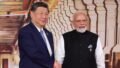
Xi’s current visit is another major step in that process. It is his first visit to India in seven years, and Chinese officials have publicly emphasized communication, cooperation and the need to manage differences.
China has also described the upcoming Xi-Modi meeting as part of continuing high-level engagement between the two countries. Beijing says the two sides should strengthen communication, expand cooperation and properly manage disagreements.
Against that backdrop, bringing Cai to New Delhi carries political weight.
Cai’s presence signals more than a diplomatic photo opportunity
There is an important distinction between sending a senior diplomat and sending an official who works at the centre of Xi’s political administration.
Xi’s delegation includes Wang Yi, whose responsibilities naturally cover Foreign Affairs. Cai’s role is different. His presence provides continuity between Xi’s personal leadership and the Communist Party machinery behind it.
That does not prove that Cai is carrying a specific secret negotiating agenda in India. There is no reliable basis for making such a claim.
But his inclusion demonstrates that Cai remains one of the officials Xi trusts to accompany him during major international engagements. Chinese state media and government releases have repeatedly identified Cai as part of Xi’s entourage during important overseas trips in 2026.
For India, this makes Cai a figure worth watching even if he is not the main public face of the visit.
The India-China relationship is improving, but the difficult issues remain
The diplomatic thaw should not be mistaken for a complete normalization of relations.
The border remains the biggest strategic issue. India and China continue to have unresolved territorial disputes, and military deployments have not simply disappeared because political contacts have increased.
Economic relations are similarly complicated. Trade between the two countries remains substantial, but India continues to maintain security and regulatory concerns around Chinese investment and technology. Recent efforts to improve economic engagement have therefore progressed alongside continued scrutiny.
Reuters reported this month that business ties remain constrained by regulatory barriers, visa problems and mutual suspicion despite the diplomatic improvement.
That creates a difficult balancing act for both governments. Beijing wants stable relations with India while managing its strategic competition with other major powers. New Delhi wants economic opportunities and stable borders without compromising national-security concerns.
Cai Qi’s role offers a window into Xi Jinping’s leadership
The larger significance of Cai Qi is not simply that he is visiting India. It is what his career reveals about the way power operates under Xi Jinping.
Cai combines long-standing personal ties to Xi with senior responsibilities covering the party’s central administrative machinery and political training system. His career illustrates how proximity, trust and experience inside the Communist Party can translate into influence at the highest levels.
His rise also demonstrates the growing importance of officials who can turn Xi’s priorities into decisions implemented across the party-state system.
For observers outside China, that makes Cai an important person to watch whenever Beijing is trying to send a political signal. He may not always make the headlines, but his presence near Xi can reveal something about the leadership’s priorities and the importance attached to a particular engagement.
What Cai Qi’s India visit could mean for the next phase of ties
The immediate focus in New Delhi will be on what Xi and Modi say and whether their discussions produce concrete progress on bilateral issues. The BRICS summit itself also gives both leaders a broader multilateral setting in which to discuss trade, global Governance and cooperation among developing countries.
China has publicly expressed support for India’s role as BRICS chair and said it wants the grouping to deepen practical cooperation. India and China are also set to take the BRICS presidency in succession, creating an additional reason for the two governments to maintain coordination.
Still, the durability of the India-China thaw will depend on issues that go beyond summit optics.
If the two sides can maintain calm along the border, expand regular diplomatic communication and gradually rebuild economic and people-to-people links, the relationship could move toward a more stable competitive coexistence.
If those areas remain unresolved, even highly visible meetings involving Xi, Modi and senior officials such as Cai Qi will have limited ability to overcome the underlying trust deficit.
That is why Cai’s presence in India is worth watching. It is not evidence of a secret deal or a dramatic policy shift. Rather, it is a reminder that Beijing is approaching this phase of engagement through the highest levels of Xi’s political system.
For India, the message is equally clear: the relationship with China is being managed at the top, but its ultimate direction will be determined by what happens after the handshakes, summit photographs and diplomatic statements are over.
For breaking news and live news updates, like us on Facebook or follow us on Twitter and Instagram. Read more on Latest World on thefoxdaily.com.



COMMENTS 0