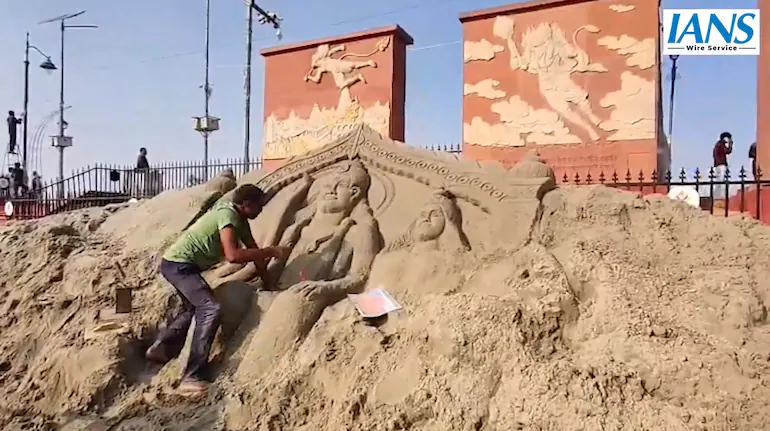
Ayodhya has added another remarkable attraction to its Deepotsav celebrations, with a gigantic sand sculpture depicting Ram Darbar and the Ram Temple earning recognition in the Book of World Records. Created using 220 tonnes of sand from the Saryu River, the artwork measures 58 feet in length and 20 feet in height, making it an extraordinary display of sand art and craftsmanship.
International sand artist Madhurendra Kumar, along with his team, completed the sculpture at Ram Katha Park on the banks of the Saryu River. The installation was prepared as part of Deepotsav 2026, organised by the Uttar Pradesh government with support from the Uttar Pradesh Tourism Department. Beyond its scale, the artwork carries a message of world peace, humanity and brotherhood.
The achievement has brought national attention to Kumar’s work and added an artistic highlight to Ayodhya’s annual festival. The Book of World Records has officially registered the creation and issued a digital certificate. However, recognition from Guinness World Records is still pending, as that process remains underway.
220 Tonnes of Saryu Sand Used to Create the Monumental Ram Darbar
The sculpture was created at Ram Katha Park, a prominent location along the Saryu River in Ayodhya. Measuring 58 feet long and 20 feet high, the installation combines a representation of Ram Darbar with a grand replica of the Ram Temple.
According to the official statement, the artist used 220 tonnes of sand collected from the Saryu River to bring the artwork to life. The scale of the installation required the coordinated efforts of Kumar and his team, who worked continuously over several days to complete the project.
Sand art is a demanding form of sculpture because the material must be shaped and detailed with considerable care. Unlike permanent stone or metal installations, sand structures can be vulnerable to wind, moisture and other environmental conditions. Creating a large composition with recognisable figures and architectural details therefore requires careful planning, technique and sustained attention.
In Ayodhya, the challenge was to bring together two important visual elements: the Ram Darbar and the Ram Temple. The resulting installation became one of the distinctive artistic attractions of Deepotsav 2026.
Seven Days of Continuous Work Behind the Record-Breaking Sculpture
Construction of the sand sculpture began on October 30 and was completed on November 7. The seven-day effort involved Kumar and his supporting team, who worked to transform the large quantity of Saryu sand into the final composition.
The completion date coincided with the main Deepotsav celebrations in Ayodhya. The artwork was ready for visitors and dignitaries attending the festival, allowing it to become part of the wider cultural presentation organised for the occasion.
Kumar described the creation as a special milestone in his artistic career. He said, “This was my first artwork of its kind and the world’s longest sand sculpture depicting Ram Darbar.”
The statement reflects the distinctive nature of the project. Although the artist has created thousands of works using different materials, he described this particular Ram Darbar composition as his first of its kind. Its dimensions and religious-cultural theme have given it a separate place among his artistic achievements.
Vice President, Governor and Chief Minister Visit the Artwork
The sculpture attracted attention during the grand inauguration ceremony of Deepotsav 2026. Vice President C. P. Radhakrishnan, Uttar Pradesh Governor Anandiben Patel and Chief Minister Yogi Adityanath viewed the installation during their visit to the festival venue.
The presence of senior constitutional and state leaders brought additional visibility to the artwork. Their visit also highlighted the role of artistic installations in the larger Deepotsav programme, which combines religious observances, cultural performances and public celebrations.
Chief Minister Yogi Adityanath congratulated Kumar on the achievement and praised the scale of the creation. He said that Ayodhya would never forget such a historic artistic contribution.
Vice President C. P. Radhakrishnan also appreciated the artist’s work, responding with the words, “Well done.”
The recognition from the visiting dignitaries added to the occasion, but the formal record registration was a separate process completed by the Book of World Records.
Book of World Records Issues Certificate Under Record Number IND/2026/001810
The record recognition followed an application process initiated by Kumar. On October 30, the artist submitted information about the sculpture to both the Book of World Records and Guinness World Records.
On November 7, the Book of World Records approved the submission through an email communication. The achievement was registered under record number IND/2026/001810, and a digital certificate was issued to acknowledge the creation.
This confirmation gives the Ayodhya sculpture formal recognition from the Book of World Records. It is important, however, to distinguish this approval from a Guinness World Records title. The artist has also approached Guinness World Records, but its recognition process has not yet been completed.
Therefore, the current achievement is officially registered with the Book of World Records, while any claim of a Guinness World Records title would be premature until that organisation completes its review and confirms the result.
Artwork Promotes Messages of World Peace, Humanity and Brotherhood
The sculpture was designed not only as a large-scale artistic installation but also as a presentation carrying a wider message. According to the official statement, its theme focuses on world peace, humanity and brotherhood.
The Ram Darbar holds an important place in the cultural and religious imagination associated with Lord Ram. Representations of Ram, Sita, Lakshman and Hanuman are widely recognised in Indian artistic and devotional traditions. By presenting the theme through sand sculpture alongside a replica of the Ram Temple, Kumar brought together religious symbolism and a temporary public art installation.
The message of brotherhood and peace also gives the artwork a broader cultural dimension. While its subject is rooted in the Ramayana tradition, the stated themes are intended to communicate values that extend beyond a single community or occasion.
Such public installations can make traditional stories accessible through visual experiences. Visitors who may not regularly engage with sand art can encounter the medium through a familiar cultural subject, while the artwork provides artists with an opportunity to present traditional themes in a different form.
Who Is Madhurendra Kumar? Meet the Sand Artist From Bihar
Madhurendra Kumar, the artist behind the Ayodhya installation, comes from East Champaran district in Bihar. He has represented India in more than 25 countries and has over 12 world records to his credit, according to the official statement.
His work extends beyond conventional sand sculptures. Over the course of his career, Kumar has created thousands of artworks using materials such as sand, coal ash, leaves, fruits, vegetables and recycled materials. His use of different mediums allows him to explore a wide range of subjects and artistic forms.
Kumar has also received an honorary doctorate in sand art from America International University. His artistic practice frequently focuses on themes connected with public awareness and social concerns, including environmental conservation, cleanliness, de-addiction and world peace.
The Ayodhya project adds another prominent creation to this body of work. It also brings attention to an artist from Bihar whose international participation and record achievements have taken his work to audiences in different countries.
How Deepotsav Helps Showcase Ayodhya’s Cultural Identity
Deepotsav has become an important annual cultural event in Ayodhya. The celebrations bring together religious traditions, public participation, artistic presentations and tourism-related activities. The sand sculpture formed one part of this broader programme, offering visitors an additional attraction alongside the festival’s other events.
Ayodhya’s association with Lord Ram gives the city a distinctive cultural identity. The development of the Ram Temple has further increased national and international attention towards the city. Against this backdrop, cultural events and public art installations provide additional ways to present Ayodhya’s heritage to visitors.
The Uttar Pradesh government has repeatedly positioned Deepotsav as part of its efforts to promote Ayodhya as a major cultural and tourism destination. The involvement of the Tourism Department in the sand sculpture project reflects that wider approach, bringing an artistic attraction into the festival programme.
Large installations can also create opportunities for artists, local organisers and tourism-related businesses. Visitors drawn by major festival attractions may explore other cultural and religious sites in the city, although the actual economic impact depends on factors such as visitor numbers, spending and the duration of their stay.
The Ram Darbar sculpture therefore serves two purposes: it celebrates a religious-cultural theme through a distinctive artistic medium and adds another attraction to Ayodhya’s festival landscape.
Why the 220-Tonne Sand Sculpture Is Significant
The achievement stands out for several reasons. Its dimensions, material requirements, completion timeline and formal recognition together make it a notable event in the field of sand art.
- Large-scale construction: The artwork uses 220 tonnes of sand collected from the Saryu River.
- Impressive dimensions: The sculpture measures 58 feet in length and 20 feet in height.
- Seven-day completion: The team began work on October 30 and completed the installation on November 7.
- Official recognition: The Book of World Records registered the artwork under record number IND/2026/001810 and issued a digital certificate.
- International record process: The submission to Guinness World Records is still under consideration.
- Cultural message: The installation promotes world peace, humanity and brotherhood through a Ram Darbar and Ram Temple theme.
These elements distinguish the installation from a routine festival decoration. It represents a coordinated artistic effort that combines a large quantity of material, a recognisable cultural subject and an official record application.
Guinness World Records Recognition Still Awaited
Although the Book of World Records has approved the sculpture, the process with Guinness World Records remains incomplete. Kumar submitted information to both organisations on October 30, but only the Book of World Records had issued its approval by November 7.
Record organisations follow their own submission and verification procedures. An approval from one organisation does not automatically establish a record with another. The Guinness process must therefore be treated separately until an official decision is communicated.
For now, the confirmed milestone is the sculpture’s registration in the Book of World Records. Any further international recognition will depend on the outcome of the pending application.
Ayodhya’s Deepotsav Gains Another Major Cultural Attraction
The 220-tonne Ram Darbar sand sculpture has given Deepotsav 2026 another memorable highlight. Created by Madhurendra Kumar and his team at Ram Katha Park, the 58-foot-long and 20-foot-high installation combines the Ram Darbar with a representation of the Ram Temple.
Its registration in the Book of World Records marks a significant achievement for the artist and adds to the cultural attractions associated with Ayodhya. The visit and appreciation of the Vice President, the Uttar Pradesh Governor and the Chief Minister further brought the creation into the spotlight.
For Kumar, the project represents a new milestone in a career that has included international participation and work across several artistic materials. For Ayodhya, it adds a distinctive example of public art to the city’s Deepotsav celebrations and its wider effort to present its religious and cultural heritage to visitors.
With Guinness World Records recognition still pending, the Book of World Records certificate remains the formal acknowledgement of the achievement so far. The sculpture’s scale, craftsmanship and message of peace and brotherhood have already made it one of the notable artistic creations of Deepotsav 2026.
For breaking news and live news updates, like us on Facebook or follow us on Twitter and Instagram. Read more on Latest India on thefoxdaily.com.






COMMENTS 0