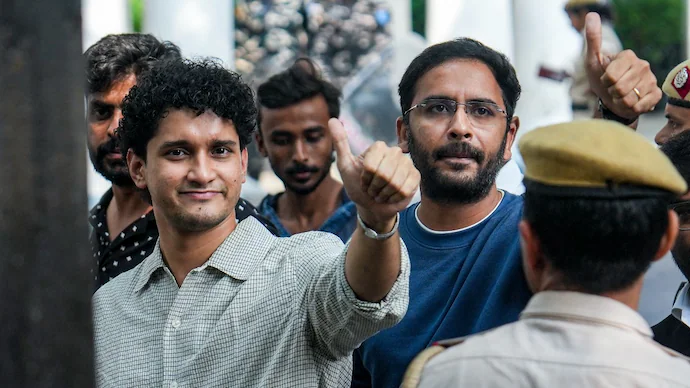
The Cockroach Janta Party (CJP) has moved the Special Executive Magistrate seeking the release of its members Saurav Das and Ashutosh Ranka, who were sent to Tihar Jail for five days following their detention during a protest at Delhi’s Jantar Mantar. The party’s legal team has submitted their surety documents, and a decision on their release is expected by Sunday afternoon.
According to the legal team, Das and Ranka were remanded to judicial custody because their sureties were unavailable on the day they were detained. Sources said Delhi Police were verifying the submitted documents before a decision could be taken.
Police had cited alleged violations of peace bonds and trespassing at Jantar Mantar, which had recently been removed from the list of designated protest venues. The detentions have drawn criticism from CJP, which has linked the case to its protests over alleged irregularities in the Special Intensive Revision (SIR) of electoral rolls and restrictions on demonstrations in central Delhi.
CJP Moves Magistrate for Release of Saurav Das and Ashutosh Ranka
The CJP legal team has approached the Special Executive Magistrate after placing the surety documents for Das and Ranka on record. The application seeks their release from judicial custody, with a decision expected by Sunday afternoon.
The party’s lawyers said the two men were sent to Tihar Jail because the required sureties were not available when they were detained. Their release now depends on the verification process and the decision of the competent authority.
Sources told India Today that Delhi Police were checking the surety documents. The verification is a key step in determining whether the conditions required for release have been fulfilled.
Das and Ranka were sent to judicial custody for five days on Wednesday. Their associate, Ajinkya Shinde, was allowed to leave after signing a peace bond.
Why Were the CJP Members Sent to Tihar Jail?
Delhi Police said Das and Ranka had violated peace bonds and trespassed into Jantar Mantar, which had recently been removed from the list of designated protest sites.
Police also cited alleged repeated violations and concerns that the two could disturb public peace or encourage others to do so. According to the supplied report, Das and Ranka had previously signed bonds undertaking to maintain peace for one year following an earlier detention during a protest.
The latest action followed their presence at Jantar Mantar, where restrictions on designated protest locations have become a point of contention between the authorities and CJP.
The allegations cited by police form the basis of their stated reasons for the detention. The application for release concerns the next procedural step in the case and does not, by itself, resolve the underlying dispute over the alleged violations.
CJP Founder Abhijeet Dipke Accuses Government of Suppressing Dissent
CJP founder Abhijeet Dipke criticised the detention of Das and Ranka, arguing that the action amounted to an attempt to suppress dissent.
In a post on X, Dipke said the two had been sent to five days of judicial custody for unfurling the national flag at Jantar Mantar.
His remarks reflect the party’s position that the detentions were connected to its protest activities. The police, however, cited alleged violations of peace bonds and trespassing rather than presenting the case solely as an issue involving the unfurling of the Tricolour.
The competing accounts have placed the detentions within a wider debate about protest restrictions, public order and the ability of political groups to demonstrate at prominent locations in the national capital.
Why Jantar Mantar Is at the Centre of the Dispute
Jantar Mantar has been an established location for demonstrations in Delhi, including protests involving political parties, civil society groups and other organisations. Its removal from the list of designated protest sites has therefore become a central issue in CJP’s opposition to the latest restrictions.
An order issued by Delhi Police Commissioner Anurag Kumar on October 11 designated Ramlila Maidan, Burari Ground and CBD Ground as protest venues, effectively removing Jantar Mantar from the list.
CJP has opposed the decision, arguing that moving demonstrations away from the capital’s political centre would make public dissent less visible. The party’s protests have also focused on alleged irregularities in the Special Intensive Revision of electoral rolls.
Which Protest Sites Were Designated by Delhi Police?
Under the October 11 order cited in the report, three locations were designated as venues for protests:
- Ramlila Maidan: One of the designated venues for demonstrations in Delhi.
- Burari Ground: Another location included in the revised list of protest sites.
- CBD Ground: The third venue identified in the police order.
The revised arrangement has prompted objections from CJP, which argues that restricting demonstrations at Jantar Mantar could reduce their visibility in the political heart of the capital.
The dispute illustrates the tension between the administration of public spaces and the concerns of groups seeking to organise demonstrations. Police authorities have cited public-order considerations in relation to the detentions, while CJP has framed the restrictions as an obstacle to visible political protest.
SIR Electoral Roll Controversy Behind CJP Protests
The detentions also come amid CJP’s protests over alleged irregularities in the Special Intensive Revision of electoral rolls. The party has raised concerns about the revision process and has opposed restrictions on demonstrations at Jantar Mantar.
Electoral roll revisions can become politically contentious because they determine the records used to identify eligible voters. Allegations of irregularities can lead to demands for greater transparency, explanations from election authorities and opportunities to raise objections through established procedures.
In this case, the supplied report identifies alleged irregularities in the SIR process as one of the issues behind CJP’s protests. It does not provide details substantiating those allegations, so they should be distinguished from established findings.
The combination of electoral concerns and restrictions on protest venues has brought the party into conflict with Delhi Police. The detentions of Das and Ranka have further intensified the dispute, with CJP criticising the action and police citing alleged breaches of the conditions imposed on the two men.
What Happens Next in the Saurav Das and Ashutosh Ranka Case?
The immediate development to watch is the decision on the release application, which is expected by Sunday afternoon. Delhi Police are reportedly verifying the surety documents submitted by the CJP legal team.
If the required conditions are accepted, the authorities can proceed according to the applicable release process. The supplied information does not confirm the outcome of the application or establish whether the verification has been completed.
The case also leaves broader questions about the restrictions on demonstrations at Jantar Mantar and the circumstances surrounding the alleged peace-bond violations. CJP’s objections to the revised list of protest venues and its concerns about the SIR process remain separate issues from the procedural question of release from custody.
For now, the focus is on whether the Special Executive Magistrate will accept the surety arrangements and permit Das and Ranka to leave judicial custody. The decision is expected to clarify their immediate status, while the wider disagreement over protest restrictions and the party’s allegations concerning electoral roll revisions remains unresolved.
For breaking news and live news updates, like us on Facebook or follow us on Twitter and Instagram. Read more on Latest India on thefoxdaily.com.






COMMENTS 0