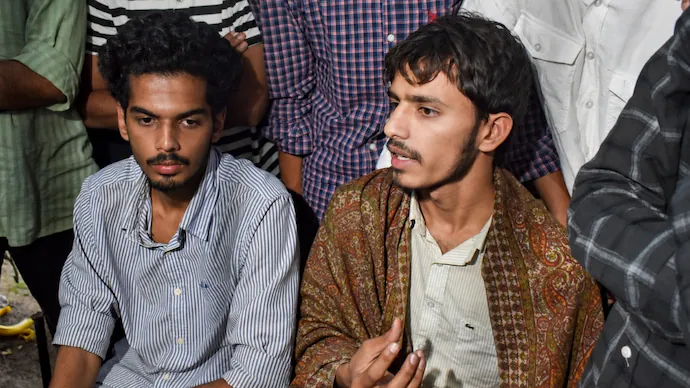
Jamia Millia Islamia has issued a final warning to two students on an indefinite hunger strike demanding the restoration of the students’ union, directing them to vacate the protest site or face possible legal and disciplinary action. The warning comes as the agitation entered its 15th day, despite the university announcing a plan to hold student union elections within 15 days of the approval of the union’s constitution.
The two protesting students, Rehan Khan and Ebin Basil, have refused to end their hunger strike, arguing that the administration has not provided a firm deadline for completing the constitution and announcing the election schedule. They are also seeking the withdrawal of disciplinary proceedings linked to the protest and assurances against further punitive action.
On Monday, the university revoked suspension orders and show-cause notices issued to students during the agitation. It also announced the formation of a committee to examine the conduct of security personnel during the protest period. However, disagreements over the election process and the conditions attached to the administration’s decision have kept the standoff unresolved.
The unrest has also disrupted regular academic activities. Jamia has extended online classes until November 8 and decided that its second mid-term semester examinations will be conducted online. Meanwhile, police and paramilitary personnel were deployed outside the campus gates, and at least 40 students were detained during police action before being released later that night.
Jamia Issues Final Warning to Hunger-Striking Students
Jamia Millia Islamia issued a “last warning” to Rehan Khan and Ebin Basil on Monday, instructing them to immediately vacate the protest site. The university warned that failure to comply could result in legal and disciplinary action.
The warning was issued as the students continued their indefinite hunger strike over the restoration of the Jamia Millia Islamia Students’ Union (JMISU). Their protest has focused on the absence of a functioning elected student union and the lack of a definite timeline for reviving the electoral process.
The university’s announcement that elections would be held within 15 days of the approval of the union’s constitution has not satisfied the protesters. They argue that the administration has not specified when the constitution will be finalised and approved, leaving the actual election date uncertain.
The disagreement reflects the central issue in the standoff: while the administration has announced a framework linking elections to approval of the constitution, the protesters want a clear deadline for completing the preliminary process itself.
Why Are Jamia Students Protesting?
The agitation centres on the restoration of the JMI Students’ Union, which was dissolved in 2006. According to the students, elections have not been held since the union was dissolved, leaving their demand for an elected representative body unresolved.
Rehan Khan and Ebin Basil have sought changes to the registrar’s order, arguing that the university’s latest decisions do not adequately address all their demands. They have maintained that the protest and hunger strike will continue until the administration provides commitments they consider sufficient.
The students have asked the university to complete the drafting and approval of the students’ union constitution by December 20. They have also demanded that elections be held within 15 days of the constitution’s approval.
The proposed timetable is important to the protesters because it would establish a target for both the constitutional process and the subsequent elections. Under the university’s Monday announcement, the 15-day period for holding elections would begin only after the constitution receives approval. The students’ concern is that, without a deadline for that approval, the election process could remain uncertain.
Students Demand Withdrawal of Disciplinary Proceedings
Alongside the restoration of the students’ union, the hunger-striking students have raised concerns about disciplinary action taken against participants in the agitation.
Their demands include the withdrawal of all disciplinary measures initiated in connection with the protest. These include show-cause notices, suspension orders, campus bans and rustication orders. They have also sought an assurance that the administration will not initiate further disciplinary proceedings against students participating in the agitation.
The protesters have called for the resignation of the university’s chief security adviser and argued that students should not be compelled to apologise for exercising what they describe as their constitutional right to peaceful protest.
These demands remain central to the dispute because the students are seeking more than an election announcement. They also want the administration to address the treatment of protesters and provide clarity about the consequences of participating in the agitation.
The university has announced the revocation of suspension orders and show-cause notices issued during the protest. However, the students’ broader demands also refer to other forms of disciplinary action and seek assurances against future measures. The available order details do not establish that every demand has been accepted.
Jamia Announces Election Timeline and Revokes Notices
Earlier on Monday, Jamia issued an order stating that student union elections would be held within 15 days of approval of the union’s constitution. The order was issued by Registrar Md Mahtab Alam Rizvi following consideration of a demand letter submitted by the hunger-striking students and their representatives.
The administration also announced the revocation of suspension orders and show-cause notices issued to students during the ongoing agitation. In addition, it provided for the formation of a committee to inquire into the conduct of security personnel during the protest period.
The decisions represented a response to several issues raised by the protesters, including the revival of elections and disciplinary measures. Yet the announcement did not bring the agitation to an end.
The protesters continued to question the absence of a specific deadline for approving the constitution and declaring election dates. Their position is that a commitment to hold elections after approval does not settle when the process will reach that stage.
“Our first demand was that student union elections should be revived, and dates for polls be declared,” Rehan Khan said, questioning the absence of a deadline for the constitution’s approval.
The university’s order also stated that the protesting students had agreed to issue a public apology at a press conference for defamatory statements, actions or social media posts made against the administration during the agitation. It further directed that the relevant posts be removed from social media platforms immediately.
The apology and social media provisions add another point of contention to the dispute, given that the students have maintained that protesters should not be forced to apologise for exercising their right to peaceful protest. The administration’s announcement of concessions on elections and disciplinary notices has therefore not resolved the disagreement over the conditions attached to the order.
Police Deployment and Detentions Outside the Campus
Tensions remained high at Jamia on Monday, when police and paramilitary personnel blocked the university gates and stopped students from entering the campus. Some students were seen climbing the gates in an attempt to gain entry.
At least 40 students were detained during the police action outside the university. They were subsequently released from the Okhla Industrial Police Station later on Monday night.
The deployment and detentions underscored the growing disruption surrounding the protest. The dispute has moved beyond negotiations over the election timetable, affecting campus access and the university’s ability to maintain normal academic operations.
The administration’s final warning to the hunger-striking students came against this backdrop of continuing agitation and heightened security. The available information does not indicate that the students have agreed to vacate the protest site or end their hunger strike.
Online Classes Extended Until November 8
Jamia has separately extended online classes until November 8 and decided to conduct the second mid-term semester examinations online. The university had shifted classes across all courses to online mode from October 24, citing concerns about student safety and security amid escalating tensions at the protest site.
According to a separate office order issued on Monday, the extension was decided at a meeting chaired by Vice-Chancellor Mazhar Asif. The meeting included the university’s deans, heads of departments, directors and other officials.
The university said online classes would continue until the forthcoming Diwali holidays. It will review the situation after November 8 and decide whether online teaching should continue, depending on conditions on campus.
The decision means that students will continue to attend classes remotely while the administration assesses the security situation. The university has not indicated in the stated order that the online arrangement will necessarily remain in place beyond November 8.
Mid-Term Examinations to Be Held Online
In addition to extending online classes, Jamia has decided that the second mid-term semester examinations will also take place online. The respective deans, heads of departments and directors will determine the guidelines and arrangements for conducting the examinations in consultation with the Controller of Examinations.
The arrangements will include the examination schedule and related procedures. This places responsibility on individual academic units to establish the operational details within the university’s broader decision to move the mid-term assessments online.
The examination decision is a significant practical consequence of the continuing unrest, as students and academic departments must prepare for assessments under remote arrangements. The university’s planned review after November 8 will help determine whether further changes to teaching arrangements are necessary, depending on circumstances at the institution.
What Happens Next in the Jamia Students’ Union Dispute?
The immediate outcome depends on whether the university and the protesting students can resolve their differences over the constitution, election schedule and disciplinary measures. Jamia has committed to holding elections within 15 days of the constitution’s approval, but the protesters are seeking a deadline for completing the approval process by December 20.
The revocation of suspension orders and show-cause notices addresses part of the students’ demands. The proposed inquiry into security personnel’s conduct also creates a formal mechanism to examine events during the protest period. However, the continuing hunger strike indicates that the administration’s announcement has not secured the protesters’ acceptance.
The university’s warning introduces the possibility of further legal or disciplinary action if the two students do not vacate the protest site. At the same time, the students have said they will continue their agitation until their demands are met.
For now, the dispute remains unresolved. The next developments will depend on whether the administration provides greater certainty about the constitution’s approval and elections, how the outstanding demands are addressed, and whether the university can restore normal campus activity without further escalation.
The extended online teaching arrangement and online mid-term examinations show that the unrest is already affecting academic life. Until an agreement is reached, Jamia faces the dual challenge of managing the protest and providing clarity to students about the future of their elected union and their academic schedules.
For breaking news and live news updates, like us on Facebook or follow us on Twitter and Instagram. Read more on Latest India on thefoxdaily.com.





COMMENTS 0