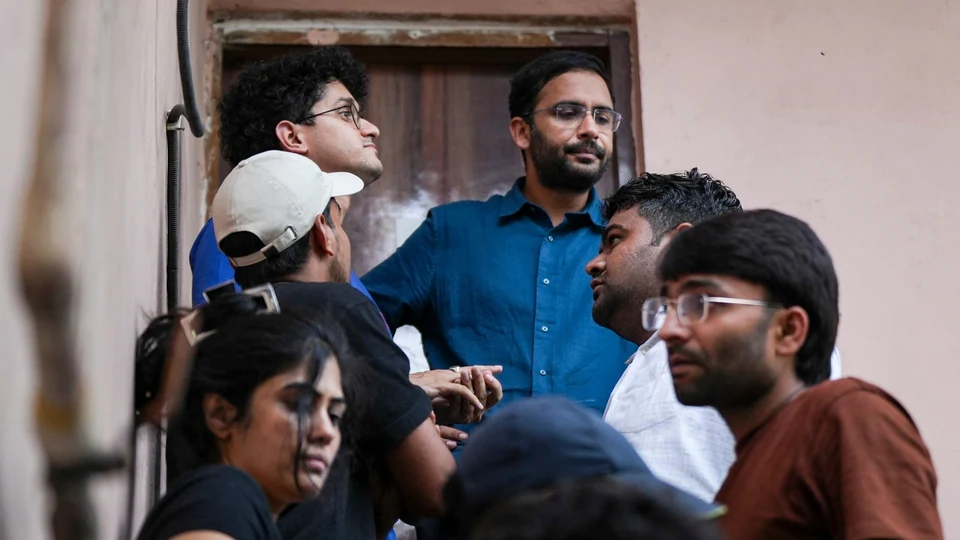
Cockroach Janata Party (CJP) co-conveners Saurav Das and Ashutosh Ranka on Wednesday withdrew their petition before the Delhi High Court challenging the extension of their judicial custody by a Special Executive Magistrate (SEM) court. The development came after Justice Subramonium Prasad declined to entertain the plea at that stage and suggested that the leaders first await the outcome of proceedings before the lower court.
The petition challenged an October 19 order by the Special Executive Magistrate at Delhi’s Mandir Marg police station extending the duo’s custody by two days. Das and Ranka have been in judicial custody since October 14 after allegedly scaling the locked gates of Jantar Mantar during a protest.
The High Court noted that the SEM court was scheduled to reconsider the sureties furnished by the two leaders at 2 pm on Wednesday. The judge questioned why they had approached the High Court before the lower court had completed the scheduled proceedings, suggesting that any further legal challenge should follow the prescribed judicial process.
Why Saurav Das and Ashutosh Ranka Withdrew Their Petition
Justice Subramonium Prasad questioned the timing of the petition, pointing out that the Special Executive Magistrate was due to reconsider the sureties submitted by Das and Ranka later that day.
The judge suggested that the petitioners wait for the outcome of the proceedings before deciding on their next legal step. He also indicated that the matter could be challenged before the appropriate lower court and subsequently brought before the High Court, if necessary, in accordance with the law.
During the hearing, the judge asked why the leaders had approached the High Court when the matter was already scheduled to come up before the SEM court. He questioned whether they could withdraw the petition, wait for the lower court’s decision and then pursue the appropriate legal remedy.
The court also used the expression ‘keep your powder dry’ to suggest that the petitioners should preserve their legal arguments until a further challenge became necessary. The remarks indicated that the court wanted the procedural steps to be followed before considering the dispute at the High Court level.
The court subsequently allowed the duo’s lawyer, Abhik Chimni, to seek instructions from his clients on whether they wished to withdraw the petition, ask the High Court to decide the matter on merits or seek a hearing before the roster bench.
Minutes later, Das and Ranka withdrew their petition.
The withdrawal followed the court’s reluctance to entertain the challenge at that stage. It should not be interpreted as a judicial ruling affirming the legality of the custody extension on its merits, as the supplied report does not indicate that the High Court delivered such a decision.
What Was the Custody Extension Dispute About?
The legal dispute arose from an October 19 order issued by the Special Executive Magistrate at the Mandir Marg police station in Delhi. The order extended the judicial custody of Das and Ranka by two days.
The two CJP leaders had been in judicial custody since October 14 after allegedly scaling the locked gates of Jantar Mantar. Their challenge before the High Court sought to contest the extension of that custody.
The immediate issue before the High Court was whether it should entertain the petition while proceedings concerning the sureties were scheduled to take place before the SEM court. Justice Prasad’s questions focused on the timing of the challenge and the availability of a procedural route through the lower court.
Sureties are arrangements intended to support a person’s release subject to applicable legal conditions. In this case, the SEM court was expected to reconsider the sureties furnished by Das and Ranka, making its forthcoming decision relevant to the next steps in their legal proceedings.
By suggesting that the petitioners await the lower court’s consideration, the High Court emphasised the importance of following the appropriate legal procedure. The sequence of proceedings may determine whether another challenge is required and which court should consider it.
The supplied report does not establish the outcome of the SEM court’s scheduled reconsideration of the sureties. Consequently, the withdrawal of the High Court petition alone does not clarify whether Das and Ranka were granted release or whether their custody continued beyond the period specified in the October 19 order.
Delhi High Court Questions Conduct During Jantar Mantar Protest
At the beginning of the hearing, the High Court also questioned the conduct of Das and Ranka during the protest at Jantar Mantar. The court noted that the two leaders were allegedly at the forefront of the demonstration and had breached barricades despite not having permission to hold the protest.
Justice Prasad highlighted the purpose of police barricades, observing that breaking them could allow additional people to enter a protest area and potentially create a situation that authorities might struggle to control.
The judge told the petitioners’ lawyer that barricades were installed for a purpose and warned that breaching them could result in more people joining the gathering. The court’s remarks focused on the potential consequences of crossing police barriers during an unauthorised demonstration.
The discussion reflected the distinction between the stated purpose of a protest and the need to maintain public order. Even when demonstrators describe their intentions as peaceful, authorities may impose conditions or require permission to manage crowds, regulate access and prevent disruptions.
The court’s observations did not, on their own, establish a final finding of guilt against Das and Ranka. The allegations concerning their conduct at Jantar Mantar remain distinct from the procedural question about whether the High Court should entertain their challenge to the custody extension.
Why the Court Referred to Unrest in Other Countries
During the hearing, Justice Prasad referred to incidents of arson and unrest in other countries, including France and Albania, while discussing the purpose of police barricades.
The court reportedly observed that a protest could begin with what organisers describe as peaceful intentions, but that other people might join the gathering and disrupt it. The judge suggested that obtaining police permission helps authorities manage such risks and prevent unwanted participants from entering a demonstration.
The remarks, reported by Bar and Bench, placed the Jantar Mantar incident within a broader discussion about public order and crowd management. They reflected the court’s concern that crossing barricades could create opportunities for a gathering to expand beyond the control of its organisers or the police.
However, the reference to unrest abroad was part of the court’s discussion about the possible consequences of breaching barricades. It does not establish that the protest involving Das and Ranka was connected to the incidents mentioned by the judge.
The broader issue raised during the hearing concerns the balance between the ability to demonstrate and the responsibility of authorities to maintain public safety. Police restrictions can be used to regulate access and manage crowds, while allegations of unlawful conduct must be considered through the applicable legal process.
What Happens After the Petition’s Withdrawal?
The withdrawal means that the High Court did not proceed to decide the challenge to the custody extension on its merits during the hearing described in the report. The immediate focus was instead on the proceedings scheduled before the Special Executive Magistrate concerning the sureties furnished by the two leaders.
Justice Prasad indicated that the petitioners could wait for the lower court’s decision and then consider the appropriate legal remedy. If they remained aggrieved by a subsequent order, they could pursue a challenge through the procedure available under the law.
The next steps therefore depend on the outcome of the proceedings before the SEM court and any further action taken by Das and Ranka. The withdrawal itself does not resolve every legal question surrounding the extension of their custody.
The case also highlights the importance of distinguishing between a court’s procedural observations and a final determination on the merits of a dispute. A court may decline to entertain a petition at a particular stage without conclusively deciding whether the underlying order was legally valid.
For now, the key development is that the CJP leaders withdrew their challenge after the High Court questioned the timing of the petition and pointed to the scheduled reconsideration of their sureties by the SEM court.
Key Takeaways From the Delhi High Court Hearing
- Petition withdrawn: CJP co-conveners Saurav Das and Ashutosh Ranka withdrew their challenge to the extension of their judicial custody.
- High Court’s position: Justice Subramonium Prasad declined to entertain the petition at that stage and suggested that the leaders follow the appropriate legal procedure.
- Custody extension: The petition challenged an October 19 order by a Special Executive Magistrate at Delhi’s Mandir Marg police station extending their custody by two days.
- Sureties under consideration: The SEM court was scheduled to reconsider the sureties furnished by the two leaders at 2 pm on Wednesday.
- Jantar Mantar allegations: The leaders had been in judicial custody since October 14 after allegedly scaling the locked gates of Jantar Mantar during a protest.
- Observations on barricades: The High Court questioned the alleged breach of barricades and discussed the role of police permission in managing protests and preventing public disorder.
- No merits ruling reported: The withdrawal did not amount to a final High Court decision on the legality of the custody extension.
The proceedings leave the immediate legal position dependent on the outcome of the SEM court’s consideration of the sureties and any subsequent challenge filed through the appropriate legal channels. The High Court hearing also brought renewed attention to the relationship between protest-related allegations, public-order concerns and the procedural safeguards governing judicial proceedings.
For breaking news and live news updates, like us on Facebook or follow us on Twitter and Instagram. Read more on Latest India on thefoxdaily.com.






COMMENTS 0