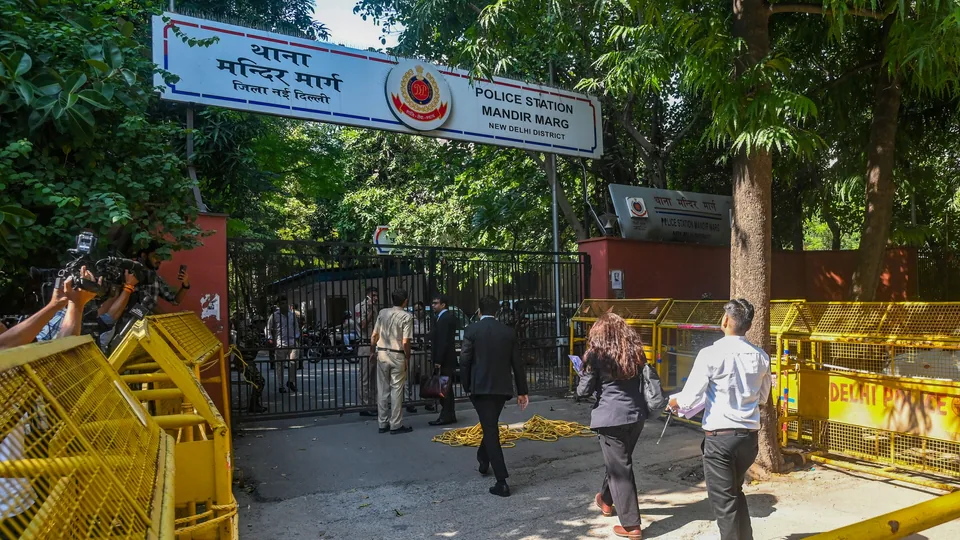
The custody of Cockroach Janata Party (CJP) leaders Saurav Das and Ashutosh Ranka was extended by two days on Monday after Delhi Police argued that their release could affect public order. The case stems from allegations that the two leaders entered Jantar Mantar by climbing over locked gates after the venue had been de-notified as a protest site.
A Special Executive Magistrate (SEM) granted the extension after police sought further custody, citing concerns about maintaining “peace and tranquillity”. The decision came amid a disagreement between the police and the leaders’ legal team over whether their release could pose any threat to public order.
The CJP legal team challenged the police’s apprehensions, arguing that there was no evidence to suggest the leaders posed a threat or that their release would disturb public peace. The competing arguments placed the focus on the justification for continued custody and the circumstances surrounding the alleged entry into the protest venue.
Das, the party’s chief spokesperson, and Ranka, its national spokesperson, were detained on October 13. Their detention followed an incident at Jantar Mantar, where they allegedly crossed the locked gates and entered the premises during protests against the Special Intensive Revision (SIR) of electoral rolls.
Why were Saurav Das and Ashutosh Ranka detained?
Delhi Police detained the two CJP leaders on October 13 after they allegedly entered Jantar Mantar by jumping over its locked gates. The incident took place a day after the venue was de-notified as a protest site.
Jantar Mantar has long been associated with demonstrations and public campaigns in the national capital. However, access to a designated protest location can be subject to official restrictions, and the police action in this case followed the change in the site’s status.
According to the reported account, the leaders entered the premises despite the gates being locked. Police personnel present at the location intervened and took hold of them.
The detention occurred amid protests against the Special Intensive Revision of electoral rolls, a process that has become a point of political contention. The available information does not establish that the custody proceedings themselves determine the merits of the broader political objections to the SIR process.
Video of the Jantar Mantar incident shared on X
Shortly after the detention, Ashutosh Ranka shared a video on his X account showing himself, Saurav Das and Ajinkya Shinde, the party’s national organisation in-charge, climbing over the locked gates and entering Jantar Mantar.
The footage reportedly showed police personnel intervening after the group entered the venue. The video became part of the public account of the incident, although the full legal implications of the alleged entry depend on the applicable restrictions and the proceedings before the authorities.
Das and Ranka hold prominent communication roles within the CJP. Their detention therefore drew attention to the party’s participation in the protests and the authorities’ response to the alleged breach of the venue’s access restrictions.
Police cite public order concerns in seeking continued custody
Delhi Police sought further custody of the two leaders, arguing that their release could affect “peace and tranquillity”. The police position was that continued custody was necessary in view of the possibility of further disruption.
During an earlier hearing, the police had argued that “there was a presumption that the accused might carry out a crime” if released. Last week, the Special Executive Magistrate ordered five days of judicial custody after considering the police’s submissions.
The latest request for further custody continued the dispute over whether the authorities had sufficient grounds to keep the two leaders in custody. Police cited the possibility of a disturbance, while the defence challenged the basis of that apprehension.
Public-order concerns can be relevant in proceedings involving alleged violations of restrictions at protest sites. However, the police’s stated apprehension is an argument advanced by the authorities; it should not automatically be treated as proof that the accused would commit another offence or disrupt public peace.
CJP legal team disputes police apprehensions
The legal team representing the Cockroach Janata Party leaders opposed the police request, arguing that there was no evidence to show that Das and Ranka posed a threat or that their release would disturb public order.
The defence’s argument challenged the necessity of continued custody rather than merely disputing the political context of the incident. At the centre of the disagreement is whether the possibility of future disruption, as claimed by the police, provides sufficient justification for extending restrictions on the leaders’ liberty.
The two sides therefore presented different assessments of the risk posed by the leaders’ release. Delhi Police relied on concerns about peace and tranquillity, while the defence maintained that the apprehension was unsupported by evidence.
The two-day extension means the leaders will remain in custody for the additional period ordered by the magistrate. The available account does not specify whether the defence plans to challenge the latest order or what further proceedings are scheduled.
What is the Special Intensive Revision of electoral rolls?
The Special Intensive Revision, commonly known as SIR, is an electoral-roll revision exercise. Such processes concern the preparation and verification of voter lists, which are central to determining who is registered to vote in an election.
Electoral-roll revisions can become politically contentious when parties or campaigners raise concerns about how voters are included or removed, how verification is conducted, or whether the process affects particular groups. However, the specific objections raised by the CJP leaders in this incident are not detailed in the available report.
The protests that preceded the detention were directed against the SIR process. The alleged entry into Jantar Mantar occurred after the site was de-notified as a protest venue, bringing the dispute over electoral-roll revision into contact with a separate question concerning access to a public demonstration site.
These issues should be considered separately. Opposition to an electoral process and compliance with restrictions at a protest location involve different questions, and the custody proceedings do not, by themselves, settle the broader debate over the SIR exercise.
What happens next in the CJP leaders’ custody case?
The immediate development is the two-day extension of custody ordered by the Special Executive Magistrate. The next steps will depend on further proceedings and any decisions by the authorities or the leaders’ legal team.
Key questions include whether Delhi Police presents additional grounds for its public-order concerns, whether the defence challenges the continued custody, and what decision the competent authority makes when the extended period ends.
The case also raises a broader question about how authorities manage access to protest sites after their official status changes. Police are responsible for enforcing applicable restrictions and maintaining public order, while legal proceedings must assess the grounds for detention in the individual case.
For now, the custody extension reflects the magistrate’s decision to continue the restrictions for two more days. The police’s concerns and the defence’s objections remain competing positions, and the final outcome will depend on the subsequent proceedings rather than on either side’s claims alone.
For breaking news and live news updates, like us on Facebook or follow us on Twitter and Instagram. Read more on Latest India on thefoxdaily.com.






COMMENTS 0