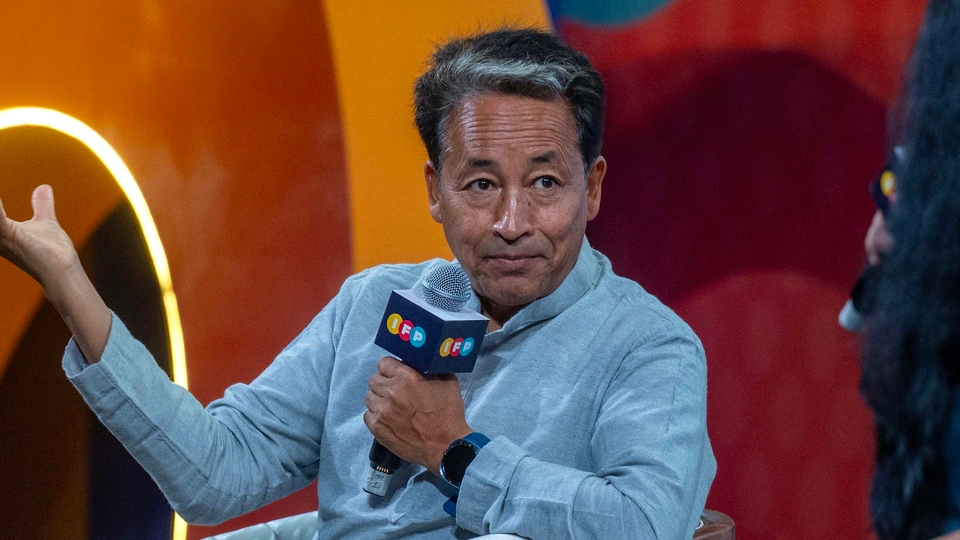
The All Ladakh Liquor Traders Association (ALLTA) has criticised climate activist Sonam Wangchuk over his demand to make Ladakh a dry Union Territory, questioning his position on alcohol sales and raising concerns about the government licence for his home-grown apple wine brand, Ule Topo.
At a press conference on Saturday, representatives of the association asked whether Ule Topo had obtained the necessary government licence to sell its products and why the administration had not taken action if the brand was operating without the required approval.
The criticism comes amid an ongoing dispute over Ladakh’s liquor policy. Wangchuk has opposed the Union Territory’s Excise Policy 2026-27, which was introduced on June 1 and proposed increasing the number of retail liquor outlets from two to 20. The administration later withdrew the policy following objections from residents and social organisations.
The traders’ association accused Wangchuk of taking inconsistent positions on alcohol consumption and argued that liquor traders should not be singled out while other social issues remain part of the wider debate.
Ladakh Liquor Traders Question Sonam Wangchuk’s Position on Alcohol
During Saturday’s press conference, a representative of the All Ladakh Liquor Traders Association questioned Wangchuk’s demand for a complete prohibition on alcohol sales in Ladakh. The representative argued that the discussion around alcohol should also consider traditional beverages such as chang, which has cultural significance in parts of the region.
The association questioned why commercially sold liquor was being targeted for prohibition while other activities, including drug use, smoking and meat consumption, were not being addressed through similar demands.
The representative said the association would support a complete prohibition if the same standards were applied consistently across these activities. However, traders objected to what they described as selective action against their livelihoods.
The association also urged Wangchuk not to interfere with the economic interests of people engaged in the liquor trade. Its representatives argued that decisions affecting the industry should consider the livelihoods of traders as well as the wider social concerns raised by residents.
Association Raises Questions Over Ule Topo Apple Wine Licence
A major part of the association’s criticism focused on Ule Topo, an apple wine brand associated with Wangchuk. Representatives questioned whether the brand had obtained the necessary government licence to manufacture and sell its products.
They asked the Ladakh administration to clarify the licensing position and explain why no action had been taken if the brand was found to be operating without the required permissions.
However, the association’s questions do not by themselves establish that Ule Topo is operating without a licence. The licensing status of the brand would need to be confirmed through official records and a response from the relevant authorities.
The issue has added another dimension to the disagreement between the traders and Wangchuk. While the activist has raised concerns about the expansion of liquor outlets in Ladakh, the association has challenged his position by questioning the status of a wine brand associated with him.
Women’s Organisations Suspend Protest After Administration’s Assurance
The traders’ press conference came a day after four women’s organisations temporarily suspended their protests against Ladakh’s liquor policy following assurances from the Union Territory administration.
The organisations had demanded a complete rollback of the new excise policy and sought to have Ladakh declared a dry Union Territory. Their concerns centred on the proposed expansion of liquor shops and the possibility of additional bar licences, which they said could affect young people, society and the region’s cultural and religious values.
The four organisations involved in the protest were:
- Ladakh Buddhist Association Women Wing
- Anjuman-e-Imamia Women Wing
- Anjuman Moin-ul-Islam Women Wing
- Christian Community Women Wing
The groups had planned a dharna from October 29 to November 5. However, on October 30, Wangchuk announced that the organisations had temporarily suspended their protest after the administration agreed to their demands in principle.
According to Wangchuk, the administration requested one week’s time to provide the agreement in writing. The decision followed a letter issued by the Union Territory administration’s Home Department on October 29.
The organisations agreed to give the administration time to fulfil its assurances while keeping their demand for a complete rollback of the liquor policy and a dry Union Territory at the centre of the dispute.
Ladakh Administration Rejects Wangchuk’s Allegations on Liquor Policy
The dispute has also involved a public disagreement between Wangchuk and the Ladakh administration over the number and location of liquor outlets.
On October 22, Wangchuk alleged at a press conference that the administration was promoting alcohol consumption by opening bars in residential neighbourhoods and near schools despite objections from local residents.
The administration rejected the allegations on October 28, describing them as “false”, “baseless” and “totally imaginary”. It maintained that the claims did not accurately reflect the excise policy currently in force or the actual number of operational liquor outlets.
According to the administration, the new Excise Policy 2026-27 was introduced on June 1 but withdrawn on August 26 following feedback from residents and social organisations. The previous Excise Policy 2025-26 was subsequently restored and remains applicable.
The administration’s response sought to distinguish between the proposed expansion under the withdrawn policy and the existing arrangements under the restored policy.
How Many Liquor Shops Are Currently Operating in Ladakh?
According to the Ladakh administration, the previous excise policy allowed two retail liquor shops in Leh, located in Ward No. 4 and Ward No. 6. However, only one of these shops was operational at the time of its statement.
The administration said the shop in Ward No. 6 became operational following an auction held on October 14. No bid was received for the shop in Ward No. 4, leaving that outlet non-operational.
The administration also provided figures for liquor outlets attached to restaurants and bars across the Union Territory. It said 50 such outlets were operating in different parts of Ladakh.
| Region | Liquor Outlets Attached to Restaurants and Bars |
|---|---|
| Leh | 38 |
| Nubra | 7 |
| Zanskar | 3 |
| Changthang | 2 |
| Total | 50 |
In addition to these outlets, the administration said two beer bars were operating in Leh.
It maintained that the figures did not support Wangchuk’s allegation that bars were being opened in every neighbourhood or close to schools. The administration also said liquor licences were issued to hotels and other establishments only after they met the applicable requirements.
Administration Says Liquor Licences Follow Distance Rules
Responding to concerns about liquor outlets near sensitive locations, the administration said hotels and other establishments could receive licences only after satisfying the relevant regulatory conditions.
These conditions include prescribed distance limits from highways, religious places and educational institutions. According to the administration, establishments must meet the required rules before being permitted to operate licensed liquor facilities.
The administration used these licensing requirements to counter allegations that bars were being opened indiscriminately in residential areas and near schools.
However, the disagreement over the policy has continued, with women’s organisations and Wangchuk raising concerns about the broader social impact of alcohol availability in Ladakh.
Why Ladakh’s Liquor Policy Has Become a Major Public Issue
The controversy has developed into a wider debate over public health, cultural values, economic livelihoods and the role of government regulation in Ladakh.
Women’s organisations have argued that expanding liquor availability could affect young people and undermine the region’s social and religious traditions. Their demand for a dry Union Territory reflects concerns about the consequences of greater access to alcohol.
Liquor traders, on the other hand, have raised concerns about the economic impact of prohibition and argued that their livelihoods should be considered in any policy decision. Their criticism of Wangchuk also centres on what they describe as inconsistent standards in the debate over alcohol consumption.
The administration has maintained that the expanded 2026-27 policy was withdrawn and that the previous policy has been restored. Its published figures and licensing explanations form the basis of its response to allegations about the number and location of liquor outlets.
What Happens Next in the Ladakh Liquor Policy Dispute?
The next developments will depend partly on whether the administration provides the written assurance requested by the women’s organisations and how it responds to their demand for a complete rollback of the new policy and dry Union Territory status.
The traders’ association has also raised questions about the licensing of Ule Topo, adding pressure on the administration to clarify the regulatory position if any formal complaint or licensing concern is presented.
For now, the previous Excise Policy 2025-26 remains in force, according to the administration. The withdrawn 2026-27 policy, the number of operational outlets and the conditions governing liquor licences remain central to the dispute.
The controversy highlights the competing interests involved in Ladakh’s alcohol policy debate. While women’s organisations and Wangchuk are pressing for restrictions based on social and cultural concerns, liquor traders are defending their livelihoods and questioning the consistency of the prohibition demand. The administration’s next decisions will determine how these competing demands are addressed.
For breaking news and live news updates, like us on Facebook or follow us on Twitter and Instagram. Read more on Latest India on thefoxdaily.com.





COMMENTS 0