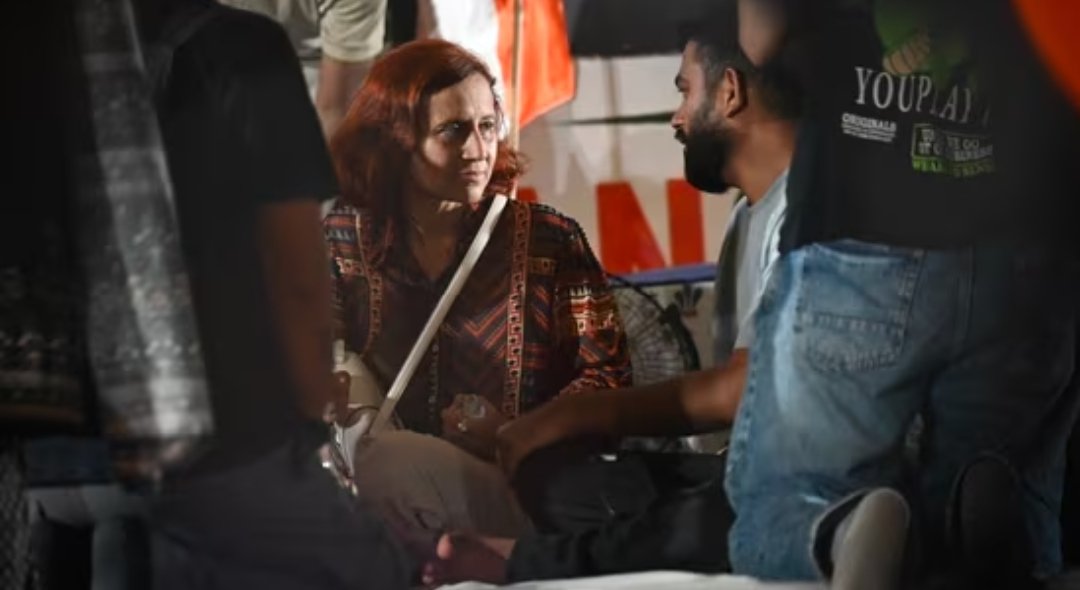
The hunger strike led by Education Reform advocate Sonam Wangchuk has entered a decisive phase, with his wife announcing that he is willing to end his fast if political leaders personally assure him that the issues of accountability in public examinations and education reforms will be formally raised during Parliament’s Monsoon Session. The statement comes as thousands of supporters assemble at Delhi’s Jantar Mantar ahead of a planned march toward Parliament, transforming what began as a protest over examination irregularities into one of the country’s most closely watched political movements.
With Parliament beginning its Monsoon Session, the developments have shifted attention from a single activist’s hunger strike to broader questions about governance, transparency, student welfare, and the credibility of India‘s competitive examination system. At the same time, authorities have tightened security across central Delhi, citing prohibitory orders and the need to maintain law and order around Parliament.
Why Sonam Wangchuk’s Hunger Strike Has Become a National Issue
Sonam Wangchuk is widely known for his work in education, sustainable innovation, and youth development. His decision to undertake a prolonged hunger strike over concerns related to public examination accountability has resonated with students, parents, teachers, and civil society groups across India.
The protest has focused primarily on restoring confidence in India’s examination system following controversies surrounding competitive examinations such as NEET. For millions of students, these exams determine access to higher education and future careers, making their credibility a matter of national importance.
As Wangchuk’s Health deteriorated after more than three weeks without Food, the movement gained additional momentum, drawing support from political leaders, student groups, education activists, and citizens from different parts of the country.
What Condition Has Wangchuk’s Wife Placed?
According to his wife, educationist Gitanjali J. Angmo, Sonam Wangchuk is prepared to end his hunger strike if leaders from different political parties meet him at the hospital and publicly assure him that the demands regarding education reforms and accountability will be discussed during Parliament’s Monsoon Session.
The proposed condition reflects an important shift in strategy. Rather than demanding an immediate executive decision, the focus is now on ensuring that elected representatives formally debate the issue in India’s highest legislative forum.
This approach highlights the belief that long-term education reforms require parliamentary discussion, public scrutiny, and institutional accountability rather than temporary administrative responses.
Key Demands Behind the Protest
Although the movement has evolved over time, several core concerns continue to define the campaign.
- Greater transparency in national competitive examinations.
- Accountability for alleged examination irregularities.
- Measures to strengthen public trust in recruitment and entrance tests.
- Protection of students’ academic futures.
- Comprehensive reforms in examination administration.
These demands extend beyond a single examination and seek broader improvements in how India’s public examination system is governed.
Political Support Continues to Grow
Several Members of Parliament from different political parties have visited Wangchuk during the protest, expressing support for discussing education-related issues during the Monsoon Session.
The issue has also entered parliamentary procedures. A notice seeking discussion on the matter has been submitted in the Rajya Sabha, arguing that concerns surrounding examination credibility deserve immediate national attention.
Support from opposition leaders has increased the political visibility of the movement, while government agencies continue to defend the administrative actions taken in recent days.
Timeline of Recent Developments
| Date | Major Development |
|---|---|
| Mid-June | Protest campaign began at Jantar Mantar. |
| June 28 | Sonam Wangchuk joined the indefinite hunger strike. |
| After 20+ days | Health concerns intensified as the fast continued. |
| July 18 | Delhi Police shifted Wangchuk to Safdarjung Hospital citing medical concerns and court directions. |
| July 19 | His wife announced he could end the fast if political assurances are provided in Parliament. |
| July 20 | Monsoon Session begins alongside the proposed Parliament march. |
Jantar Mantar Becomes the Centre of the Movement
As preparations intensified for the proposed march toward Parliament, Jantar Mantar witnessed a significant increase in the number of supporters gathering at the protest site. Organisers described the gathering as one of the largest since the campaign began.
The growing crowds indicate that the movement has expanded beyond a single activist’s fast into a wider public campaign focused on educational reforms and institutional accountability.
Many participants view the protest as representing the concerns of students whose futures depend on transparent and credible examination systems.
Security Tightened Ahead of Parliament Session
Delhi Police have significantly increased security arrangements across central Delhi before the Monsoon Session of Parliament.
Authorities stated that prohibitory orders remain in force in the New Delhi district, restricting public gatherings except at designated protest locations with prior permission.
Security measures include:
- Additional police deployment.
- Multi-layer security around sensitive government areas.
- Vehicle inspections at major entry points.
- Barricades near Parliament and surrounding roads.
- Enhanced monitoring of protest locations.
Officials have maintained that these arrangements are intended to ensure public safety and the smooth functioning of Parliament.
The Hospitalisation That Changed the Protest
The transfer of Sonam Wangchuk from the protest site to Safdarjung Hospital marked a significant turning point in the movement.
Authorities stated that the decision was based on medical advice and court directions due to concerns over his deteriorating health after an extended hunger strike.
Supporters, however, viewed the development as an attempt to disrupt the protest, leading to increased mobilisation and public demonstrations.
The contrasting interpretations have intensified both political debate and public interest surrounding the case.
Why the NEET Debate Continues to Dominate National Attention
The controversy surrounding NEET has become one of the most significant Education Issues in recent years because millions of students compete annually for limited seats in medical colleges.
Any allegation affecting the integrity of such examinations has consequences extending far beyond individual candidates. Public confidence in examination systems directly influences trust in educational institutions, recruitment processes, and government agencies.
Education experts frequently note that transparency in examinations is essential because competitive tests determine opportunities that shape careers for decades.
Expert Analysis: Why Accountability Matters More Than Ever
The current movement highlights an important Policy question: how can examination authorities maintain public trust while conducting large-scale national tests involving millions of candidates?
Internationally, successful examination systems typically emphasize:
- Independent oversight.
- Robust digital security.
- Transparent investigation mechanisms.
- Rapid response to irregularities.
- Clear public communication.
Strengthening these areas not only reduces the risk of malpractice but also reassures students that their efforts will be evaluated fairly.
A Comparison with Previous Student Movements
India has witnessed numerous student-led movements over education policies, reservation issues, fee structures, and examination reforms. However, the current campaign differs in one important respect—it combines public examination reform with a symbolic hunger strike led by a nationally recognised education innovator.
This combination has broadened the movement’s appeal beyond students, attracting educators, parents, social activists, and political leaders.
Unlike many protests focused on immediate policy reversals, the current campaign emphasizes systemic accountability and institutional reform.
What Happens Next?
Several developments are expected over the coming days.
- Political leaders may meet Sonam Wangchuk at the hospital.
- Parliament could witness debates regarding examination reforms.
- Security agencies will continue monitoring demonstrations.
- The proposed Parliament march may influence the national political narrative.
- Further announcements regarding the future of the hunger strike are anticipated.
The direction of the movement will likely depend on whether meaningful political engagement occurs during the Monsoon Session.
The Bigger Picture: India’s Education System at a Crossroads
Beyond the immediate political developments, this protest has revived a broader conversation about the future of India’s education system.
As competition for higher education intensifies, ensuring fairness, transparency, and accountability in national examinations becomes increasingly important. Students invest years of preparation, families make significant financial sacrifices, and institutions rely on examination credibility to maintain public confidence.
Education reforms are therefore not merely administrative decisions—they influence economic mobility, professional opportunities, and trust in public institutions.
Conclusion
Sonam Wangchuk’s hunger strike has evolved into a national discussion on educational accountability, examination integrity, and democratic engagement. His wife’s statement offering a path to end the fast has introduced the possibility of dialogue at a crucial political moment, coinciding with the opening of Parliament’s Monsoon Session.
Whether the immediate demands are addressed or not, the movement has already succeeded in placing education reform at the centre of national political discourse. The coming days will determine whether parliamentary debate leads to concrete policy discussions or whether public demonstrations continue to grow. Either way, the issues raised by the protest are likely to remain part of India’s education and governance conversation long after the current demonstrations conclude.
For breaking news and live news updates, like us on Facebook or follow us on Twitter and Instagram. Read more on Latest India on thefoxdaily.com.






COMMENTS 0