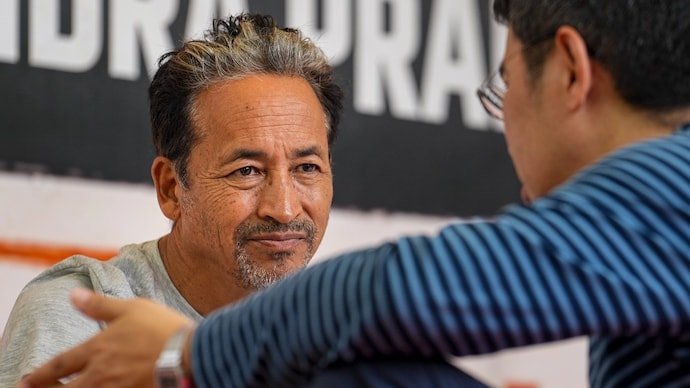
Environmentalist, engineer, and Education reform advocate Sonam Wangchuk has declared that he will continue his indefinite hunger strike until July 20, the day supporters plan to march to Parliament in New Delhi. The announcement comes as his fast enters its third week, with doctors closely monitoring his declining health and supporters across the country urging him to end the protest.
Speaking at Jantar Mantar, Wangchuk said he intends to stay on the fast long enough to personally lead the peaceful “Sansad Chalo” march. In a light-hearted remark intended to motivate supporters, he joked that if the march failed to attract significant participation, he would “come back as a ghost.”
The statement has once again drawn national attention to a movement that has evolved from a student-led campaign into a broader protest centered on education policy, accountability, and democratic engagement.
Why July 20 Is a Turning Point
July 20 carries symbolic and political significance because it coincides with the opening day of Parliament’s monsoon session. Protest organizers believe presenting their demands while Parliament is in session will maximize public attention and encourage dialogue with policymakers.
According to Wangchuk, the planned march represents more than a demonstration—it is intended as a peaceful appeal to lawmakers inside what he described as the “temple of democracy.”
He emphasized that the success of the movement should be measured not by the number of days he has fasted but by the level of public participation and the willingness of authorities to engage in meaningful discussions.
What Are the Protesters Demanding?
At the center of the movement are demands related to education governance and accountability.
Among the key demands raised during the protest are:
- Resignation of Union Education Minister Dharmendra Pradhan over alleged irregularities in the education system.
- Greater accountability in education-related decision-making.
- Constructive dialogue between protest representatives and the central government.
- Public attention to issues affecting students and educational institutions.
Wangchuk has repeatedly stated that his objective is not confrontation but meaningful engagement with the government through peaceful democratic processes.
How Long Has Sonam Wangchuk Been on Hunger Strike?
The indefinite hunger strike entered its 20th day on July 17, while the broader protest at Jantar Mantar reached its fourth week.
Throughout the fast, Wangchuk has maintained that ending the protest without any official response would weaken the movement’s message and reduce pressure for dialogue.
Despite growing concern over his health, he has continued addressing supporters and encouraging them to focus their efforts on the upcoming Parliament march rather than urging him to break his fast.
Health Update: Doctors Continue Monitoring Wangchuk
Medical professionals monitoring Wangchuk have reported a steady decline in his physical condition as the prolonged fast continues.
| Health Indicator | Latest Reported Status |
|---|---|
| Weight | 56.65 kg |
| Total Weight Loss | More than 9 kg since beginning the fast |
| Blood Pressure | 105/61 mmHg |
| Blood Sugar | 80 mg/dL |
| Oxygen Saturation | 97% |
| Overall Condition | Conscious, mentally alert, under continuous medical observation |
Doctors have recommended ongoing medical supervision, noting that prolonged fasting increases the risk of serious complications even when vital signs initially remain relatively stable.
Delhi High Court’s Intervention
The activist’s health has also become the subject of judicial attention.
The Delhi High Court directed both the central government and the Delhi government to ensure that Wangchuk’s medical condition is monitored daily. Authorities have also been instructed to provide immediate medical assistance if his health deteriorates further.
The government’s response indicated that appropriate monitoring arrangements would continue while the protest remains ongoing.
How the Protest Has Evolved
The current movement did not begin as a nationwide campaign.
Initially, the protest attracted attention as a satirical political initiative led largely by students under the banner of the Cockroach Janta Party (CJP). The movement emerged after controversial public remarks referring to unemployed youth, which triggered widespread discussion on employment and education.
Wangchuk’s decision to undertake an indefinite hunger strike fundamentally changed the movement’s public profile.
Rather than focusing solely on political messaging, the protest increasingly came to be viewed through the lens of personal sacrifice and nonviolent civil resistance.
Why Hunger Strikes Carry Powerful Symbolism
Hunger strikes have historically been used around the world as a form of peaceful protest intended to draw attention to causes that participants believe are not receiving adequate public or political consideration.
By voluntarily refusing food, protesters seek to emphasize the seriousness of their demands while appealing to public conscience rather than physical confrontation.
Because prolonged fasting carries significant medical risks, hunger strikes often attract heightened public attention, media coverage, and legal oversight.
Support Grows Across Different Sections of Society
As Wangchuk’s fast has continued, support has expanded beyond student groups.
Public figures, writers, actors, activists, civil society organizations, and political leaders have visited Jantar Mantar or issued public appeals concerning his health.
While many supporters have urged him to end the hunger strike, Wangchuk has consistently redirected attention toward participation in the planned Parliament march, arguing that public engagement is more important than expressions of sympathy alone.
What Happens on July 20?
The July 20 “Sansad Chalo” march is expected to become the defining moment of the current movement.
Organizers hope supporters will assemble peacefully before marching toward Parliament to present their demands.
According to Wangchuk, the event represents an opportunity for citizens to participate in democratic engagement through peaceful means.
Whether the government responds directly after the march could significantly influence the future direction of the protest.
Expert Insight: Why Public Participation May Matter More Than the Hunger Strike Itself
While hunger strikes often become the most visible element of protest movements, their long-term impact frequently depends on broader public participation. Demonstrations, civic engagement, and sustained dialogue with institutions generally determine whether movements translate public attention into policy discussions.
Wangchuk’s repeated emphasis on the July 20 march reflects this broader strategy. Rather than measuring success by the duration of his fast, he has framed the movement’s effectiveness around citizens’ willingness to participate peacefully in democratic processes.
What Comes Next?
Several developments will shape the next phase of the movement:
- The scale of participation in the July 20 Parliament march.
- Any response from the central government.
- Wangchuk’s medical condition following the prolonged fast.
- Possible dialogue between protest representatives and government officials.
- The future direction of the broader education reform campaign.
If discussions begin after the march, the protest could transition from symbolic resistance toward formal negotiations. If not, organizers may consider additional peaceful forms of public engagement.
Conclusion
Sonam Wangchuk’s announcement that he intends to end his hunger strike after the July 20 Parliament march has placed renewed attention on both his health and the broader objectives of the ongoing protest. As his fast enters its third week, the movement has grown from a student-led campaign into a nationally recognized call for dialogue on education and accountability.
With Parliament’s monsoon session set to begin on the same day, the planned march has become a pivotal moment for supporters seeking to amplify their demands through peaceful democratic participation. Regardless of the political outcome, the coming days are likely to determine both the future of Wangchuk’s protest and the direction of the movement that has formed around it.
For breaking news and live news updates, like us on Facebook or follow us on Twitter and Instagram. Read more on Latest India on thefoxdaily.com.






COMMENTS 0