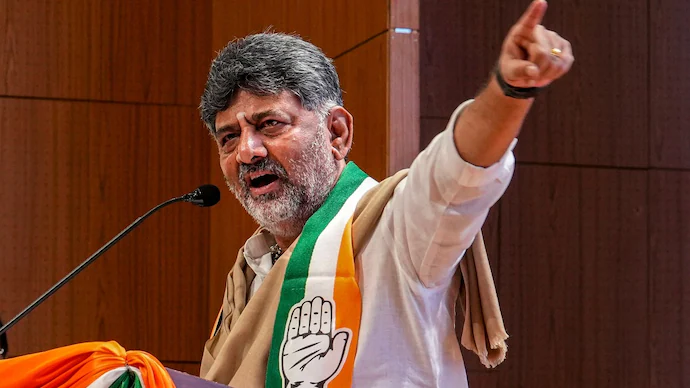
Karnataka Deputy Chief Minister DK Shivakumar has urged corporate organisations to direct their Corporate Social Responsibility (CSR) contributions towards improving government schools in rural areas, setting a target of upgrading at least 1,000 schools over the next two to three years. He said every child in rural Karnataka should have access to quality Education and the opportunity to compete at a global level.
Speaking at the ‘Nanna Shaale, Nanna Javabdari’ (My School, My Responsibility) CSR and Individual Contributors Programme at the Banquet Hall of Vidhana Soudha on Wednesday, Shivakumar reiterated the state government’s commitment to strengthening school infrastructure. He called on companies and individual contributors to work with the administration to improve educational facilities, particularly in villages.
During the programme, 15 memorandums of understanding (MoUs) were signed for the development of 56 schools at an estimated cost of Rs 206.10 crore. The initiative is part of a wider effort to bring corporate participation into government school development and expand access to better educational infrastructure across the state.
Karnataka Sets Target to Upgrade 1,000 Government Schools
Shivakumar said improving at least 1,000 government schools within the next two to three years could help Karnataka establish a national benchmark in school development. He stressed that children living in rural areas should not face limitations in educational opportunities because of where they are born or live.
“Children in rural areas must develop. Every child in rural regions should be capable of competing at a global level,” he said.
The Chief Minister’s appeal focused on encouraging businesses to support rural schools through CSR initiatives. He said corporate participation could help address infrastructure gaps and create better learning environments for students who depend on government institutions.
The programme brought together corporate organisations and individual contributors to support the government’s school development efforts. The administration is seeking partnerships that can provide financial assistance and practical support for upgrading facilities across rural Karnataka.
Rs 206.10 Crore MoUs Signed for Development of 56 Schools
The programme saw the signing of 15 MoUs covering the development of 56 schools, with an estimated investment of Rs 206.10 crore. The agreements represent a significant component of the state’s ongoing effort to mobilise CSR funding for government education infrastructure.
Earlier in 2026, another 18 MoUs had been signed to upgrade 33 schools with an investment of Rs 85 crore. In addition, 12 more agreements covering 23 schools and involving Rs 64 crore were at an advanced stage of finalisation.
Together, these agreements and proposed partnerships indicate the scale of corporate participation being sought by the Karnataka government. Shivakumar said sustained contributions from businesses could help the state expand the programme and reach more government schools.
The latest agreements also demonstrate how CSR funding is being channelled towards specific school development projects rather than being limited to general financial contributions.
Rural School Development Could Help Reduce Migration to Cities
Shivakumar said improving the quality of education in villages could help address migration to urban centres. He pointed out that families often move to cities in search of better employment opportunities and educational facilities for their children.
According to the Chief Minister, strengthening primary education in rural areas could encourage families to remain in their native places instead of relocating to urban centres for better schooling.
He emphasised that parents across different economic backgrounds consider education an important investment in their children’s future. Referring to drivers and small farmers, he said that good education is regarded by every parent as a valuable asset for their children.
“Every parent, including drivers and small farmers, considers good education for their children as their true asset,” he said.
Shivakumar added that providing better educational facilities could help retain families in villages for at least 15 years. He said this could also ease the growing pressure on cities by reducing the need for families to relocate primarily to access better schools.
The government’s approach links rural education development with broader efforts to strengthen village communities. Better school infrastructure, according to the Chief Minister, could give families greater confidence in the educational opportunities available in their local areas.
Cluster-Based School Development Plan Across 6,000 Gram Panchayats
Shivakumar proposed a cluster-based approach to rural school development covering Karnataka’s 6,000 Gram Panchayats. Under the suggested model, schools would be organised according to a 1:3 Panchayat ratio.
The proposal is intended to provide a structured approach to identifying schools and coordinating development efforts across rural areas. A cluster-based system could help organise infrastructure support and corporate participation across different localities.
By involving Gram Panchayat-level structures, the government aims to extend the school development initiative beyond major urban centres and reach institutions in districts and villages.
The Chief Minister also urged companies not to concentrate their CSR contributions only in Bengaluru. He said corporate assistance should be distributed across districts so that government schools in rural areas can benefit from the programme.
Shivakumar Raises Concerns Over Utilisation of CSR Funds
During his address, Shivakumar raised concerns about how CSR contributions generated by companies operating in Karnataka are being allocated and utilised. He said the state generates approximately Rs 8,000 crore through CSR contributions, but a substantial portion is either not being used effectively within Karnataka or is being directed elsewhere.
He alleged that some companies registered in Mumbai, Delhi and Gujarat route their CSR allocations to those locations instead of directing the funds towards development activities in Karnataka.
The Chief Minister said he had approached the Prime Minister and the Union Finance Minister seeking greater oversight of CSR fund allocation and utilisation. His appeal focused on ensuring that contributions generated by businesses operating in Karnataka also support development priorities within the state.
He called on profitable companies with operations in Karnataka to contribute towards improving educational opportunities for rural children. According to Shivakumar, greater participation from corporate organisations could help address the infrastructure requirements of government schools.
Companies Asked to Support School Construction and Basic Facilities
Shivakumar said corporate organisations could contribute to several aspects of government school development. Their assistance could cover school construction, teacher salaries, drinking water facilities and infrastructure maintenance.
These areas represent different requirements involved in improving the overall learning environment. While construction and maintenance can address physical infrastructure gaps, support for drinking water and teacher salaries can contribute to the functioning of schools.
The Chief Minister urged companies to work with the government and identify areas where their CSR contributions could make a direct difference. He said corporate assistance should extend beyond Bengaluru and reach schools across Karnataka’s districts.
He also indicated that the government was prepared to facilitate partnerships by providing necessary support, including land, incentives and clearances, within the applicable legal framework.
District Authorities Authorised to Sign MoUs With Companies
To make corporate participation easier, district-level authorities have also been authorised to enter into MoUs directly with corporate organisations. These authorities include Deputy Commissioners, Deputy Directors of Public Instruction and Zilla Panchayat Chief Executive Officers.
The arrangement is intended to support coordination between companies and local administrations. Allowing district officials to sign agreements directly could help organisations identify schools and establish partnerships closer to the locations where development assistance is required.
Shivakumar emphasised that all assistance must be provided within the legal framework. He said the government would facilitate companies through the necessary administrative processes while encouraging them to participate in rural education development.
The involvement of district authorities is also expected to support the wider geographical reach of the initiative, particularly in areas where government schools require infrastructure improvements.
Government Invites Corporate Leaders to Join School Development Initiative
Concluding his address, Shivakumar invited corporate leaders and organisations to collaborate with the Karnataka government in expanding the school development programme. He said the administration was open to feedback and course correction as the initiative progresses.
He expressed confidence that sustained corporate participation could help transform government schools and improve educational opportunities for children in rural areas. The broader objective, he said, was to ensure that students in villages receive education comparable to global standards.
The ‘Nanna Shaale, Nanna Javabdari’ programme is built around the idea that improving government schools requires participation from multiple stakeholders, including the government, businesses and individual contributors.
With 1,000 schools targeted for development over the next two to three years, the government’s appeal places CSR partnerships at the centre of its rural education infrastructure plans. The success of the initiative will depend on sustained contributions, coordination with district authorities and the effective implementation of school development projects across Karnataka.
For breaking news and live news updates, like us on Facebook or follow us on Twitter and Instagram. Read more on Latest India on thefoxdaily.com.






COMMENTS 0