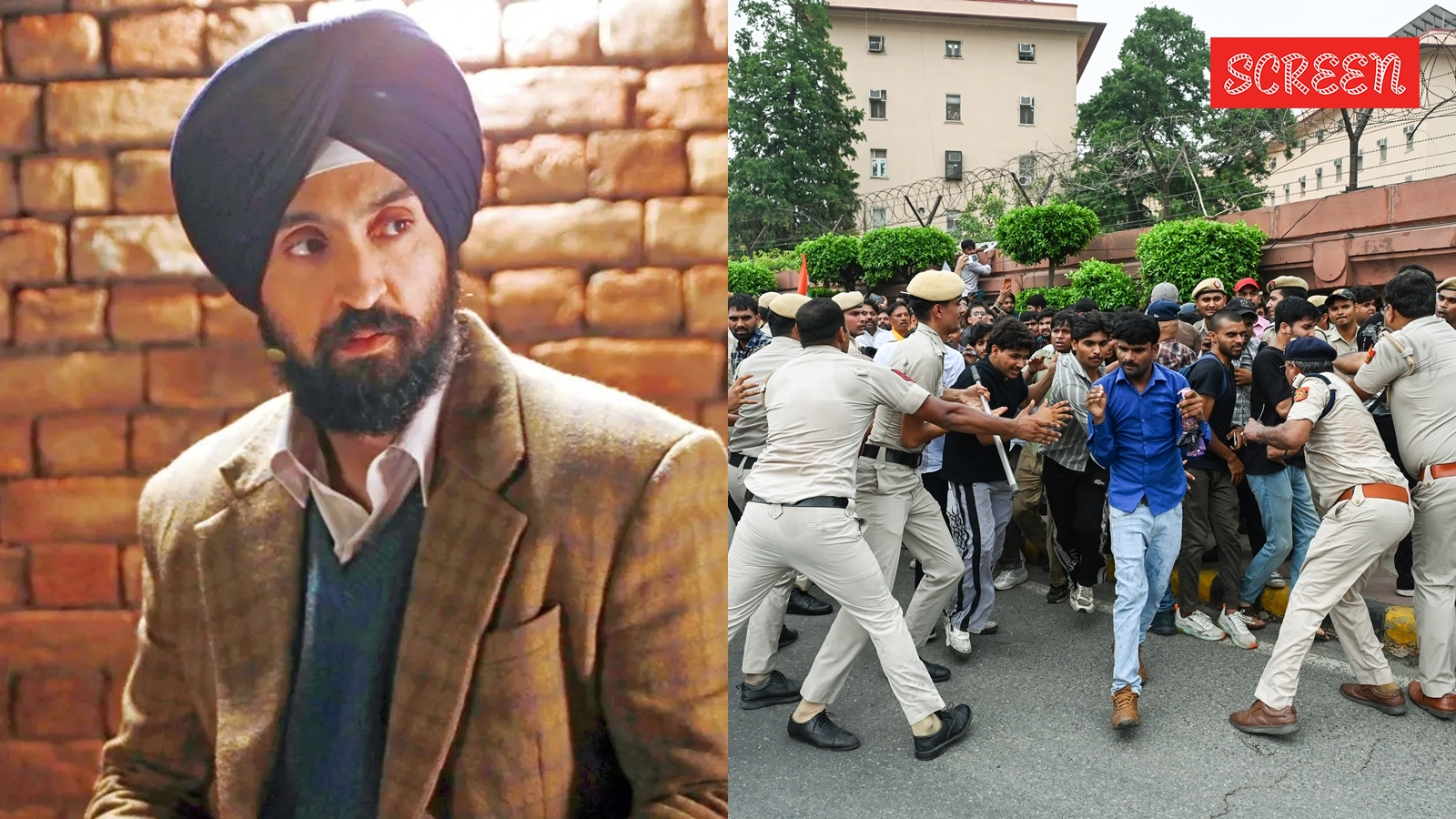
Celebrity voices often amplify public conversations, especially when they concern issues affecting millions of young people. Diljit Dosanjh‘s latest statement on the CJP-led student protests has quickly become a talking point, not just because of his popularity but because it touches on broader themes of democratic participation, freedom of expression and the role public figures play in political and social debates.
The protests, centered on the NEET-UG paper leak controversy, have already triggered intense political reactions. While some leaders have emphasized maintaining law and order, Dosanjh’s intervention shifts the focus back to students, urging authorities to engage with their concerns rather than allowing the debate to become solely about politics.
What Did Diljit Dosanjh Say?
Through a note shared on social media, Diljit Dosanjh expressed disappointment over how student protesters were treated during the demonstrations.
“What happened today was really sad. Students shouldn’t have been treated this way. I request the authorities to listen to the demands of the students. The voice of the masses is the voice of God.”
He also acknowledged that expressing support for the protesters could once again lead to criticism directed at him.
“I have been tagged as an anti-national on many occasions. Even now, I will be called anti-national. After the farmers’ protest, I faced a lot of backlash and legal problems which I can’t even discuss. Rest, God is watching everything.”
His message was partly written in Punjabi, reflecting the style in which he often communicates with his audience.
Why Are Students Protesting?
The demonstrations are linked to the NEET-UG paper leak controversy, which has become one of India’s biggest education-related issues in recent years.
Student groups and political organizations have argued that alleged irregularities compromised the fairness of the examination and affected the future of medical aspirants who spent years preparing for one of the country’s most competitive entrance tests.
The Cockroach Janta Party (CJP) organized the ‘Chalo Sansad’ march demanding accountability and action over the controversy.
Understanding the NEET-UG Controversy
The National Eligibility cum Entrance Test (NEET-UG) serves as the primary entrance examination for undergraduate medical education across India. Every year, millions of students compete for a limited number of seats.
Allegations surrounding question paper leaks transformed what initially appeared to be an examination controversy into a nationwide issue involving investigations, court proceedings, political debate and public protests.
The controversy has raised important concerns about:
- Integrity of competitive examinations.
- Security of confidential question papers.
- Trust in the admission process.
- Student mental health.
- Accountability within examination systems.
Why Diljit Dosanjh’s Statement Is Significant
Diljit Dosanjh has built a reputation for speaking on issues beyond entertainment. Whether discussing agriculture, social concerns or humanitarian causes, he has often used his public platform to express personal views on matters affecting ordinary citizens.
His latest comments are significant because they focus less on political parties and more on the treatment of students during protests.
Rather than commenting on the investigation itself, Dosanjh emphasized listening to young people whose futures are directly affected by examination controversies.
His Reference to the Farmers’ Protest
One of the most widely discussed parts of Diljit’s statement was his reference to the farmers’ protest of 2020–21.
He said supporting farmers previously resulted in:
- Public criticism.
- Being labelled “anti-national.”
- Legal difficulties that he chose not to elaborate upon.
By recalling that experience, Dosanjh suggested he expected similar criticism for supporting student protesters.
The Role of Celebrities in Public Movements
Public figures frequently face a difficult balancing act when commenting on social or political issues.
| Potential Benefits | Potential Challenges |
|---|---|
| Raises awareness. | Political criticism. |
| Amplifies public concerns. | Polarized public opinion. |
| Encourages dialogue. | Social media backlash. |
| Brings media attention. | Misinterpretation of statements. |
| Inspires civic participation. | Pressure from multiple groups. |
Because celebrities have large audiences, even brief statements can influence public conversations, although they also become subject to greater scrutiny.
Freedom of Expression and Democratic Debate
India’s democratic framework allows citizens—including artists, actors and musicians—to express opinions on public issues, subject to constitutional and legal limitations.
Support for or criticism of public policy often becomes part of broader democratic discourse, particularly when national issues affect millions of people.
At the same time, public responses to celebrity opinions frequently reflect the country’s diverse political viewpoints.
Why the NEET Debate Extends Beyond Politics
While political parties have taken differing positions on the paper leak controversy, the issue fundamentally concerns educational fairness.
For students, competitive examinations often represent years of preparation, financial investment and family expectations.
Consequently, allegations involving examination integrity resonate far beyond political circles.
| Stakeholder | Primary Concern |
|---|---|
| Students | Fair examination process. |
| Parents | Transparency and credibility. |
| Educational Institutions | Admission integrity. |
| Government | Maintaining public confidence. |
| Law Enforcement | Investigating alleged malpractice. |
How Public Reactions Have Evolved
Public opinion surrounding celebrity activism has changed considerably over the past decade.
Earlier, actors generally avoided commenting on political developments. Today, social media enables celebrities to communicate directly with millions of followers, making personal statements both more immediate and more influential.
However, increased visibility also means that public figures often receive equally strong support and criticism regardless of the position they take.
A Timeline of Recent Events
| Event | Development |
|---|---|
| NEET-UG Examination | Medical entrance test conducted nationwide. |
| Paper Leak Allegations | Questions raised regarding examination fairness. |
| Investigations Begin | Authorities initiated inquiries into alleged irregularities. |
| Student Demonstrations | Protests organized demanding accountability. |
| CJP’s ‘Chalo Sansad’ March | Political protest held during Parliament session. |
| Diljit Dosanjh’s Statement | He urged authorities to listen to students and avoid mistreating protesters. |
Why Listening to Students Matters
One notable aspect of Dosanjit’s message is that it focuses on dialogue rather than confrontation.
His appeal asks authorities to engage with students’ concerns instead of allowing tensions to escalate. Regardless of differing political opinions, constructive communication often remains one of the most effective ways to address public grievances.
Education-related controversies can have lasting effects on student confidence, making transparency and timely communication especially important.
What Happens Next?
The NEET-UG controversy continues to evolve through investigations, parliamentary discussions and public debate. Student organizations are expected to continue seeking accountability, while policymakers face growing pressure to strengthen examination security and restore confidence in national testing systems.
Meanwhile, celebrity interventions like Diljit Dosanjh’s are likely to keep the conversation visible beyond traditional political forums, ensuring that the focus remains not only on the controversy itself but also on the experiences of students directly affected.
Conclusion
Diljit Dosanjh’s support for the CJP-led student protests has added another influential voice to the ongoing national conversation surrounding the NEET-UG paper leak controversy. By emphasizing that students deserved better treatment and urging authorities to hear their concerns, he shifted attention toward the human impact of the issue rather than its political dimensions alone.
Whether one agrees with his position or not, the episode illustrates the growing role public figures play in shaping civic conversations. Ultimately, restoring trust in India’s examination system will depend not only on investigations and legal action but also on transparent communication, institutional accountability and meaningful engagement with the students whose futures are at stake.
For breaking news and live news updates, like us on Facebook or follow us on Twitter and Instagram. Read more on Latest Entertainment on thefoxdaily.com.






COMMENTS 0