- What we know so far
- Exam stress: a silent but widespread pressure
- The bigger issue: mental health in academic institutions
- A comparison: academic pressure vs available support
- Why timing matters in such cases
- The role of peers and campus culture
- A deeper insight: success pressure vs personal well-being
- What can institutions do better?
- What students should remember
- Conclusion: a wake-up call, not just a tragedy
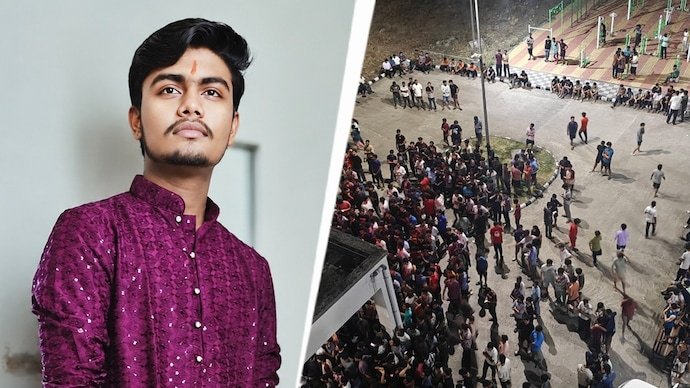
A second-year student at the Indian Institute of Information Technology (IIIT) Nagpur died after falling from a hostel building in the early hours of Monday, in an incident that has once again brought the issue of exam stress and student Mental health into sharp focus.
The student, identified as 20-year-old Shreyash Chandrakant Mane from Kolhapur, was pursuing Computer Science and was reportedly under academic pressure ahead of upcoming semester examinations.
The incident occurred at a time when most of the campus was asleep between 4:00 am and 4:30 am leaving the student community shocked and searching for answers.
What we know so far
Authorities have confirmed that the student fell from the ninth floor of a hostel building. No note was found at the scene, and officials have registered a case of accidental death while continuing to investigate all possible angles.
Early inputs suggest that academic stress may have been a contributing factor, with examinations just days away. However, investigators are also examining personal and digital evidence to understand the full context.
For many on campus, the tragedy feels both sudden and deeply unsettling.
Exam stress: a silent but widespread pressure
While individual circumstances vary, exam stress is a reality faced by Students across institutions. The pressure to perform, combined with tight deadlines and high expectations, can create an overwhelming Environment.
In highly competitive academic settings, this pressure often intensifies due to:
- Fear of falling behind in coursework
- Concerns about future career prospects
- Comparisons with peers
- Lack of adequate rest during exam periods
What makes exam stress particularly challenging is that it often remains invisible students may struggle internally without expressing their concerns openly.
The bigger issue: mental health in academic institutions
This incident is not isolated. Across India and globally, there has been growing concern about mental health challenges among students, especially in high-performance environments.
Institutions have introduced counseling services and support systems, but gaps still remain in awareness, accessibility, and early intervention.
In many cases, students hesitate to seek help due to stigma or fear of being judged.
That hesitation can turn manageable stress into something far more serious.
A comparison: academic pressure vs available support
| Factor | Reality for Many Students | Ideal Support System |
|---|---|---|
| Workload | High, especially before exams | Structured with flexibility |
| Mental health awareness | Limited or inconsistent | Open and normalized |
| Access to counseling | Available but underused | Easily accessible and encouraged |
| Peer support | Informal | Organized and proactive |
This gap between pressure and support is where many problems begin to escalate.
Why timing matters in such cases
Academic stress tends to peak during specific periods exams, results, and deadlines. These are also the times when students are most vulnerable.
Late-night study schedules, reduced sleep, and isolation can amplify anxiety, making it harder for individuals to cope.
In this case, the early morning timing of the incident highlights how such struggles often unfold quietly, away from immediate help.
The role of peers and campus culture
Students often turn to their peers before approaching formal support systems. This makes campus culture an important factor in mental health.
A supportive environment where conversations about stress and well-being are normal can make a significant difference.
On the other hand, highly competitive or isolating environments can unintentionally discourage openness.
A deeper insight: success pressure vs personal well-being
There is a broader issue at play how success is defined in academic spaces.
For many students, performance becomes the central measure of self-worth. When that happens, setbacks can feel far more intense than they actually are.
This creates a dangerous imbalance:
- High expectations
- Low emotional resilience support
Addressing this imbalance requires more than policies it requires a shift in mindset.
What can institutions do better?
While no system can eliminate all risks, there are steps institutions can take to reduce them:
- Proactive mental health check-ins during exam periods
- Stronger awareness campaigns to reduce stigma
- Better integration of counseling services into daily campus life
- Training faculty to पहचान early signs of distress
These measures are not just reactive they help build resilience over time.
What students should remember
Moments of stress, especially during exams, can feel overwhelming but they are temporary.
Reaching out to a friend, a mentor, or a counselor can make a critical difference. Even small conversations can help break the cycle of isolation.
It’s also important to recognize that academic performance, while important, is not the only measure of a person’s value or future.
Conclusion: a wake-up call, not just a tragedy
The death of a young student is always devastating. But beyond grief, it should also prompt reflection.
This incident is a reminder that academic excellence and student well-being must go hand in hand. One cannot come at the cost of the other.
As investigations continue, the focus must also remain on what can be done differently so that campuses are not just places of learning, but also spaces of support.
Because sometimes, the most important lessons are not in textbooks but in how we take care of each other.
For breaking news and live news updates, like us on Facebook or follow us on Twitter and Instagram. Read more on Latest India on thefoxdaily.com.






COMMENTS 0