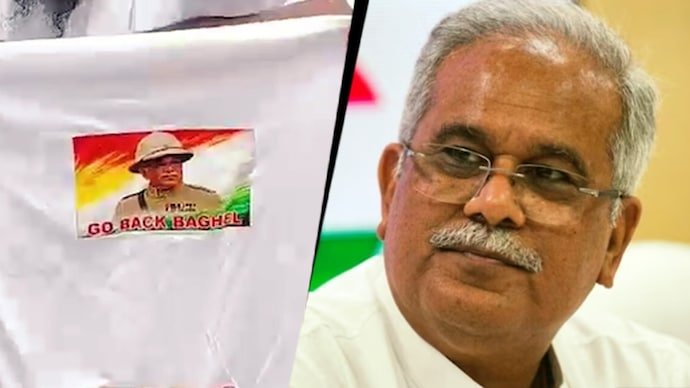
The Punjab Congress rift came into sharp focus in Ludhiana on Thursday when an organisational meeting was disrupted by Protests, anti-Bhupesh Baghel slogans and a brief scuffle between rival groups within the party. The confrontation unfolded during the Congress’s ongoing ‘Har Booth, Congress Mazboot’ campaign, which is aimed at strengthening the organisation ahead of the 2027 Punjab Assembly elections.
Workers opposed to state Congress in-charge Bhupesh Baghel raised “Baghel go back” slogans as Baghel and Punjab Congress president Amarinder Singh Raja Warring took the stage. Some protesters were also seen wearing T-shirts carrying the same message.
The episode was more than a disruption at a single party meeting. It highlighted the continuing disagreements over leadership within the Punjab Congress, particularly between supporters of Warring and those aligned with former Chief Minister Charanjit Singh Channi and former minister Bharat Bhushan Ashu.
What happened at the Ludhiana Congress meeting?
The confrontation took place during the Congress’s organisational outreach programme in Ludhiana. The party has been conducting the ‘Har Booth, Congress Mazboot’ campaign as part of its preparations for the next Assembly election.
When Baghel and Warring appeared on stage, a group of workers began raising slogans against the Congress’s Punjab in-charge. The protesters also voiced support for Channi and Ashu, signalling that the disagreement was not limited to opposition to Baghel alone.
The situation became tense after Warring asked the protesters to leave. A brief physical confrontation followed between Warring’s supporters and workers backing Ashu.
The disruption was eventually brought under control, but the exchange exposed the depth of dissatisfaction among sections of the state unit at a time when the Congress is attempting to project organisational unity.
Why are Congress workers opposing Baghel?
The slogans against Baghel reflect a wider dispute over the direction and leadership of the Punjab Congress. Baghel has been involved in overseeing the party’s organisational activities in the state, while Warring remains the state Congress president.
A section of party leaders and workers has objected to Warring continuing in the state leadership. The disagreement has become particularly visible among leaders associated with Channi.
The Congress leadership on July 1 retained Warring as the Punjab unit president while appointing Channi as chairman of the party’s campaign committee. That arrangement has not eliminated the underlying differences between the factions.
Instead, Thursday’s confrontation suggests that questions surrounding leadership and organisational control remain unresolved.
Warring accuses protesters of trying to disrupt the programme
After the incident, Warring strongly criticised those involved. He described the protesters as “RSS sycophants” and said there had been information that some individuals might attempt to create trouble during the programme.
Warring maintained that the protests represented only a small group and insisted that Congress programmes across Punjab were receiving a positive response.
His remarks triggered a sharp response from supporters of Ashu. They rejected the allegation that they were connected to the Rashtriya Swayamsevak Sangh and questioned Warring’s authority to label them as outsiders or opponents of the Congress.
The dispute therefore moved quickly from an argument over Baghel’s role to a broader confrontation over who represents the legitimate voice of the Punjab Congress.
Ashu supporters challenge Warring
Supporters of Bharat Bhushan Ashu said they were Congress workers and did not require certification from the state party chief to establish their allegiance.
The response is significant because Ashu has emerged as one of the leaders associated with the faction challenging aspects of the current state leadership. His supporters’ presence at the Ludhiana meeting showed that the internal contest is not confined to private discussions among senior leaders.
Warring, meanwhile, referred to Ashu as his “brother” while recalling his previous support for the former minister.
Warring said he had personally stood by Ashu during his period in custody following his arrest and recalled staging a continuous sit-in outside the Vigilance Bureau office. His remarks appeared aimed at underlining his previous association with Ashu despite their current political differences.
Baghel warns of action over indiscipline
Baghel took a tougher organisational position following the disruption. He said the Congress would identify those responsible and take action, warning that there would be “zero tolerance” towards indiscipline.
He also argued that the party needed to distinguish between its external political opponents and individuals working against it from within. Referring to alleged “Sleeper Cells” and “internal saboteurs”, Baghel said such elements should be identified and removed.
The language reflects the seriousness with which the Congress leadership is viewing internal disruption. For a party preparing for a major state election, public disagreements among workers can become a political liability if they overshadow its campaign message.
Congress says the campaign belongs to the organisation
Baghel also emphasised that the Ludhiana programme was not the personal event of any individual leader. He said the campaign was being conducted under the direction of Congress president Mallikarjun Kharge and senior leader Rahul Gandhi.
That argument is important in the context of Punjab’s factional Politics. The Congress leadership is attempting to frame its booth-level campaign as a collective organisational exercise rather than a platform for individual leaders or competing groups.
Baghel said the campaign was receiving a strong response across Punjab and expressed confidence that the Congress could return to power in the 2027 Assembly elections.
Why the Punjab Congress rift matters before 2027
The immediate political significance of the Ludhiana incident lies in its timing. The next Punjab Assembly election is still ahead, but parties are already working to strengthen their grassroots structures and identify electoral weaknesses.
For the Congress, organisational cohesion will be particularly important. Booth-level mobilisation requires cooperation between local workers, district leaders and the state leadership. Public clashes can make that coordination more difficult and give rival parties an opportunity to portray the Congress as divided.
At the same time, internal disagreement is not necessarily unusual in a large political organisation. Factions can compete over strategy, leadership and candidate selection without automatically determining an election’s outcome.
The bigger question is whether the Punjab Congress can convert its internal debate into an organisational settlement before the campaign becomes more intense.
Channi’s role adds another layer to the dispute
The continuing role of former Chief Minister Charanjit Singh Channi is central to the current factional equation. Channi’s supporters have opposed Warring’s continuation as Punjab Congress president and have demanded a change in the state leadership.
At the same time, the Party Leadership has retained Warring while giving Channi a significant role as chairman of the campaign committee.
This arrangement gives both leaders important positions, but it does not necessarily remove the political competition between their respective supporters.
The Ludhiana incident demonstrates how that competition can spill into organisational programmes. Slogans supporting Channi during protests against Baghel and Warring showed that the leadership dispute remains connected to the grassroots organisation.
What the confrontation reveals about the Congress strategy
The Congress’s immediate strategy is focused on strengthening its organisation at the booth level. The name of the campaign, ‘Har Booth, Congress Mazboot’, itself reflects that objective.
But an effective booth-level campaign requires more than public meetings. It depends on workers agreeing to operate under a common leadership structure and communicate a consistent political message to voters.
That is why incidents such as the Ludhiana confrontation can have importance beyond the number of people involved. They can become symbols of wider organisational disagreements, particularly when they occur in front of party leaders and receive public attention.
Baghel’s warning about disciplinary action indicates that the party leadership wants to prevent such incidents from becoming routine. The challenge will be to enforce discipline without deepening resentment among rival factions.
Could the dispute affect the 2027 Assembly election?
It is too early to conclude that the latest confrontation will directly determine the Congress’s electoral performance in 2027. Elections are influenced by multiple factors, including Governance issues, candidate selection, alliances, voter preferences and the performance of competing parties.
However, the organisational Health of a party can affect its ability to translate public support into votes. A divided local organisation can make campaign coordination harder, while a disciplined network can help a party reach voters more effectively.
The key test for the Punjab Congress will therefore be whether its leadership can resolve or manage factional disagreements while continuing its booth-level mobilisation.
What happens next for Punjab Congress?
The immediate focus is likely to remain on the party’s organisational campaign and the response to the Ludhiana disruption. Baghel has already warned that disciplinary action could follow, while Warring continues to defend his position as state Congress chief.
The Congress will also have to manage relations between supporters of Warring and Channi. With both leaders holding important positions, the party has created a structure that can potentially accommodate competing political interests, but the arrangement will require cooperation to work effectively.
For now, the Ludhiana incident has made one thing clear: the Punjab Congress rift remains an active political issue. Whether it becomes a lasting electoral weakness or is contained through organisational discipline and political negotiation will depend on what the party does next.
For breaking news and live news updates, like us on Facebook or follow us on Twitter and Instagram. Read more on Latest India on thefoxdaily.com.






COMMENTS 0