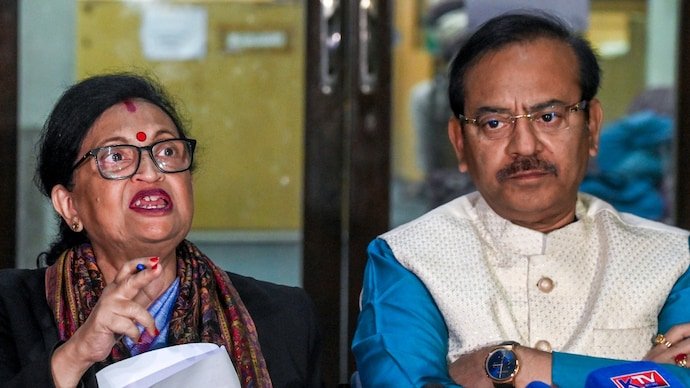
The Trinamool Congress (TMC), one of India’s most influential regional political parties, is facing one of the most serious internal challenges in its History. What began as a Leadership dispute has now expanded into a battle over organisational authority, legislative control, and even access to the party’s financial resources.
The latest flashpoint emerged when former West Bengal Sports Minister Aroop Biswas, widely regarded as a long-time loyalist of party chief Mamata Banerjee, wrote to HDFC Bank requesting an immediate freeze on debit transactions and operational changes linked to TMC accounts. The move has transformed an internal political struggle into a financial and administrative conflict, raising questions about Governance, legitimacy, and the future direction of the party.
With rebellion spreading across both the West Bengal Assembly and Parliament, the dispute represents more than a routine organisational disagreement. It reflects a broader contest over leadership, succession, party structure, and Political Strategy ahead of crucial electoral battles.
Why the TMC Financial Dispute Matters
Political parties depend heavily on their financial Infrastructure to conduct day-to-day operations, organise campaigns, support party workers, and prepare for Elections. Control over bank accounts is therefore not merely an administrative matter—it often symbolizes control over the organisation itself.
Aroop Biswas’s request to halt account operations signals concerns regarding who currently possesses legitimate authority to make financial decisions on behalf of the party.
In his communication to the bank, Biswas reportedly cited a serious dispute over organisational control. Such a move is unusual because internal disagreements rarely escalate into formal requests involving financial institutions.
The development suggests that factional divisions have reached a level where competing groups may no longer fully recognize each other’s authority within the party structure.
Understanding the Background of the Crisis
The current turmoil did not emerge overnight. Over recent months, signs of growing dissatisfaction within sections of the party had become increasingly visible.
Several issues contributed to the tensions:
- Disagreements over leadership decisions
- Organisational restructuring efforts
- Questions about representation within the party
- Power struggles among senior leaders
- Concerns regarding future electoral strategy
- Differences over opposition Politics at the national level
The situation escalated after a major organisational reshuffle announced by Mamata Banerjee, during which existing party units were dissolved and restructured.
As part of this exercise, Subhashish Chakraborty was appointed party treasurer, replacing Aroop Biswas in that role.
The timing of the bank letter has therefore attracted significant attention because it comes shortly after the leadership changes were implemented.
The Assembly Rebellion: A Turning Point
The financial dispute cannot be understood without examining the parallel rebellion unfolding within the West Bengal Assembly.
Recent developments indicate that a substantial section of TMC legislators chose to defy the party leadership on a crucial organisational matter.
According to reports, 58 out of 80 MLAs initially broke ranks and supported an alternative position regarding legislative leadership. Subsequently, reports suggested that support for the rebel camp increased further, strengthening its influence inside the Assembly.
The scale of the rebellion is significant because legislative unity has traditionally been one of the TMC’s strengths.
When large numbers of elected representatives openly challenge central leadership decisions, it signals deeper structural issues within the organisation.
Parliamentary Setback Adds to Pressure
The challenges facing the TMC are not limited to West Bengal.
The party has also reportedly experienced substantial turbulence within its parliamentary ranks.
Political analysts note that maintaining cohesion among Members of Parliament is particularly important for regional parties seeking influence at the national level.
Parliamentary strength provides:
- National visibility
- Negotiating power in coalition politics
- Committee representation
- Policy influence
- Media attention
- Fundraising advantages
Any erosion of parliamentary unity can significantly weaken a party’s leverage in national political discussions.
Why Internal Revolts Become Financial Battles
Political history shows that leadership struggles often evolve beyond ideological disagreements.
Once rival factions emerge, disputes frequently extend into:
- Control of party headquarters
- Organisational appointments
- Election symbols
- Membership databases
- Financial resources
- Campaign infrastructure
The reason is straightforward: political legitimacy and organisational control are closely interconnected.
Who controls the resources often determines who can effectively mobilize supporters, run campaigns, and maintain influence within the party structure.
This explains why financial institutions sometimes become unexpected participants in political disputes, even though their role remains administrative rather than political.
The Challenge of Organisational Restructuring
Major political parties periodically undertake restructuring exercises to improve efficiency, reward performance, or prepare for future elections.
However, such reforms carry risks.
While intended to strengthen the organisation, restructuring can also create uncertainty among existing leaders and office-bearers.
Common challenges include:
- Resistance from displaced leaders
- Confusion regarding authority
- Factional competition
- Communication breakdowns
- Regional dissatisfaction
- Questions about transparency
Successful restructuring requires balancing renewal with continuity—a task that becomes particularly difficult in large political organisations with multiple power centers.
Historical Perspective: Internal Crises in Political Parties
Indian political history offers numerous examples of major parties facing internal rebellions.
| Common Cause | Potential Impact |
|---|---|
| Leadership disputes | Factional divisions |
| Succession battles | Splinter groups |
| Organisational reforms | Resistance from established leaders |
| Electoral setbacks | Questioning of leadership decisions |
| Resource allocation disputes | Financial and administrative conflicts |
| Ideological differences | Long-term fragmentation |
Some parties emerge stronger after resolving internal tensions, while others experience lasting fragmentation.
The outcome often depends on leadership flexibility, negotiation capacity, and the ability to accommodate competing interests.
Implications for West Bengal Politics
The developments inside the TMC carry implications beyond the party itself.
As one of West Bengal’s dominant political forces, any major organisational disruption could reshape the state’s political landscape.
Several key questions now emerge:
- Can the leadership restore unity before future elections?
- Will the rebel faction remain within the party or chart an independent course?
- How will opposition parties respond to the instability?
- Can organisational restructuring continue amid internal resistance?
- Will financial disputes escalate into legal challenges?
The answers could influence not only party dynamics but also broader electoral competition across the state.
The Importance of Financial Transparency in Political Organisations
The Controversy also highlights the growing importance of financial governance within political parties.
Modern political organisations handle substantial resources and increasingly face public scrutiny regarding accountability and transparency.
Strong financial governance typically requires:
- Clear authorization structures
- Transparent decision-making processes
- Defined responsibilities for office-bearers
- Proper documentation of leadership changes
- Compliance with regulatory requirements
When leadership disputes arise, these systems become critical for ensuring continuity and preventing operational disruptions.
What Happens Next?
Several scenarios could emerge over the coming weeks.
The party leadership may attempt reconciliation with dissatisfied legislators and leaders. Alternatively, formal disciplinary measures could be considered if divisions continue to widen.
The bank-related dispute may also require clarification regarding who currently possesses authorized authority over party accounts.
Meanwhile, political observers will closely watch whether the rebel camp consolidates further support or whether negotiations restore organisational unity.
Much will depend on the ability of senior leaders to balance authority with accommodation while maintaining confidence among elected representatives and party workers.
Conclusion: A Defining Moment for the TMC
The Trinamool Congress finds itself at a pivotal moment. What began as an internal leadership disagreement has evolved into a multidimensional crisis involving legislative rebellion, parliamentary uncertainty, organisational restructuring, and now a dispute over financial control.
Aroop Biswas’s request to freeze account-related operations has brought the conflict into an entirely new arena, underscoring how deeply questions of legitimacy and authority now run within the party.
For the TMC, the coming months will likely determine whether this episode becomes a temporary period of turbulence or a transformative turning point in its political journey.
The broader lesson extends beyond one party: in modern politics, organisational unity, financial governance, and leadership credibility are increasingly interconnected. When any one of these pillars comes under strain, the consequences can quickly spread across the entire political structure.
As West Bengal and national political observers watch closely, the TMC’s response to this challenge may shape not only its future but also the direction of opposition politics in the years ahead.
For breaking news and live news updates, like us on Facebook or follow us on Twitter and Instagram. Read more on Latest India on thefoxdaily.com.





COMMENTS 0