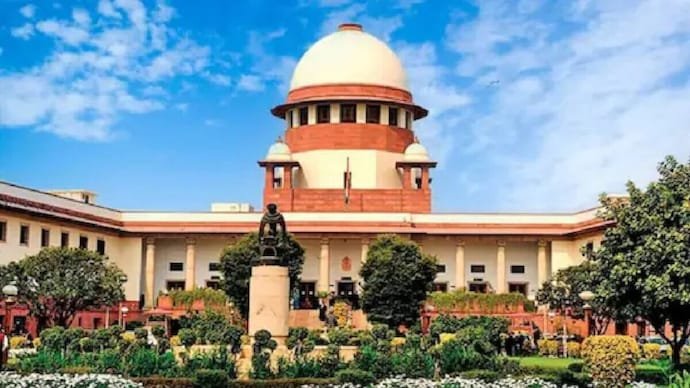
The Supreme Court on Monday directed the Jammu and Kashmir administration to pay rent to Abdul Rashid Wani for land belonging to his family that has been used as a police station in Kangan, Ganderbal, since 1953.
The property, measuring seven kanals and 18 marlas, was taken over by the administration nearly seven decades ago without formal acquisition proceedings or payment of compensation, according to Wani’s case.
A bench comprising Chief Justice Surya Kant and Justices Joymalya Bagchi and V Mohana directed the land acquisition officer to calculate the rent payable for the use of the property from 1953.
However, the Supreme Court did not direct the administration to retrospectively initiate acquisition proceedings from 1953. Instead, it ordered that the acquisition process begin from 2021, when Wani first approached the Jammu and Kashmir and Ladakh High Court.
The High Court will determine the final compensation for the property as well as the rent payable for its use since 1953.
Land was allegedly taken without acquisition
The dispute concerns land at Mouza Kangan in Ganderbal district, bearing survey number 525.
Wani told the courts that the property belonged to his predecessors and was taken over by the administration in 1953 for use as a police station. According to his case, no formal acquisition proceedings were conducted and his family was not paid compensation for the land.
He sought either restoration of the property or initiation of acquisition proceedings. He also sought compensation or rent for the period during which the administration had used the land.
The Supreme Court has now granted him limited relief by directing that rent be calculated from the time the government began using the property.
High Court had rejected Wani’s plea
Wani had approached the Supreme Court through lawyer Mahfooz Ahsan Nazki, challenging a 2022 order of the Jammu and Kashmir and Ladakh High Court.
The High Court had dismissed his petition, citing an unexplained delay of 68 years in approaching the court.
The High Court had observed that a cause of action could not be allowed to remain open indefinitely and described Wani’s claim as what had effectively become a “dead cause of action” because of the prolonged delay.
The court had stressed the importance of bringing legal claims within a reasonable period rather than allowing them to remain unresolved indefinitely.
Wani cited his father’s illiteracy
Wani argued that the delay should not deprive him of relief because the original alleged wrongdoing was committed by the state and his father was illiterate.
He told the High Court that his father lacked the Education necessary to approach the courts and challenge the government’s possession of the property.
The High Court, however, rejected that explanation. It noted that Wani himself was around 42 years old when he filed the petition and had attained adulthood more than two decades earlier.
Wani also claimed that he had approached government authorities repeatedly during the previous 20 years in an effort to resolve the dispute.
According to his case, however, he could not produce documentary evidence of those efforts.
2014 floods cited for missing records
Wani attributed the absence of supporting records to the 2014 Floods, which he said resulted in the destruction of documents.
The claim was relevant to his explanation for why he could not produce evidence supporting his alleged attempts to approach the authorities over the years.
The administration, however, opposed the petition and argued that the claim had been brought after an excessive delay.
It also pointed to the practical difficulty of producing official records relating to possession of the land after several decades.
Administration says police have occupied land since 1953
The Union Territory administration maintained that the Police Department had remained in peaceful possession of the property since 1953.
It argued that the passage of several decades made it difficult to reconstruct the circumstances surrounding the original occupation or locate official records from that period.
The administration therefore opposed Wani’s attempt to reopen the matter after such a long period.
The Supreme Court nevertheless found grounds to provide limited relief by directing payment of rent for the period of government use.
Why the Supreme Court did not order acquisition from 1953
While the Supreme Court directed the administration to calculate rent from 1953, it stopped short of ordering retrospective acquisition proceedings beginning from that year.
The court took into account the fact that Wani approached the courts only in 2021, nearly seven decades after the property was allegedly taken over.
As a result, the acquisition process has been directed to begin from 2021 rather than being treated as if it had commenced in 1953.
This creates two separate components to the relief ordered by the Supreme Court: rent for the government’s use of the land dating back to 1953, and acquisition proceedings beginning from 2021.
High Court to determine final compensation and rent
The Supreme Court has left the calculation of the final amounts to the High Court.
The High Court will determine the compensation payable for the land under the acquisition process and the rent due for the administration’s use of the property from 1953.
The exact amount of rent or compensation was not specified in the supplied material.
The land acquisition officer has been directed to calculate the rent based on the court’s order.
What the Supreme Court order means
The ruling provides Wani with relief despite the extraordinary delay in bringing the claim.
The court did not restore the land to him or order acquisition retrospectively from 1953. Instead, it recognised the need to compensate him for the government’s use of the property while directing that formal acquisition proceedings begin from the year he first approached the High Court.
The order therefore balances the long delay in pursuing the claim against the allegation that government authorities had used private family land for decades without formal acquisition or compensation.
The final financial consequences will depend on the calculations made by the land acquisition authorities and the determination of the High Court.
A dispute spanning more than seven decades
The case dates back to 1953, when the administration allegedly took possession of the land for a police station. The dispute remained unresolved for decades before Wani approached the High Court in 2021.
His case was initially rejected because of the prolonged delay, but the Supreme Court has now provided limited relief by recognising his claim for rent for the period during which the property was used.
The ruling means the administration will have to account financially for its use of the seven-kanal, 18-marla property since 1953, even though the formal acquisition process will begin only from 2021.
The High Court will now determine the final compensation and rent payable, bringing the long-running dispute closer to a financial resolution.
For breaking news and live news updates, like us on Facebook or follow us on Twitter and Instagram. Read more on Latest India on thefoxdaily.com.






COMMENTS 0