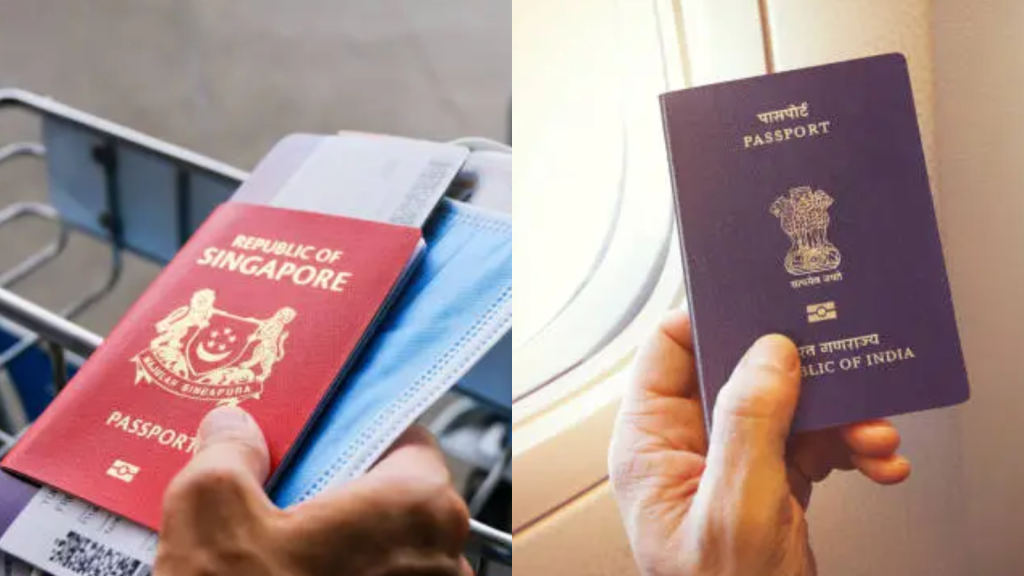
Singapore has reclaimed the top position in the 2026 Henley Passport Index, becoming the world’s most powerful passport for international travel, while India has improved its ranking by one place despite losing access to some visa-free destinations. The latest rankings highlight differences in Global Travel mobility, with several Asian, European and Middle Eastern countries securing leading positions.
According to the 2026 update released by Henley & Partners, Singaporean passport holders can access 193 destinations without obtaining a visa in advance. Japan, South Korea and the United Arab Emirates share second place, offering visa-free access to 188 destinations. Sweden occupies third place, while a number of European countries dominate the remaining positions in the top 10.
India moved from 85th place in 2025 to 84th in 2026. However, the number of destinations accessible to Indian passport holders without a prior visa fell from 57 to 55. India shares its current position with Algeria and Mauritania, demonstrating that an improvement in the overall ranking does not necessarily mean an increase in travel access.
The Henley Passport Index evaluates passports according to the number of destinations their holders can visit without securing a traditional visa before departure. Its latest assessment covers 199 passports and 227 destinations, using data from the International Air Transport Association (IATA), alongside Henley & Partners’ research and online datasets.
Top 10 Most Powerful Passports in 2026
The 2026 ranking places Singapore at the top, followed by countries and groups of countries that offer extensive visa-free travel opportunities. Several positions are shared because multiple passports provide access to the same number of destinations under the index’s methodology.
| Rank | Country or passport | Visa-free destinations |
|---|---|---|
| 1 | Singapore | 193 |
| 2 | Japan, South Korea and United Arab Emirates | 188 |
| 3 | Sweden | Not specified in the supplied data |
| 4 | Belgium, Denmark, Finland, France, Germany, Ireland, Italy, Luxembourg and the Netherlands | Not specified in the supplied data |
| 5 | Austria, Greece, Malta, Portugal and Switzerland | Not specified in the supplied data |
| 6 | Hungary, Malaysia, Poland and the United Kingdom | Not specified in the supplied data |
| 7 | Australia, Canada, Czechia, Latvia, New Zealand, Slovakia and Slovenia | Not specified in the supplied data |
| 8 | Croatia and Estonia | Not specified in the supplied data |
| 9 | Liechtenstein and Lithuania | Not specified in the supplied data |
| 10 | Iceland and the United States | Not specified in the supplied data |
The ranking illustrates the significant differences in international mobility between passport holders. Singapore leads with access to 193 destinations, while Japan, South Korea and the UAE follow with 188 each. The supplied ranking does not specify the precise destination counts for the remaining positions, so those figures should not be inferred from their rankings alone.
Singapore Tops the 2026 Passport Rankings
Singapore has secured first place in the 2026 Henley Passport Index, with its passport providing visa-free access to 193 destinations. This puts the Southeast Asian country ahead of every other passport in the latest ranking and gives its citizens extensive options for international travel without having to obtain a traditional visa before departure.
The country’s position reflects the importance of international travel arrangements in determining passport strength. Visa exemptions and other entry arrangements can make it easier for citizens to travel for tourism, business, family visits and other purposes. However, visa-free access does not remove every travel requirement, as destination-specific entry rules may still apply.
Singapore’s lead also highlights the position of Asian countries in the upper tier of the index. Japan and South Korea share second place alongside the United Arab Emirates, each offering access to 188 destinations without a prior visa. Their performance places three Asian countries and one Middle Eastern country among the leading passports in the world.
Japan, South Korea and UAE Share Second Place
Japan, South Korea and the United Arab Emirates jointly occupy the second position in the 2026 rankings. Passport holders from all three countries can visit 188 destinations without obtaining a traditional visa in advance, according to the supplied index figures.
The shared position demonstrates that the Henley Passport Index ranks passports according to travel access rather than assigning a unique position to every country. When passports offer the same level of access under the index’s methodology, they can occupy the same rank.
The UAE’s position is particularly notable in the regional context because it stands alongside Japan and South Korea, both of which are established leaders in international passport rankings. The result shows that the top tier is not limited to European countries and includes passports from different regions.
For travellers, however, a higher ranking is best understood as an indicator of potential convenience rather than a guarantee of unrestricted entry everywhere. Immigration authorities retain the power to enforce entry conditions, and visa exemptions may be limited to particular purposes or lengths of stay.
European Countries Dominate the Remaining Top 10
European passports account for a large share of the remaining positions in the 2026 top 10. Sweden is ranked third, while nine countries share fourth place: Belgium, Denmark, Finland, France, Germany, Ireland, Italy, Luxembourg and the Netherlands.
Austria, Greece, Malta, Portugal and Switzerland jointly occupy fifth place. Hungary, Malaysia, Poland and the United Kingdom share sixth, making Malaysia the only Asian country in that group and the UK one of the leading European passports.
The seventh position is shared by Australia, Canada, Czechia, Latvia, New Zealand, Slovakia and Slovenia. Croatia and Estonia rank eighth, followed by Liechtenstein and Lithuania in ninth place. Iceland and the United States complete the top 10.
These shared positions are important when interpreting the list. A rank does not necessarily represent one country alone, and several passports can hold the same position. The number of countries appearing in the top 10 is therefore greater than 10.
The ranking also demonstrates that geographical location alone does not determine passport strength. Countries from Europe, Asia, the Middle East, North America and Oceania appear in the leading positions, reflecting differences in the travel access available to their citizens.
India Improves From 85th to 84th Position
India has moved up one place in the Henley Passport Index, improving from 85th position in 2025 to 84th in 2026. Despite the modest rise, the latest figures reveal a contrasting trend: the number of destinations Indian passport holders can visit without obtaining a visa in advance has decreased.
In 2025, Indian passport holders had access to 57 destinations without a prior visa. In the 2026 update, that figure fell to 55. India now shares 84th place with Algeria and Mauritania.
The distinction between ranking and destination access is central to understanding India’s position. A country’s rank depends on how its passport compares with other passports in the index. Its destination count, meanwhile, reflects the number of places accessible under the index’s qualifying entry arrangements.
As a result, a passport can move up the rankings even when the number of destinations available to its holders decreases. Changes in the positions of other countries can affect relative rankings, meaning that an improvement in rank does not automatically translate into more visa-free travel opportunities.
For Indian travellers, the fall from 57 to 55 destinations means that the latest index records access to two fewer destinations without a visa in advance than in the previous year’s figures. Travellers should check the current entry requirements for their intended destination before booking a trip, as visa policies and other conditions can change.
What India’s Passport Ranking Means for Travellers
The Henley Passport Index offers a broad comparison of international mobility, but the ranking is only one factor to consider when planning overseas travel. A passport’s position can provide a useful overview of how many destinations its holder can access without securing a traditional visa beforehand.
For Indian citizens, the 2026 figures suggest that travel planning remains important even as the country improves its overall position. The index records 55 destinations available without a prior visa, but it does not mean that every destination will permit entry under identical conditions.
Some countries may allow visitors to obtain a visa on arrival, while others may require an electronic travel authorisation or a visitor’s permit. These arrangements can involve separate application processes, fees, documentation requirements or restrictions on the purpose of travel.
Travellers may also need to meet requirements relating to passport validity, return or onward tickets, accommodation, financial resources or other documentation, depending on the destination. Visa-free access should therefore not be interpreted as a guarantee of entry.
The difference between India’s rank and its destination count also matters when comparing changes over time. Moving up one place is a relative improvement within the index, but the decrease from 57 to 55 destinations shows that the number of qualifying travel options has not increased in the latest update.
How the Henley Passport Index Ranks Passports
The Henley Passport Index measures the travel access associated with passports by assessing how many destinations their holders can visit without obtaining a traditional visa before departure. The 2026 edition covers 199 passports and 227 destinations worldwide.
The ranking draws on data from the International Air Transport Association (IATA), supplemented by research conducted by Henley & Partners and online datasets. The index applies a scoring system that assigns points according to the entry requirements passport holders face when travelling to each destination.
When a passport receives one point
A passport receives one point when its holder can enter a destination without needing to obtain a visa before travelling. Under the methodology described in the supplied information, the same score applies when travellers can obtain a visa on arrival, a visitor’s permit or an electronic travel authorisation (ETA).
This means the index’s definition of visa-free access is broader than simply travelling with no paperwork at all. Certain destinations may require travellers to complete an authorisation process or obtain permission after arrival while still qualifying for a point under the index’s scoring system.
When a passport receives zero points
A passport receives zero points when a visa is required for entry. The same score applies when travellers must obtain government approval before departure for a visa on arrival.
The system distinguishes between destinations that can be accessed without a traditional advance visa and those where a visa requirement or a qualifying pre-departure approval process applies. These scores are then combined to calculate the passport’s overall result.
How the final score is calculated
The total score equals the number of destinations a passport holder can access without a visa being required in advance under the index’s rules. Passports with access to more destinations receive higher scores, which generally translates into a stronger position in the ranking.
Because multiple passports can have the same score, countries may share a rank. The index is therefore a comparative measure of international mobility rather than a list in which every country receives a unique position.
Why Passport Strength Matters
Passport strength can influence how easily people travel internationally. Travellers who can enter more destinations without applying for a traditional visa in advance may face fewer administrative steps before departure and may find it easier to organise short-notice trips.
For business travellers, access arrangements can affect the preparation required for meetings, conferences and other international engagements. For tourists, they can influence how much advance planning is needed before a holiday. Families visiting relatives abroad may also benefit from entry arrangements that reduce the need for advance visa applications.
However, the index does not measure every aspect of international travel. It does not establish the cost of travelling, the affordability of flights, the duration of permitted stays, the right to work abroad or the likelihood that an individual traveller will be admitted at the border.
A higher passport ranking should therefore be interpreted as greater access under the index’s criteria, not as a comprehensive measure of a country’s economic strength, diplomatic influence or citizens’ overall freedom of movement.
Key Takeaways From the 2026 Henley Passport Index
- Singapore ranks first: Its passport offers visa-free access to 193 destinations.
- Three countries share second place with the UAE: Japan, South Korea and the United Arab Emirates each provide access to 188 destinations without a prior visa.
- Sweden ranks third: It leads the next group of passports in the supplied ranking.
- Europe features prominently: Numerous European countries occupy shared positions from fourth through tenth.
- India rises to 84th place: It improves from 85th in 2025 and shares its current position with Algeria and Mauritania.
- India’s destination count declines: The number of destinations accessible without a prior visa falls from 57 to 55.
- The index uses a points-based system: Passports receive points based on whether their holders can enter destinations without a traditional visa in advance, including through qualifying visa-on-arrival or authorisation arrangements.
Conclusion
The 2026 Henley Passport Index places Singapore at the top of the global passport rankings, followed by Japan, South Korea and the United Arab Emirates. European countries continue to occupy a substantial share of the leading positions, while Australia, Canada, New Zealand and the United States also feature among the top-ranked passports.
India has recorded a one-place improvement, moving from 85th to 84th. However, the reduction in its visa-free destination count from 57 to 55 shows why rankings and actual travel access should be considered separately.
For Indian passport holders, the latest results offer a snapshot of international mobility rather than a substitute for checking individual countries’ entry rules. Visa policies can change, and travellers should confirm the requirements that apply to their destination before departure. Ultimately, the index provides a useful comparison of passport access, while the practical experience of travelling abroad depends on the rules and conditions governing each journey.
For breaking news and live news updates, like us on Facebook or follow us on Twitter and Instagram. Read more on Latest India on thefoxdaily.com.


COMMENTS 0