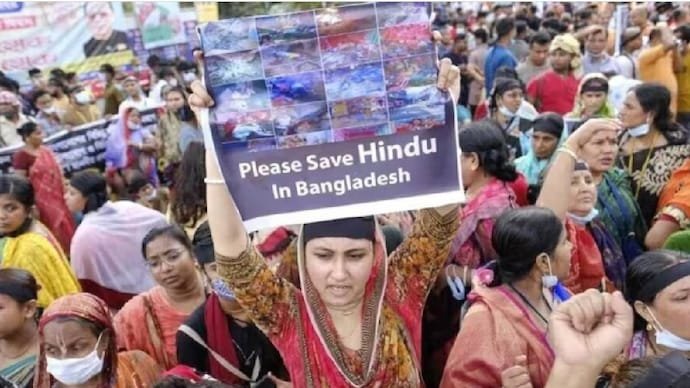
A growing humanitarian and political crisis is unfolding along the Indo-Bangladesh border in West Bengal, where undocumented Bangladeshi migrants are increasingly gathering near border checkpoints amid fears of detention, deportation, and tightening verification drives.
At the Hakimpur border area in North 24 Parganas district, families carrying bags, blankets, food packets, and identity documents have spent recent days waiting under uncertainty as authorities verify their records before moving them to holding centres.
The situation has rapidly evolved into more than just a border enforcement issue.
It has exposed the long-running realities of illegal migration, porous borders, labour dependency, identity politics, documentation loopholes, and the emotional trauma faced by families who spent years and in some cases generations living in India without legal citizenship.
Officials on the ground say hundreds of undocumented migrants have already been processed since the latest verification and crackdown measures intensified.
Many migrants claim they entered India years ago through informal border routes with the help of agents and middlemen, primarily in search of work, safety, or better economic opportunities.
Now, with pressure increasing from authorities, many say they feel they have no option but to return.
Why Bangladeshi Migration Into India Has Continued for Decades
Illegal migration from Bangladesh into India is not a new phenomenon.
The India-Bangladesh border stretches over 4,000 kilometres, making it one of the longest land borders in the world.
Large sections of the border pass through densely populated villages, river belts, agricultural areas, and difficult terrain, making surveillance extremely challenging.
Migration across the border has historically been driven by several major factors:
- Poverty and unemployment
- Search for better wages
- Family and cultural ties across Bengal
- Political instability
- Environmental pressures and flooding
- Demand for low-cost labour in Indian cities
For decades, undocumented migrants found work in construction, domestic labour, transportation, agriculture, small factories, and informal urban economies across West Bengal and neighbouring states.
Many eventually obtained local identity documents through informal networks, forged papers, or political patronage.
Over time, entire communities emerged where undocumented migrants blended into local populations due to shared language, culture, and religion.
What Is Happening at the Hakimpur Border
The Hakimpur border region has now become one of the focal points of the ongoing crackdown.
police and administrative teams have established registration desks where migrants arriving near the border are being documented.
Officials are reportedly verifying Bangladeshi documents and preparing databases before transferring individuals to temporary holding centres.
Authorities say records of hundreds of migrants have already been prepared within days.
Those arriving include families from:
- Kolkata outskirts
- New Town
- Dum Dum
- Khardah
- Dankuni
- Madhyamgram
Several migrants admitted they originally entered India illegally through middlemen years ago after paying money for border crossings.
Many say they worked for years in low-income sectors before the atmosphere changed due to increased document checks and police verification drives.
The Identity Crisis Facing Second-Generation Migrants
One of the most emotionally complex dimensions of the crisis involves second-generation migrants born or raised in India.
Many young people gathered near the border say they grew up entirely within Indian society and feel disconnected from Bangladesh.
Some claim they attended Indian schools, spoke local Bengali dialects, and possessed Aadhaar cards, ration cards, and other local documents.
However, lacking proof of legal citizenship or older residence records has now placed them in a deeply uncertain position.
For many younger migrants, the crisis is no longer simply about deportation.
It has become an identity crisis.
Several migrants reportedly expressed feelings of cultural displacement, saying India feels like their home despite lacking legal recognition.
Some families claim they no longer own property or maintain relatives in Bangladesh, making return even more difficult emotionally and economically.
How Document Verification Became a Central Issue
The current crackdown also highlights a major Governance challenge surrounding identity documentation.
Many undocumented migrants reportedly possessed some combination of:
- Aadhaar cards
- Ration cards
- PAN cards
- School certificates
- Local residential proof
However, officials increasingly distinguish between identity documents and proof of citizenship.
Aadhaar, for example, primarily serves as proof of identity and residence rather than citizenship.
This distinction has become politically and legally significant during recent verification exercises.
Authorities are reportedly demanding older documentation establishing lawful residence or citizenship status, which many migrant families are unable to provide.
For illiterate or economically vulnerable families that migrated decades ago, maintaining formal records was often impossible.
The Human Side of the Crackdown
Beyond politics and border policy, the scenes unfolding near the border reveal a significant humanitarian dimension.
Families with children, elderly people, and disabled individuals are now living in uncertainty while awaiting decisions about their future.
Some migrants reportedly abandoned rented homes, jobs, belongings, and community ties before arriving near the border.
Among the most vulnerable are individuals who depended on informal labour for survival.
Women who worked as domestic helpers and labourers now face uncertain futures.
Some visually impaired migrants reportedly depended entirely on begging and informal support networks in Indian cities for survival.
For these families, deportation is not merely a legal process it also threatens economic collapse.
Holding Centres and the Administrative Response
Authorities have reportedly shifted many migrants into temporary holding centres established across North 24 Parganas district.
The largest centre has been set up at Tentulia, where officials are arranging:
- Food distribution
- Medical support
- Police security
- Health monitoring
- Administrative processing
Additional holding centres are reportedly being prepared as authorities continue verification operations.
Officials say migrants may eventually be “pushed back” across the border into Bangladesh after the documentation process is completed.
However, the process appears increasingly complicated.
Reports suggest Bangladesh authorities may have slowed or temporarily halted acceptance of undocumented returnees, potentially creating logistical and diplomatic complications.
The Economic Reality Behind Illegal Migration
The migration issue is also closely tied to economic realities on both sides of the border.
India’s large informal Economy has historically created strong demand for low-cost labour.
Undocumented migrants often accepted lower wages in sectors where labour shortages existed.
Industries and sectors where undocumented labour has historically appeared include:
- Construction
- Domestic work
- Agriculture
- Waste collection
- Small-scale manufacturing
- Transport and logistics
At the same time, poverty and limited employment opportunities in parts of Bangladesh historically encouraged outward migration.
While Bangladesh’s economy has improved significantly over the past decade, migration networks built over generations have continued functioning.
Politics, Migration, and West Bengal
Illegal migration has remained one of the most politically sensitive issues in West Bengal for decades.
The issue frequently influences:
- Citizenship debates
- border security discussions
- Electoral politics
- Identity-based mobilisation
- National security narratives
Political parties across the spectrum have repeatedly accused rivals of either enabling undocumented migration for vote-bank politics or weaponising migration fears for polarisation.
The debate intensified nationally after controversies surrounding:
- The National Register of Citizens (NRC)
- The Citizenship Amendment Act (CAA)
- Citizenship verification exercises
- Border fencing policies
The latest developments are likely to further intensify political confrontation ahead of future elections.
Why the India-Bangladesh Border Remains Difficult to Control
Despite years of fencing and surveillance upgrades, securing the India-Bangladesh border remains extraordinarily difficult.
| Challenge | Impact on Border Security |
|---|---|
| Long international border | Difficult continuous monitoring |
| Riverine terrain | Complicates fencing and patrols |
| Dense local populations | Cross-border movement becomes harder to track |
| Shared language and culture | Migrants integrate more easily |
| Informal labour demand | Creates economic pull factors |
| Smuggling and agent networks | Facilitates illegal crossings |
Security experts have long argued that migration management requires not only policing but also stronger regional cooperation, economic planning, and better legal migration systems.
The Broader Human Rights and Legal Debate
The ongoing developments are also likely to reignite debates over human rights and due process.
Critics of aggressive deportation drives often argue that verification systems can create hardship for poor and undocumented communities lacking paperwork.
Supporters of stricter enforcement, however, argue that sovereign nations have the legal right and responsibility to regulate citizenship and border security.
The challenge lies in balancing:
- National security concerns
- Humanitarian obligations
- Legal verification processes
- Cross-border diplomatic relations
- Rights of long-settled families
This balance becomes especially complicated when migrants have spent decades integrated into local communities.
What Happens Next
The coming weeks may prove critical.
Authorities are expected to continue verification drives and administrative processing across parts of West Bengal.
Much will depend on:
- Coordination between India and Bangladesh
- Verification of migrant identities
- Diplomatic handling of pushback operations
- Legal scrutiny of documentation claims
- Political reactions within West Bengal
Analysts believe the issue could evolve into a larger national debate surrounding citizenship, migration policy, and border governance.
It may also place renewed focus on how India manages undocumented populations that have lived for years within informal urban economies.
Conclusion: A Border Crisis About More Than Borders
The scenes unfolding at the Hakimpur border are not just about illegal migration.
They reflect decades of economic desperation, porous borders, Political Controversy, weak documentation systems, and the human consequences of living between two nations without clear legal belonging.
For authorities, the crackdown represents an attempt to enforce immigration laws and tighten border governance.
For many migrants, however, the experience feels like the collapse of an entire life built over years inside India.
The crisis also exposes a difficult reality confronting governments worldwide: migration is rarely driven by a single factor.
It is shaped by poverty, labour demand, identity, politics, security concerns, and human survival.
As verification drives continue and holding centres expand, the India-Bangladesh migration debate is once again moving to the center of public and political attention carrying implications far beyond one border district in West Bengal.
For breaking news and live news updates, like us on Facebook or follow us on Twitter and Instagram. Read more on Latest India on thefoxdaily.com.





COMMENTS 0