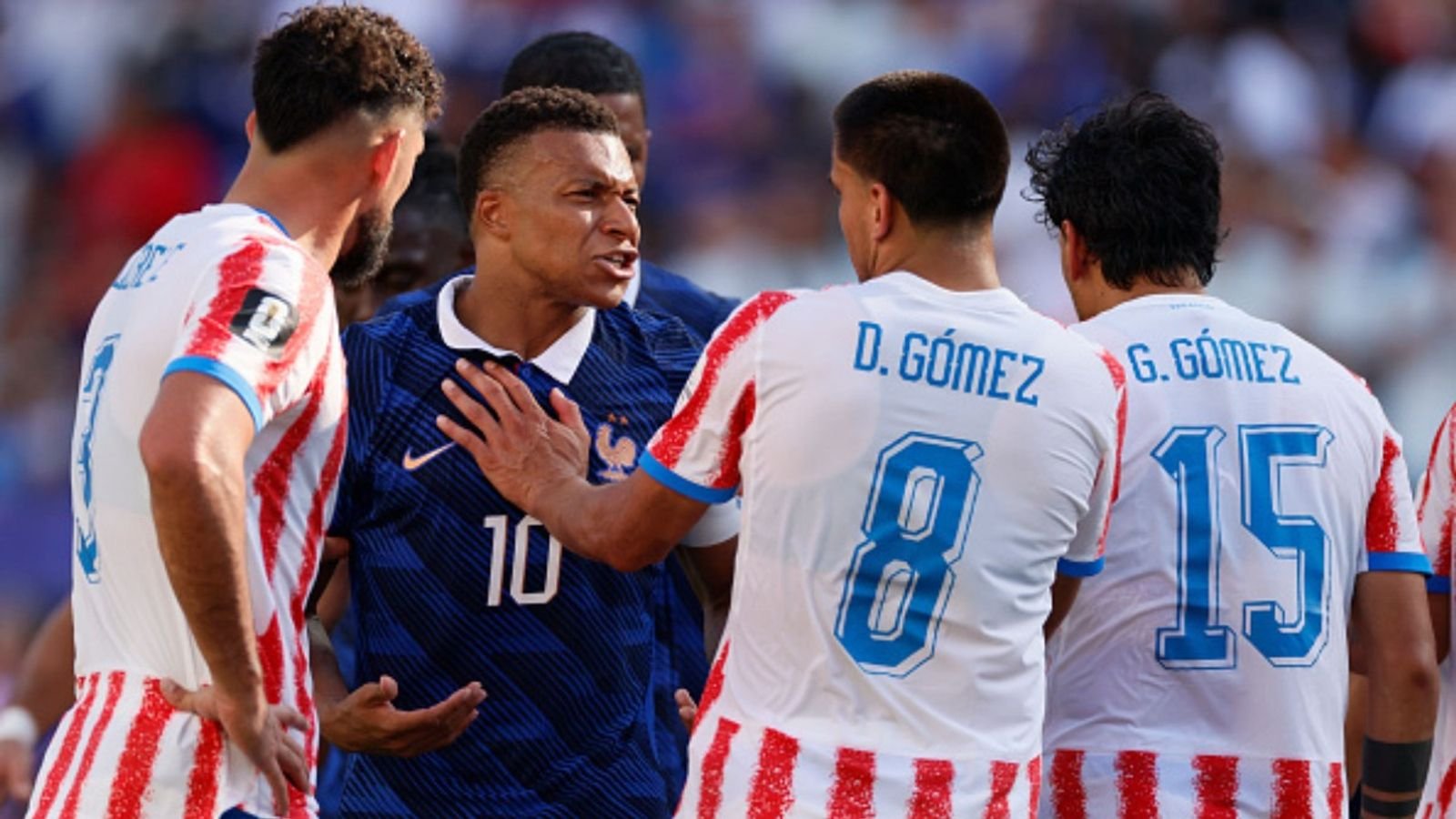
The 2026 FIFA World Cup Round of 16 match between France and paraguay will be remembered not only for Kylian Mbappé’s decisive penalty but also for the brutal Weather conditions that transformed the contest into a battle of endurance. Played in Philadelphia under temperatures reportedly reaching 37°C (98.6°F), the knockout clash became one of the hottest matches of the tournament, pushing players, coaches, and support staff to their limits.
While France eventually advanced to the quarter-finals with a hard-fought 1-0 victory, the intense heat emerged as a major factor throughout the contest. Frequent hydration breaks, visible signs of exhaustion, and a slower tempo highlighted how weather conditions can significantly influence outcomes at football’s biggest event.
As the 2026 FIFA World Cup progresses across multiple North American venues, the France-Paraguay encounter has reignited discussions about player welfare, match scheduling, and the growing impact of extreme weather on elite football.
France vs Paraguay: More Than Just a Knockout Match
Heading into the Round of 16, France entered as favorites. Led by captain Kylian Mbappé, Les Bleus were expected to dominate possession and eventually break down Paraguay’s disciplined defensive structure.
Paraguay, however, had already proven they could frustrate stronger opponents. Their defensive organization, physicality, and counter-attacking threat had carried them into the knockout stages and made them one of the tournament’s surprise packages.
Yet neither team’s tactical plans fully accounted for the severe weather conditions awaiting them in Philadelphia.
From kickoff, it became evident that the heat would play a significant role in shaping the contest.
How Hot Was It During France vs Paraguay?
Reports indicated temperatures climbed to approximately 37°C, creating one of the most challenging environments players have faced during the tournament.
While temperature alone tells part of the story, factors such as humidity, direct sunlight, and physical exertion made conditions feel even more demanding on the field.
Professional footballers typically cover between 9 and 13 kilometers during a match. Performing at elite intensity under near-40°C conditions dramatically increases physical stress.
The result was a match where hydration, recovery, and energy conservation became almost as important as tactics and technical quality.
Why Extreme Heat Impacts Football Matches
Football is one of the most physically demanding sports in the world. High temperatures affect nearly every aspect of performance.
Reduced Running Intensity
Players naturally conserve energy when temperatures rise. Sprint frequency often declines, and teams may adopt a more cautious approach to preserve stamina.
Higher Risk of Fatigue
The body must work harder to regulate temperature. This increases fatigue and reduces overall physical output.
Slower Ball Movement
Extreme conditions often result in a slower pace of play as teams focus on maintaining possession rather than engaging in constant high-pressure pressing.
Greater Injury Concerns
Heat exhaustion, muscle cramps, dehydration, and concentration lapses become more common during prolonged exposure to extreme temperatures.
The France-Paraguay match displayed many of these characteristics throughout the 90 minutes.
How the Heat Changed the Tactical Battle
Under normal conditions, France would likely have preferred a high-tempo game built around quick transitions and attacking movement.
Instead, the weather forced a more measured approach.
France controlled possession for long periods but often circulated the ball patiently rather than launching constant attacks. Paraguay, meanwhile, focused on defensive compactness and selective counterattacks.
The match became a contest of patience rather than speed.
This suited Paraguay for much of the game, as they successfully frustrated one of the tournament favorites and kept the score level deep into the second half.
Mbappé Delivers When France Needed Him Most
Even under exhausting conditions, world-class players often find decisive moments.
That moment arrived in the 70th minute when France earned a penalty after sustained attacking pressure.
Kylian Mbappé stepped forward and calmly converted from the spot, breaking the deadlock and ultimately securing France’s place in the quarter-finals.
The goal was significant for multiple reasons:
- It secured France’s progression.
- It moved Mbappé closer to major World Cup scoring records.
- It highlighted his ability to perform under extreme pressure.
- It kept France’s World Cup title hopes alive.
In a match where opportunities were limited, Mbappé’s composure made the difference.
Paraguay Earned Respect Despite Elimination
Although Paraguay exited the tournament, their performance earned widespread admiration.
The South American side remained organized throughout the match and refused to be overwhelmed by either France’s quality or the challenging weather.
Their defensive discipline limited clear-cut chances for long stretches, while their physical resilience allowed them to remain competitive until the decisive penalty.
Paraguay’s campaign demonstrated how tactical structure and determination can help underdog teams compete against football’s elite nations.
The Growing Weather Challenge at the 2026 FIFA World Cup
The France-Paraguay clash has become part of a larger conversation surrounding weather conditions during the 2026 FIFA World Cup.
With matches being played across various regions of North America, teams face dramatically different climates depending on location.
| Weather Factor | Potential Impact on Matches |
|---|---|
| High Temperatures | Increased fatigue and dehydration |
| Humidity | Reduced stamina and recovery |
| Direct Sunlight | Higher body temperature during play |
| Travel Between Venues | Adaptation challenges for teams |
| Scheduling Windows | Potential influence on performance quality |
As the tournament advances, weather conditions could become an increasingly important factor influencing results.
Why Some Teams Adapt Better Than Others
One interesting aspect of the France-Paraguay matchup was the discussion surrounding climate adaptation.
Teams from warmer regions often possess greater familiarity with playing in high temperatures. This does not guarantee success, but it can reduce the shock of extreme conditions.
Paraguay appeared comfortable during portions of the match despite the heat, while France had to carefully manage player workloads and energy levels.
Modern football staffs invest heavily in sports science, hydration strategies, and recovery protocols, but extreme weather still presents unique challenges.
Sports Science and the Fight Against Heat
Today’s elite teams rely on advanced sports science techniques to combat extreme conditions.
Common strategies include:
- Customized hydration plans.
- Electrolyte monitoring.
- Pre-cooling techniques.
- Ice towels and cooling vests.
- Real-time physical performance tracking.
- Modified training schedules.
The scenes from Philadelphia, where players were frequently hydrating and receiving support from medical teams, highlighted the importance of these measures.
In modern football, preparation off the field can be just as important as performance on it.
France vs Morocco: Another Major Test Awaits
With the victory over Paraguay, France advanced to the quarter-finals where they will face Morocco in one of the most anticipated matches of the tournament.
Morocco arrives with momentum after an impressive victory over Canada and continues to build on its reputation as one of international football’s most resilient teams.
The matchup offers several intriguing storylines:
- Kylian Mbappé versus Achraf Hakimi.
- A rematch of recent World Cup history.
- Europe versus Africa on the biggest stage.
- A place in the semi-finals at stake.
France will hope for slightly more favorable conditions, but after surviving Philadelphia’s heat, the squad may feel better prepared for whatever comes next.
The Hidden Lesson From Philadelphia
The France-Paraguay encounter serves as a reminder that football matches are influenced by more than talent alone.
Tactics, mentality, fitness, preparation, and environmental conditions all contribute to success.
While Mbappé’s winning penalty will dominate highlight reels, the broader story was one of endurance. Players battled not only each other but also the intense summer conditions that threatened to impact every aspect of performance.
As climate conditions continue to become a growing consideration in global sports, tournaments like the FIFA World Cup may increasingly need to balance commercial schedules with athlete welfare.
Conclusion
France’s 1-0 victory over Paraguay secured a place in the 2026 FIFA World Cup quarter-finals, but the match will be remembered as much for the weather as the football. With temperatures reaching approximately 37°C, Philadelphia provided one of the toughest environments of the tournament, forcing players to battle exhaustion, dehydration, and physical stress throughout the contest.
Kylian Mbappé ultimately delivered the decisive moment, converting a second-half penalty to send France through. Yet Paraguay’s resilience and the extraordinary conditions created a contest that showcased the physical demands of elite international football.
As the World Cup enters its decisive stages, the lessons from Philadelphia are clear: in tournament football, overcoming the opposition is only part of the challenge. Sometimes, the weather itself becomes the toughest opponent on the field.
For breaking news and live news updates, like us on Facebook or follow us on Twitter and Instagram. Read more on Latest Sports on thefoxdaily.com.






COMMENTS 0