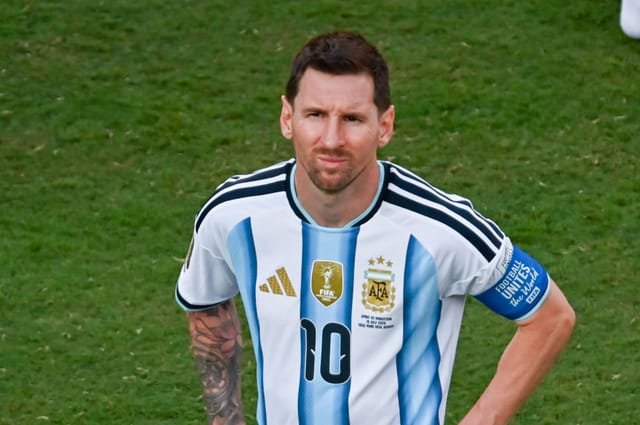
The 2026 FIFA World Cup final delivered everything football fans expect from the sport’s biggest stage—drama, tension, elite performances, tactical battles, and a historic champion. Spain ultimately lifted the trophy after defeating Argentina 1-0 following extra time at MetLife Stadium in New Jersey.
However, several days after the final whistle, discussions are no longer focused solely on Ferran Torres’ match-winning goal or Spain’s remarkable tournament run. Instead, attention has shifted toward a controversial sequence involving Argentina captain Lionel Messi during the closing stages of regulation time.
The incident has generated significant debate among fans, pundits, and journalists, highlighting how modern football’s increasingly complex rulebook can sometimes become as important as the action itself.
What Happened During the FIFA World Cup 2026 Final?
The final between Spain and Argentina was already an intense contest before controversy entered the spotlight.
With the score still level and emotions running high, Argentina were dealt a major setback when midfielder Enzo Fernandez received a second yellow card and was sent off.
The dismissal immediately sparked reactions from players on both sides.
As often happens during major football matches, multiple players surrounded the referee, discussions escalated, and tensions increased.
During those moments, cameras captured an interaction involving Spain defender Marc Cucurella and Lionel Messi.
The footage quickly became one of the most discussed clips from the final.
The Rule at the Center of the Debate
Much of the controversy revolves around a recently introduced regulation designed to combat abusive conduct on the pitch.
The rule was created as part of football’s broader efforts to address racism, hate speech, discriminatory language, and inappropriate behavior during matches.
One of its provisions focuses on situations in which players deliberately cover their mouths while communicating during games.
The reasoning behind the regulation is straightforward:
- Improve transparency.
- Discourage abusive language.
- Increase accountability.
- Help officials monitor player conduct.
- Support anti-discrimination initiatives.
However, like many new regulations, interpretation and enforcement remain subjects of ongoing debate.
Why Lionel Messi’s Actions Became a Talking Point
The controversy emerged because Messi appeared to draw the referee’s attention to Cucurella during the incident.
Critics argue that the Argentina captain was attempting to encourage officials to investigate whether the Spanish defender had violated the recently introduced rule.
Supporters of Messi, meanwhile, contend that players frequently communicate concerns to referees during high-pressure matches and that such behavior is not unusual in elite football.
The disagreement highlights a broader issue in modern sport: where should the line be drawn between legitimate appeals and attempts to influence officiating decisions?
That question has no universally accepted answer, which explains why reactions have varied so dramatically.
Why the Incident Has Sparked Such Strong Reactions
Ordinary matches often produce controversial moments without generating global discussion.
This situation is different for several reasons.
| Factor | Why It Matters |
|---|---|
| World Cup Final | Highest-profile match in football |
| Lionel Messi Involvement | One of football’s biggest global stars |
| New Rule | Still subject to interpretation |
| Late-Game Timing | Occurred during a crucial moment |
| Argentina-Spain Rivalry | High emotional stakes |
When these factors combine, even relatively brief incidents can become major talking points long after a match concludes.
The Challenges of Enforcing New Football Rules
The controversy also exposes the difficulties football authorities face when introducing new regulations.
Every rule change creates unintended consequences.
Officials must balance enforcement with common sense while ensuring consistency across competitions.
Historically, football has experienced similar debates regarding:
- VAR implementation.
- Handball interpretations.
- Offside technology.
- Time-wasting punishments.
- Dissent regulations.
In most cases, initial controversy eventually gives way to clearer standards.
The discussion surrounding mouth-covering regulations may follow a similar trajectory.
UEFA’s Response Signals a Potential Shift
One of the most significant developments following the World Cup concerns how football authorities may approach similar situations moving forward.
The reaction from governing bodies suggests there is recognition that immediate red-card punishments may not always represent the most practical solution.
Instead, football administrators appear increasingly interested in combining in-game disciplinary measures with post-match investigations.
This approach could allow officials to address concerns without dramatically altering matches based on incidents that may require additional context.
Such changes demonstrate how major tournaments frequently influence future policy decisions across the sport.
Messi’s Leadership Under the Microscope
Because Lionel Messi served as Argentina’s captain, his actions naturally attracted greater scrutiny than those of many other players.
Captains occupy a unique role within football.
They are expected to:
- Represent their teams.
- Communicate with referees.
- Manage emotions.
- Provide leadership.
- Set behavioral standards.
Supporters often view assertive communication with officials as leadership. Critics sometimes view the same actions differently.
This duality has accompanied elite captains throughout football history.
Nearly every legendary leader—from various generations and nations—has experienced moments where opinions on their conduct differed dramatically.
The Bigger Picture: Messi’s Outstanding World Cup Campaign
While the controversy has dominated headlines in recent days, it should not overshadow Messi’s overall tournament performance.
By virtually every statistical measure, the Argentine captain produced one of the finest World Cup campaigns of his extraordinary career.
| Category | Performance |
|---|---|
| Matches Played | 8 |
| Goals | 8 |
| Assists | 4 |
| Goal Contributions | 12 |
| Tournament Recognition | Best XI Selection |
These numbers underline the extent of his influence throughout Argentina’s run to the final.
Even at 39 years old, Messi remained one of the tournament’s defining players and a central figure in nearly every major moment involving his national team.
Spain’s Triumph Risks Being Overshadowed
One unfortunate consequence of post-final controversies is that they sometimes divert attention away from the champions themselves.
Spain produced an exceptional tournament and ultimately emerged as deserved winners.
Their victory reflected:
- Tactical discipline.
- Defensive organization.
- Midfield control.
- Squad depth.
- Mental resilience.
Ferran Torres’ decisive goal in extra time capped a campaign that demonstrated Spain’s ability to blend technical quality with competitive maturity.
In many respects, the ongoing controversy illustrates how football’s biggest events often generate narratives that extend far beyond the final score.
Social Media’s Role in Amplifying Controversies
Another reason this incident continues to dominate discussions is the influence of social media.
Modern football moments are no longer viewed once and forgotten.
They are clipped, replayed, analyzed, and debated across multiple platforms within minutes.
Every angle can be examined repeatedly.
Every gesture can be interpreted differently.
As a result, controversies frequently gain momentum long after matches end.
What might once have been a brief talking point now becomes a global debate involving millions of fans.
What This Means for Argentina Moving Forward
For Argentina, the focus will eventually shift toward the future.
The World Cup final defeat marked the end of an era in many respects.
Although Messi continued to perform at an elite level throughout the tournament, questions naturally arise regarding the next generation of Argentine stars.
The national team possesses considerable talent, but replacing one of football’s greatest players is never straightforward.
The coming years will likely involve a transition process as younger players assume larger leadership responsibilities.
Can Football Avoid Similar Controversies in the Future?
The answer is probably no.
Football’s emotional nature is one of the reasons it remains the world’s most popular sport.
Passion, pressure, and split-second decisions inevitably create moments of disagreement.
However, governing bodies can reduce confusion by:
- Clarifying rule interpretations.
- Improving referee communication.
- Increasing transparency.
- Maintaining consistency across competitions.
As new regulations evolve, clearer guidelines may help prevent future disputes of this nature.
Conclusion: A Controversy That Reflects Football’s Modern Reality
The debate surrounding Lionel Messi’s actions during the 2026 FIFA World Cup final illustrates how modern football extends far beyond goals and trophies. New rules, advanced technology, social media scrutiny, and global audiences have transformed even brief incidents into major talking points.
Critics and supporters will continue to interpret Messi’s behavior differently, and opinions are unlikely to converge anytime soon. What remains undeniable, however, is the significance of the moment within the broader conversation about sportsmanship, officiating, and football’s evolving disciplinary framework.
At the same time, the controversy should not overshadow either Spain’s achievement as world champions or Messi’s remarkable individual tournament. One side lifted the trophy, while the other was driven by a veteran captain who delivered one of the most productive World Cup performances of his career.
As football authorities continue refining regulations and competitions move forward, the final will likely be remembered not only for Spain’s triumph but also for the debates that followed—a reminder that in modern football, the conversation rarely ends when the final whistle blows.
For breaking news and live news updates, like us on Facebook or follow us on Twitter and Instagram. Read more on Latest Sports on thefoxdaily.com.






COMMENTS 0