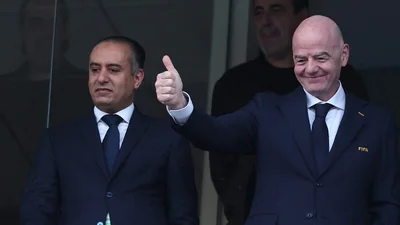
The FIFA World Cup 2026 has introduced several innovations as part of the tournament’s expansion, but few have generated as much debate as the mandatory hydration breaks now taking place in every match. While FIFA maintains that the three-minute stoppages are necessary to protect players from demanding weather conditions across North America, critics have questioned whether the breaks are also creating valuable commercial opportunities for broadcasters and sponsors.
FIFA President Gianni Infantino has firmly rejected those accusations, stating that the decision was made solely with player welfare and sporting integrity in mind. As discussions continue among coaches, players, analysts, and fans, the controversy has evolved into a broader conversation about how modern football balances athlete protection with preserving the natural rhythm of the game.
Why FIFA Introduced Mandatory Hydration Breaks at World Cup 2026
The FIFA World Cup 2026 is being played across the United States, Canada, and Mexico, making it the largest and most geographically diverse World Cup in history. Many host cities experience significantly different weather conditions, including high temperatures, humidity, and intense sunlight.
To address concerns about player fatigue and heat-related risks, FIFA introduced mandatory hydration breaks midway through each half of every match. Unlike previous tournaments where cooling breaks were used selectively during extreme conditions, the 2026 edition applies the rule universally.
The decision reflects growing awareness across global sports regarding player safety, workload management, and the physical demands of elite competition.
Gianni Infantino Rejects Commercial Revenue Claims
One of the most common criticisms surrounding hydration breaks is the belief that they create additional advertising opportunities during live broadcasts. Because play is paused, broadcasters gain extra moments to display sponsor messages, run promotional content, and engage television audiences.
However, Infantino has strongly denied that financial considerations influenced FIFA’s decision.
“There is no additional revenue for FIFA, as all commercial agreements were signed well in advance. So, this is not a financial issue for us. For us, it is purely a sporting matter.”
The FIFA president emphasized that the organization does not generate extra income from the stoppages and that player welfare remains the primary motivation behind the policy.
The Heat Challenge Facing World Cup 2026
The scale of the FIFA World Cup 2026 presents unique logistical and physical challenges. With an expanded tournament featuring 48 teams and more than 100 matches, players are expected to endure a longer and more demanding schedule than ever before.
Several host cities have recorded high summer temperatures, increasing concerns about dehydration, heat exhaustion, and recovery management.
Modern football is significantly faster and more physically demanding than previous generations. Players regularly cover extensive distances, perform repeated high-intensity sprints, and operate under immense tactical pressure.
Sports scientists have increasingly highlighted the importance of hydration and recovery in maintaining performance levels throughout major tournaments.
FIFA’s Argument: Consistency and Competitive Fairness
While heat remains the headline reason for the breaks, FIFA has introduced another important justification: competitive consistency.
According to Infantino, the governing body wanted every team to compete under identical conditions regardless of the venue or weather.
In previous tournaments, some coaches benefited from cooling breaks during hotter matches, allowing them to reorganize tactics, motivate players, and adjust strategies. Teams playing in cooler conditions did not receive the same opportunity.
By introducing hydration breaks in every match, FIFA believes it has created a more uniform competitive environment.
FIFA’s Key Reasons for Universal Hydration Breaks
- Protect player health and safety.
- Reduce heat-related performance decline.
- Provide consistent match conditions.
- Support recovery during long tournaments.
- Ensure equal coaching opportunities.
- Maintain high-intensity football throughout matches.
How Hydration Breaks Could Influence Match Tactics
One of the unintended consequences of the new rule is its impact on tactical management.
Football traditionally allows limited opportunities for coaches to communicate directly with players during matches. Hydration breaks effectively create additional mini-team talks that can alter momentum, tactics, and substitutions.
Managers can use the pauses to:
- Adjust formations.
- Correct defensive issues.
- Discuss opposition weaknesses.
- Modify pressing strategies.
- Prepare substitution plans.
- Motivate players during difficult periods.
For some coaches, these additional opportunities are beneficial. For traditionalists, however, they risk changing the essence of football’s continuous nature.
Thomas Tuchel Voices Concerns Over Match Rhythm
Among the most notable critics of the policy is England manager Thomas Tuchel, who believes the breaks significantly alter the flow of games.
Tuchel acknowledged that the stoppages offer tactical advantages but argued that they disrupt football’s natural momentum.
“I think that it interrupts and changes the identity of the football match more than I thought.”
According to Tuchel, dividing each half with scheduled stoppages effectively transforms football into a game played in smaller segments rather than one continuous contest.
He suggested that momentum, emotional intensity, and tactical evolution are fundamental parts of football’s appeal and could be affected by frequent interruptions.
Football’s Evolution: Are Hydration Breaks the Future?
The debate surrounding hydration breaks reflects a larger question facing modern football: how should the sport evolve to meet the demands of contemporary athletes?
Across global sports, governing bodies have increasingly introduced rule changes aimed at protecting player welfare. Enhanced concussion protocols, increased substitution allowances, improved medical monitoring, and stricter scheduling considerations have all become more common.
Football is now confronting similar challenges as climate conditions, tournament expansion, and physical demands continue to increase.
Potential Benefits and Drawbacks of Hydration Breaks
| Potential Benefits | Potential Drawbacks |
|---|---|
| Improved player safety | Interrupts match rhythm |
| Better hydration management | Reduces continuous gameplay |
| Supports recovery | Creates additional tactical pauses |
| Consistent tournament conditions | May frustrate traditional fans |
| Maintains player intensity | Can disrupt momentum |
How Other Sports Handle Heat and Player Welfare
Football is not alone in addressing weather-related concerns.
Tennis tournaments regularly suspend play during extreme heat conditions. Cricket has introduced hydration protocols and substitute fielding arrangements. Marathon organizers frequently adjust race schedules based on temperature forecasts.
In many ways, FIFA’s decision reflects a broader trend across professional sports where athlete health is increasingly prioritized alongside competition.
The challenge lies in finding the right balance between protecting players and preserving the characteristics that make each sport unique.
Could Hydration Breaks Become Permanent?
One of the most intriguing questions emerging from the tournament is whether mandatory hydration breaks will remain part of future FIFA competitions.
If the policy is viewed as successful in improving player welfare without significantly damaging the quality of matches, FIFA may consider expanding or retaining the rule beyond 2026.
However, continued criticism from coaches, players, broadcasters, and supporters could prompt adjustments or a return to weather-based implementation.
The outcome will likely depend on post-tournament analysis examining player performance, injury rates, fan feedback, and overall match quality.
Why the Debate Matters Beyond World Cup 2026
The controversy is not simply about a three-minute pause during football matches. It represents a larger discussion about how the sport should adapt to changing realities.
Climate concerns, increasing fixture congestion, and expanded international competitions are forcing football authorities to reconsider long-standing traditions.
The hydration break debate highlights the tension between modernization and tradition—a challenge that many sports continue to face.
Whether fans support or oppose the policy, the discussion reflects football’s ongoing evolution in a rapidly changing sporting landscape.
Final Verdict
Gianni Infantino has made FIFA’s position clear: mandatory hydration breaks at the FIFA World Cup 2026 are intended to protect players and ensure fairness rather than generate commercial revenue. While critics remain skeptical and some coaches believe the breaks disrupt football’s natural rhythm, FIFA views the policy as a necessary adaptation to the demands of a larger, longer, and more physically challenging tournament.
As the World Cup progresses, the effectiveness of the breaks will continue to be scrutinized. Whether they become a lasting feature of international football or remain a one-tournament experiment, they have already sparked one of the most significant debates of FIFA World Cup 2026.
For breaking news and live news updates, like us on Facebook or follow us on Twitter and Instagram. Read more on Latest Sports on thefoxdaily.com.






COMMENTS 0