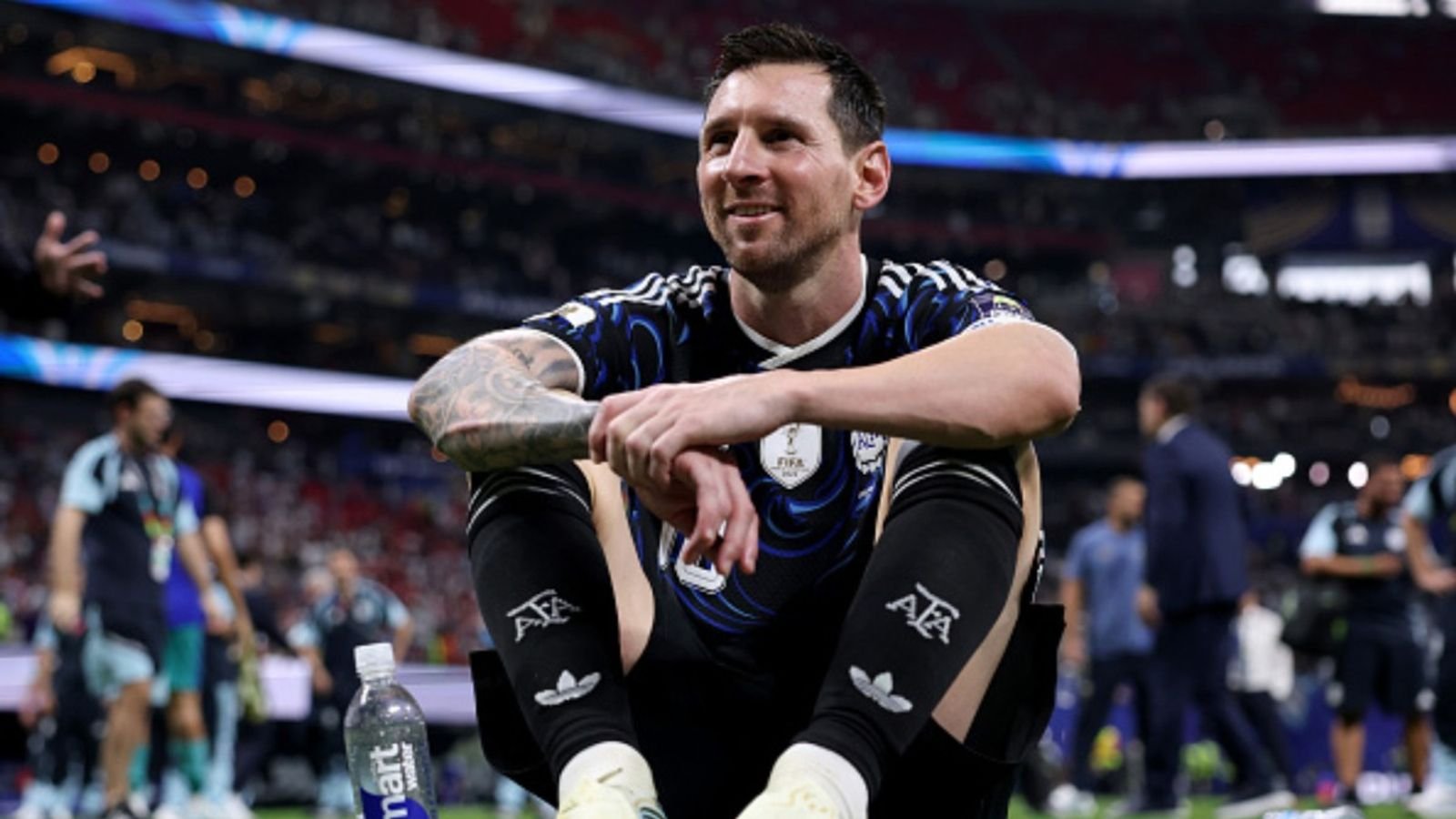
The FIFA World Cup final is often defined by moments of genius. For Argentina, those moments have largely come from Lionel Messi throughout the tournament. The 39-year-old captain has produced one of the greatest World Cup campaigns of his career, leading the defending champions back to the biggest stage in international football.
With goals, assists, leadership, and game-changing performances, Messi has once again become the central figure in Argentina’s quest for glory. Yet the final against Spain presents a completely different challenge from anything Argentina has faced so far.
Unlike teams that rely on individual defensive stars, Spain have built a collective system that suffocates opponents, controls possession, and prevents elite attackers from finding space. That tactical structure may represent Messi’s biggest headache ahead of the FIFA World Cup 2026 Final.
The key question is simple: Can even the greatest player of his generation find a way through the tournament’s most dominant defensive setup?
Why Spain Are More Than Just an Attacking Team
Much of the attention surrounding Spain has focused on their exciting attacking talent.
lamine Yamal has emerged as one of world football’s brightest stars. Pedri continues to dictate games with remarkable maturity, while Dani Olmo, Gavi, and other attacking players have consistently created chances throughout the tournament.
However, the biggest reason Spain have reached the final is not their attack.
It is their ability to prevent opponents from creating meaningful opportunities.
While many teams rely on defending deep and absorbing pressure, Spain defend by controlling the ball and dominating midfield territory.
This approach has made them arguably the most balanced side in the competition.
What Makes Spain’s Defense So Difficult to Break Down?
Traditional defensive systems often focus on the back four and goalkeeper.
Spain’s defensive success begins much earlier.
Their first line of defense is their midfield.
Whenever possession is lost, Spain immediately presses opponents, reducing the time available to launch counterattacks. This aggressive recovery system prevents teams from progressing through central areas and forces them into less dangerous positions.
As a result, opponents struggle to create high-quality chances.
This strategy explains why Spain have conceded only one goal throughout the FIFA World Cup 2026.
Why Rodri Could Be Messi’s Biggest Obstacle
Many fans naturally assume that a defender will be tasked with stopping Messi.
In reality, Rodri may be the player who influences Messi’s performance more than anyone else.
The Spanish captain controls matches through positioning, intelligence, and ball retention.
Rather than chasing opponents, Rodri often prevents dangerous situations from developing in the first place.
His ability to read the game allows Spain to maintain structure even against elite attacks.
For Messi, who thrives when he can receive possession between midfield and defense, Rodri’s positioning could significantly reduce the space available in crucial areas.
The Midfield Battle That Could Decide the World Cup Final
World Cup finals are frequently won in midfield.
Spain’s combination of Rodri, Fabian Ruiz, Pedri, and Gavi has arguably been the strongest midfield unit in the tournament.
Each player contributes differently:
- Rodri controls tempo and positioning.
- Fabian Ruiz provides ball recovery and defensive balance.
- Pedri offers creativity and technical quality.
- Gavi adds intensity, pressing, and energy.
Together, they form a system designed to dominate possession while limiting opposition opportunities.
This collective strength could become Argentina’s most difficult challenge.
| Spain Midfielder | Primary Strength | Impact on Argentina |
|---|---|---|
| Rodri | Game control | Limits Messi’s space |
| Fabian Ruiz | Ball recovery | Breaks attacking moves |
| Pedri | Creativity | Forces Argentina to defend |
| Gavi | Pressing intensity | Disrupts Argentina’s build-up |
How Spain’s System Targets Messi’s Favorite Areas
Messi has spent much of his career exploiting the spaces between midfield and defense.
These pockets allow him to turn, dribble, create chances, and dictate attacks.
Spain’s tactical setup is specifically designed to eliminate those zones.
Rather than assigning a single player to man-mark opponents, Spain compress space collectively.
When Messi drops deep, multiple players can close passing lanes simultaneously.
When he moves centrally, Spain’s midfield often narrows to restrict access.
This means Argentina may struggle to find their captain in the positions where he is most dangerous.
Lessons From Spain’s Semi-Final Against France
If Argentina want clues about how Spain might approach the final, they only need to study the semi-final.
France entered the match with one of the most dangerous attacks in world football.
Yet Spain successfully limited opportunities and maintained control for large portions of the game.
The ability to contain elite attacking players without abandoning their attacking philosophy demonstrated why Spain are considered one of the favorites.
More importantly, it showed that Spain do not need to sacrifice possession in order to defend effectively.
That balance makes them particularly dangerous.
Why Argentina Cannot Depend Solely on Messi
One of the biggest tactical questions heading into the final concerns Argentina’s supporting cast.
Messi has delivered repeatedly throughout the tournament, but Spain’s structure may force other players to become decisive.
Argentina will likely need significant contributions from players around their captain.
Forwards must stretch Spain’s defense.
Midfielders must win physical battles.
Wide players must create numerical advantages.
If Spain successfully isolate Messi, Argentina’s supporting cast could determine the outcome.
The Psychological Advantage Messi Brings
Despite Spain’s defensive excellence, there is one factor statistics cannot fully measure.
Messi’s presence changes games.
Opponents know that even a single mistake can be punished instantly.
Throughout football history, elite players have often produced decisive moments against seemingly impossible defensive systems.
That is why Spain cannot afford even brief lapses in concentration.
Messi has repeatedly demonstrated his ability to create opportunities from situations that appear harmless.
The final could ultimately hinge on one moment of brilliance.
How Argentina Can Hurt Spain
Although Spain have been defensively dominant, no team is completely flawless.
Argentina may target several areas:
- Quick transitions before Spain establish their defensive shape.
- Set-piece situations where organization becomes critical.
- Wide areas behind attacking full-backs.
- Direct combinations involving Messi and overlapping runners.
Success in these areas could force Spain out of their comfort zone and create opportunities that are otherwise difficult to generate.
A Comparison of the Finalists’ Greatest Strengths
| Argentina | Spain |
|---|---|
| Messi’s creativity | Midfield dominance |
| Tournament experience | Defensive organization |
| Counter-attacking quality | Possession control |
| Big-match mentality | Collective pressing |
| Clinical finishing | Tactical discipline |
The Unique Angle: This Final May Be About Space, Not Goals
Most previews focus on goalscorers, formations, or star players.
The more fascinating battle may revolve around space.
Argentina’s success often depends on creating space for Messi.
Spain’s success depends on eliminating space for everyone.
This contrast makes the final one of the most intriguing tactical battles in recent World Cup history.
Whoever wins the battle for territory and positioning may ultimately lift the trophy.
Prediction: Why Messi’s Biggest Challenge Is Not a Player but a System
Many legendary footballers have faced elite defenders throughout their careers.
Messi’s greatest challenge in the FIFA World Cup 2026 final may not be a specific opponent.
Instead, it is Spain’s collective defensive structure.
The combination of Rodri’s intelligence, Fabian Ruiz’s work rate, Pedri’s control, and Gavi’s intensity forms a system specifically designed to deny elite players the freedom they crave.
Argentina have overcome every obstacle so far, but Spain present a unique examination of their creativity, patience, and tactical flexibility.
Conclusion
Lionel Messi enters the FIFA World Cup 2026 final chasing another historic achievement and potentially the perfect ending to an extraordinary World Cup campaign. However, Spain represent a challenge unlike any Argentina have faced in the tournament.
With the competition’s best defensive record, unmatched midfield control, and a collective approach built around limiting space, La Roja possess the tools to frustrate even football’s greatest magician.
Whether Messi can once again produce a moment of genius or Spain’s defensive machine finally slows him down will likely determine who lifts the FIFA World Cup trophy. One thing is certain: the battle between Messi’s brilliance and Spain’s structure is set to define the final.
For breaking news and live news updates, like us on Facebook or follow us on Twitter and Instagram. Read more on Latest Sports on thefoxdaily.com.






COMMENTS 0