Manchester United face a major decision ahead of the January transfer window: invest around £150 million in new players or risk allowing their Premier League campaign to deteriorate further. With the club sitting near the bottom of the table, the financial consequences of relegation could be considerably greater than the cost of strengthening the squad midway through the season.
The possibility of Manchester United playing in the EFL Championship next season would represent a dramatic fall for one of English Football‘s most successful clubs. Their owners, the Glazer family and Sir Jim Ratcliffe’s INEOS Group, must now consider whether significant investment is necessary to protect the club’s Premier League status.
Former United captains Roy Keane and Gary Neville dismissed the possibility of relegation after Sunday’s 4-0 defeat against Liverpool at Anfield. However, the league standings present a worrying picture. United have collected only eight points from their first 11 matches, leaving them second bottom and facing growing pressure to turn their season around.
Manchester United’s League Position Raises Relegation Concerns
United’s eight-point return after 11 games places them in a difficult position. The figure is 10 points fewer than Tottenham had at the same stage of the previous season. Tottenham eventually avoided relegation on the final day, finishing just two points above West Ham, who had collected 10 points from their opening 11 matches.
The comparison highlights the scale of the challenge facing United. Although the club still have time to improve their position, their current points total leaves little room for further setbacks. Every defeat increases the pressure on the coaching staff and makes upcoming fixtures increasingly important.
The historical comparison with United’s previous relegation is equally concerning. During the 1973-74 campaign, the club won three of their first 11 league matches before eventually dropping out of the top flight. This season, United have managed only one victory in their opening 11 games, against newly promoted Ipswich Town in August.
The club’s defensive record has also become a major concern. After conceding four goals against Liverpool, United’s goals-against tally reached 34. According to the supplied figures, that left them with the worst defensive record among clubs in Europe’s five major leagues, with one more goal conceded than Crystal Palace, who were bottom of the Premier League.
Mauricio Pochettino Faces a Major Rebuilding Challenge
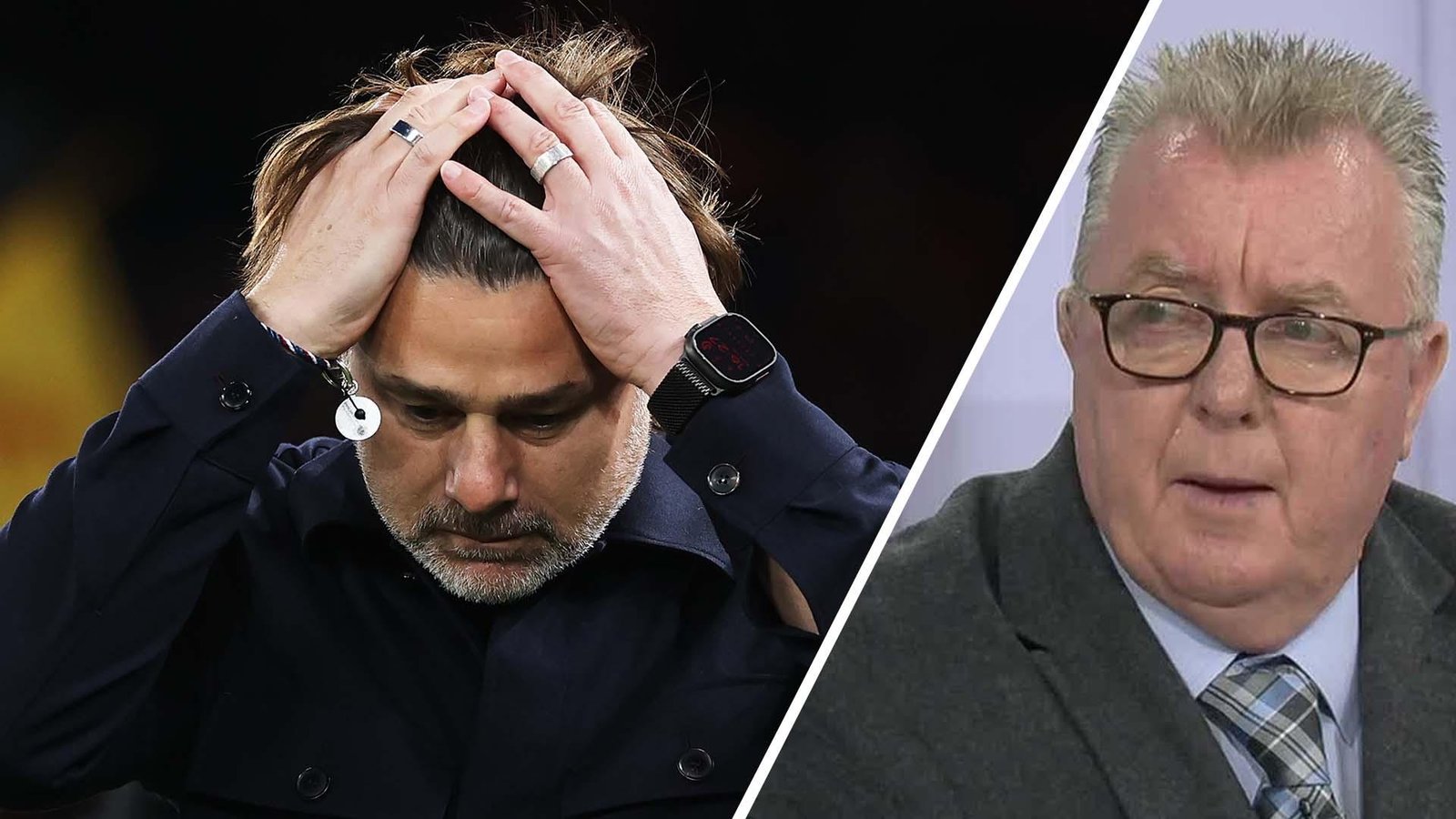
The defeat at Anfield exposed several weaknesses in a squad that already appeared short of depth and balance. New coach Mauricio Pochettino must now find a way to improve performances while dealing with the limitations of the players available to him.
United’s problems are not restricted to one position. The team need greater defensive stability, more physical strength in midfield and additional attacking quality. The scale of those requirements suggests that one or two signings may not be enough to transform the squad.
United spent slightly more than £150 million during the summer transfer window, bringing in three midfielders: Carlos Baleba, Andrey Santos and Youri Tielemans. However, the club did not significantly strengthen an ageing and injury-prone defence, leaving an important weakness unresolved.
The recruitment department, led by director of football Jason Wilcox, also decided against adding more attacking options. United reportedly believed that Marcus Rashford’s return from successive loan spells at Aston Villa and Barcelona would provide additional choices for Pochettino’s predecessor, Michael Carrick.
Sources told ESPN that Carrick had privately pushed for further signings. However, Wilcox was working within a restricted budget established by Ratcliffe and chief executive Omar Berrada. As a result, the club did not have sufficient financial flexibility to complete additional deals during the summer.
Summer Recruitment Decisions Come Under Scrutiny
United’s summer transfer strategy is now facing questions as the club struggle near the bottom of the table. Berrada recently defended the recruitment work, saying that the summer additions had “made the squad fundamentally better.” However, the team’s results have not reflected that assessment.
The injury situation has made the squad’s lack of depth even more visible. Long-term absences involving winger Marcus Rashford, left-back Luke Shaw and centre-forward Benjamin Sesko have reduced the options available to the coaching staff.
Those injuries have exposed the risks of entering a demanding Premier League season without sufficient alternatives in important positions. A team competing across a long campaign needs players capable of maintaining performance levels when regular starters are unavailable.
United’s decision not to strengthen the defence has been particularly costly in the context of their current record. Conceding 34 goals in 11 matches indicates that the problem requires more than a temporary tactical adjustment. The club may need experienced defenders and greater athleticism to improve its ability to deal with opponents’ attacks.
The January transfer window therefore represents an opportunity to address weaknesses that were left unresolved during the summer. However, United’s recent recruitment decisions suggest that completing the necessary business will not automatically be straightforward.
Manchester United Have Financial Room to Spend in January
Despite their sporting difficulties, United are also dealing with significant financial pressure. The club’s latest financial accounts reportedly show £1.1 billion in loans and outstanding transfer fees, alongside a pre-tax loss of £43 million.
Those figures raise questions about how much additional spending the club can comfortably afford. Any major January investment would add to existing financial commitments and require careful consideration from the ownership and executive team.
However, the Premier League’s new squad cost ratio rules could provide United with some flexibility. Under the system described in the supplied figures, clubs can spend up to 85% of their football-related revenue on squad costs.
United reported record revenue of £677.6 million for the previous season. The club also had approximately £160 million available through its revolving credit facility, giving it another potential source of short-term financial flexibility.
These resources do not mean that United can spend without restrictions. Transfer fees, wages, contract commitments and financial regulations would all need to be considered. Nevertheless, the club may have enough room to make significant additions if its leadership decides that avoiding relegation must take priority.
Lewis Hall Could Be a Target to Strengthen the Defence
One potential area of focus is the left-back position. Newcastle United and England defender Lewis Hall has been identified as an obvious possible target, despite having signed a new contract over the summer.
Hall’s name has emerged in the discussion because United need greater quality and reliability in defence, particularly with Luke Shaw dealing with injury problems. A player capable of providing consistency in that position could help address one of the weaknesses exposed during the opening months of the campaign.
However, securing a player of Hall’s profile would not necessarily be simple. His recent contract situation could make negotiations difficult, and Newcastle would have to be willing to consider an offer. United may therefore need to explore several options rather than depend on one transfer target.
The club’s recruitment priorities should extend beyond the left-back position. The squad needs experience, athleticism and a stronger goal threat. Finding players who can immediately improve the team’s performances in January is likely to require substantial financial investment.
Why Avoiding Relegation Could Be Worth £150 Million
The financial argument for spending in January becomes clearer when the potential cost of relegation is considered. Manchester United received £191.5 million in Premier League prize money during the previous season. By comparison, the EFL television deal is worth approximately £5.7 million annually to clubs competing in the Championship.
The difference highlights the financial importance of remaining in the top division. Premier League participation provides access to a much larger broadcasting and commercial environment, while relegation would significantly reduce the club’s immediate income.
United would be eligible for a parachute payment of approximately £45 million in their first season outside the Premier League if relegation occurred. However, that support would not come close to replacing the revenue lost through dropping out of the competition.
The initial reduction in earnings could exceed £150 million, with further financial consequences potentially following. Commercial revenue could come under pressure, while the club would still have to manage expensive player contracts negotiated during its time in the Premier League.
United could also face difficult decisions about players who might not want to compete in the Championship. Selling important players at reduced prices or continuing to pay high salaries outside the top division could create additional financial problems.
These consequences make relegation a much larger issue than a disappointing league position. It could affect recruitment, sponsorship arrangements, player retention and the club’s ability to plan for future seasons.
January Spending Could Be a Necessary Risk
Manchester United’s leadership must now weigh the risks of spending heavily against the consequences of remaining cautious. Adding another £150 million to the club’s financial commitments would be a significant decision, particularly given the existing debt and recent losses.
However, choosing not to invest could leave Pochettino with a squad that has already shown serious weaknesses. The coach would then have to improve results largely through tactical changes, player development and better performances from the existing group.
That approach could work, but it would also leave the club exposed if injuries continue or defensive problems remain unresolved. United cannot assume that the current squad will automatically find the consistency required to move away from the relegation zone.
New signings would not guarantee immediate success either. Players arriving in January need time to adapt, and transfer fees alone cannot solve every tactical or organisational problem. The recruitment department would need to identify footballers who fit the team’s requirements and can contribute quickly.
The Consequences of Relegation Could Be Far Greater
Manchester United remain one of the most recognisable clubs in world football, but their reputation cannot protect them from the consequences of poor results. Their position after 11 matches, defensive record and limited attacking options have created a situation that requires urgent attention.
Keane and Neville may believe that relegation is unlikely, but the club’s decision-makers cannot afford to rely solely on confidence or history. The remaining fixtures provide an opportunity to recover, while January offers a chance to correct weaknesses in the squad.
Spending heavily would increase pressure on United’s finances, yet the potential cost of relegation is considerably greater. For the Glazer family, Ratcliffe and the club’s executive leadership, the challenge is to make recruitment decisions that protect both the team’s Premier League position and its long-term financial stability.
United’s immediate priority must be to improve performances and collect points. If significant January investment is required to give Pochettino the tools to achieve that goal, the club may have to accept the financial risk. The consequences of failing to act could be far more damaging than the cost of strengthening the squad.
For breaking news and live news updates, like us on Facebook or follow us on Twitter and Instagram. Read more on Latest Football on thefoxdaily.com.





COMMENTS 0