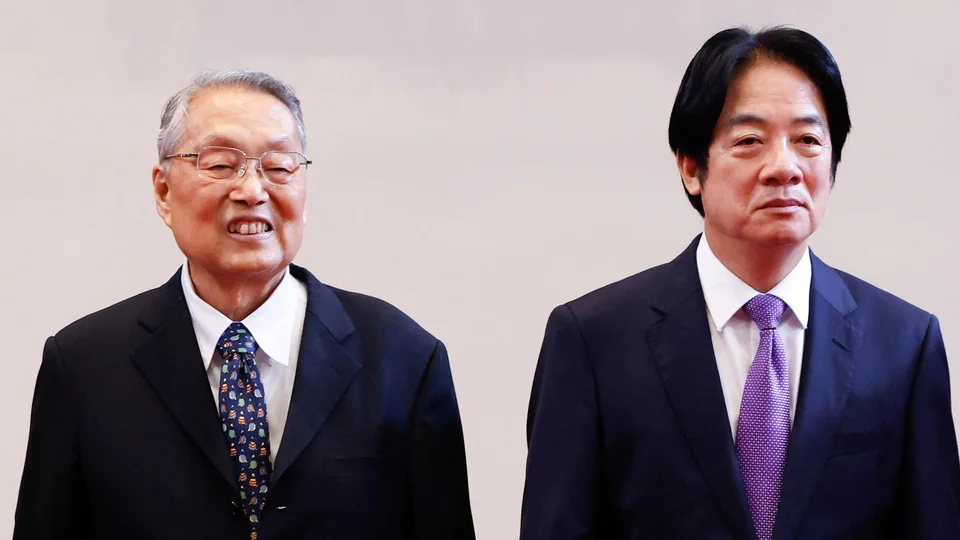
Taiwan will participate in the 2026 Asia-Pacific Economic Cooperation (APEC) leaders’ summit in China on the principle of equal treatment, President Lai Ching-te said on Thursday, November 12, as tensions between Taipei and Beijing continue over the island’s international status and representation.
Lai made the statement while introducing Acer founder Stan Shih as Taiwan’s representative to the summit, scheduled for November 18 and 19 in Shenzhen. His remarks followed a request from Taiwan for written assurances that its delegation would be allowed to participate in all summit meetings with equality, dignity and security.
China, which claims Taiwan as part of its territory, has said the island’s participation must follow the one-China principle and relevant APEC arrangements. The competing positions have brought renewed attention to the diplomatic sensitivities surrounding Taiwan’s presence at one of the Asia-Pacific region’s major economic forums.
Lai Says Taiwan Will Participate on an Equal Basis
Speaking at the Presidential Office in Taipei, Lai described APEC as an important multilateral platform for trade and economic cooperation across the Asia-Pacific region. He said all participating members should interact on an equal basis and insisted that Taiwan’s delegation would attend this year’s meetings under the same principle.
Lai also thanked countries that had supported Taiwan’s participation during preparations for the summit. He did not identify the governments involved but said their position had helped emphasise the importance of allowing Taiwan to take part in all APEC meetings.
His comments were intended to reinforce Taipei’s position that participation should be governed by established APEC arrangements rather than additional political conditions imposed by the host country.
Taiwan’s Presidential Office has argued that the island has participated in APEC activities on an equal footing since joining the organisation in 1991. Its officials say this status should allow the delegation to take part in the full range of summit activities without discrimination.
Why Taiwan Asked China for Written Guarantees
Before Lai’s announcement, Taiwan’s government had called on Beijing to provide written assurances that its delegation would be able to participate in the Shenzhen summit on equal, dignified and secure terms.
The request followed concerns about how China, as the host economy, would handle Taiwan’s participation. Taipei wants clarity that its representatives will be able to attend meetings and official activities without facing restrictions based on unilateral political demands.
Presidential Office spokesperson Karen Kuo said Taiwan would seek an immediate correction if its delegation experienced unfair treatment during the summit.
Kuo also argued that no APEC member should use unilateral political conditions to interfere with another member’s participation. Her remarks reflected Taipei’s concern that the summit’s host arrangements should not undermine the participation rights it says Taiwan has held since joining the organisation.
The request for written guarantees highlights the difference between Taiwan’s expectations and Beijing’s interpretation of the rules governing the island’s participation.
China Insists Taiwan’s Participation Must Follow the One-China Principle
China’s Foreign Ministry responded to the issue by saying that Taiwan’s participation in APEC is handled in accordance with the one-China principle and the rules and practices set out in relevant APEC memorandums of understanding.
Beijing said representatives from what it calls the Taiwan region could attend meetings normally as long as the established practices and arrangements were followed.
China’s position differs from that of Taiwan’s government. Beijing considers Taiwan part of China and opposes efforts by the island’s leadership to assert separate political status. Taipei rejects China’s sovereignty claims and maintains that its people have the right to determine their own future.
The disagreement is reflected in the language used by the two sides. Taiwan describes itself as an APEC member economy entitled to equal participation, while China’s official statements refer to the island as the Taiwan region and place its participation within the one-China framework.
Neither side’s latest statement resolves the broader dispute over Taiwan’s political status. The immediate issue is whether the delegation will be able to participate in the upcoming summit under arrangements acceptable to both Taipei and Beijing.
Who Is Stan Shih, Taiwan’s APEC Envoy?
Lai has selected Stan Shih, the founder and honorary chairman of computer manufacturer Acer, to represent Taiwan at the 2026 APEC Economic Leaders’ Meeting.
Shih is a prominent figure in Taiwan’s technology industry and has experience representing the island in international economic discussions. His appointment reflects Taiwan’s usual practice of sending a senior business executive or former government official rather than its sitting president to the APEC leaders’ summit.
Shih previously served as Taiwan’s representative at the 2007 APEC summit in Sydney, Australia. His earlier participation gives him experience with the diplomatic and economic discussions that take place during the annual gathering.
According to Taiwan’s Presidential Office, Lai wants Shih to use his international experience and industry knowledge to communicate Taiwan’s position on regional economic cooperation, trade and technology.
The choice of a business leader is also significant because APEC discussions frequently cover issues such as supply chains, digital trade, technological innovation and economic growth. These subjects are closely connected to Taiwan’s position in the global technology industry.
Taiwan Wants to Highlight Its Role in Global Supply Chains
Lai said he wanted Shih to convey that Taiwan would remain a stable and trustworthy participant in the regional and global economy despite growing geopolitical uncertainty.
He identified several challenges facing the global economy, including geopolitical tensions, energy concerns and changes in international supply chains. Taiwan, he said, would continue to deepen cooperation and exchanges with important partner economies to support regional prosperity and stability.
Taiwan’s technology industry is central to this message. The island plays an important role in global semiconductor manufacturing and the wider electronics supply chain. Its technology companies supply products and components used in computers, consumer electronics, telecommunications equipment and advanced computing systems.
Supply chain resilience has become an important subject in international economic discussions as governments and companies reassess their dependence on particular markets and manufacturing locations.
By sending Shih, an experienced technology industry leader, Taiwan is seeking to highlight its economic contribution while using the summit to strengthen contacts with other participating economies.
Why Taiwan Usually Sends a Business Leader Instead of Its President
Taiwan’s president does not normally attend the APEC leaders’ summit in person because of the political sensitivities surrounding Beijing’s objections to Taiwan’s participation.
Instead, Taipei appoints a representative, often a former senior official or a prominent business executive, to attend on the president’s behalf. This arrangement allows Taiwan to maintain a presence at the leaders’ meeting while avoiding some of the diplomatic complications that could arise from the president travelling to an event hosted by China.
These representatives can also use the summit to meet senior officials and business leaders from other participating economies. Taiwan’s envoys have traditionally sought opportunities to speak with representatives from friendly partners, including the United States and Japan.
Past interactions between Taiwanese representatives and Chinese President Xi Jinping have generally been limited. At previous APEC gatherings, encounters have sometimes involved a handshake or a brief exchange of greetings rather than extended political discussions.
Shih’s experience at the 2007 summit in Australia could help him navigate the diplomatic and business aspects of the Shenzhen meeting.
Trump and Xi Expected to Meet During the Shenzhen Summit
The 2026 APEC gathering is also attracting attention because US President Donald Trump is expected to meet Chinese President Xi Jinping in Shenzhen.
The meeting would be another high-level engagement between the two leaders during a year in which Washington and Beijing have been managing tensions over trade, technology and wider strategic issues.
The presence of both leaders could make the summit an important setting for discussions about economic relations and regional stability. It may also draw attention to how the United States approaches Taiwan-related issues during its engagement with Beijing.
Taiwan’s delegation is expected to use the summit to maintain contact with representatives of the United States and other partner economies. However, the island’s participation and the anticipated Trump-Xi meeting are separate diplomatic developments, and the latter does not guarantee any change in the positions of Washington, Beijing or Taipei on Taiwan’s status.
Why APEC Matters to Taiwan
The Asia-Pacific Economic Cooperation forum is one of the few major international organisations in which Taiwan participates alongside China and other regional economies.
Established in 1989, APEC brings together economies from across the Asia-Pacific to discuss trade, investment, economic cooperation and regional development. Unlike organisations that operate as formal political or military alliances, APEC focuses primarily on economic coordination and voluntary cooperation.
Taiwan joined the organisation in 1991 under the name Chinese Taipei. Its participation provides an opportunity to engage with other economies on trade and investment issues despite the political restrictions it faces in several international forums.
For Taiwan, the annual leaders’ meeting is particularly important because it creates opportunities to discuss technology, supply chains and economic partnerships with senior representatives from major economies.
Hosting the summit also gives China influence over the organisation’s meeting arrangements. That makes the treatment of Taiwan’s delegation a sensitive issue whenever Beijing hosts the annual gathering.
What Happens If Taiwan Faces Restrictions at the Summit?
Taiwan’s government has indicated that it will seek immediate corrections if its delegation encounters unfair treatment. Karen Kuo’s comments suggest that Taipei intends to monitor the arrangements closely throughout the meeting.
Potential areas of disagreement could include access to official sessions, the way Taiwan’s representatives are identified and the interpretation of existing participation arrangements. The latest statements from Taipei and Beijing show that both sides are presenting different understandings of the rules.
However, Taiwan has not announced that it intends to withdraw from the summit. Lai has publicly stated that the delegation will participate on an equal basis, while Beijing has said Taiwan’s representatives can attend normally under the applicable arrangements.
The practical test will come when the summit begins and delegates take part in the scheduled meetings in Shenzhen.
When Is the 2026 APEC Leaders’ Summit in China?
The 2026 APEC Economic Leaders’ Meeting is scheduled to take place in Shenzhen, China, on November 18 and 19. The gathering will bring together leaders and representatives from participating economies to discuss regional economic cooperation.
Stan Shih will attend as Taiwan’s representative after being appointed by Lai Ching-te. His responsibilities include presenting Taiwan’s views on economic and trade issues and communicating its position on regional cooperation.
The summit will take place against the backdrop of strained cross-strait relations and wider geopolitical uncertainty. Taiwan’s request for written guarantees, China’s insistence on the one-China principle and the expected meeting between Trump and Xi are likely to keep the diplomatic dimensions of the gathering under close attention.
For Taiwan, the immediate priority is to ensure that its delegation can participate in all meetings without restrictions. Whether the summit proceeds smoothly will provide an indication of how Beijing handles Taiwan’s presence at a major international gathering hosted on Chinese territory.
For breaking news and live news updates, like us on Facebook or follow us on Twitter and Instagram. Read more on Latest World on thefoxdaily.com.





COMMENTS 0