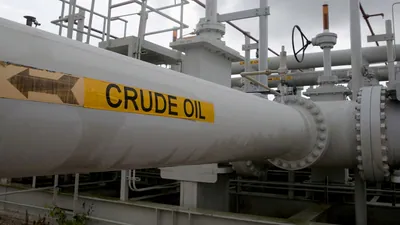
Brent crude oil price crossed the $100 a barrel mark on Wednesday, September 9, 2026, for the first time since July 24. The sharp rise reflects growing fears that the widening Middle East Conflict could disrupt crude production, oil infrastructure and major shipping routes, creating a fresh global oil supply shock.
Brent crude futures touched $100.19 a barrel during trading before easing slightly to around $99.93, still up $2.01, or 2.05%. U.S. West Texas Intermediate (WTI) crude also climbed, reaching $94.52 a barrel after gaining $1.49, or 1.60%.
The move is important because $100 has long been viewed as a major psychological threshold for crude oil. Crossing it does not automatically mean prices will remain above that level, but it signals that traders are placing a much larger risk premium on the possibility of prolonged disruptions to Middle East oil supplies.
Why Did Brent Crude Oil Cross $100?
The latest oil price rally is being driven by several risks occurring at the same time. The most important is the intensifying US-Iran conflict and its potential impact on oil production and transportation across the Middle East.
Brent has risen by roughly 25% since early August. Since the Iran war began on February 28, the benchmark has already reached as high as $126.41 a barrel on April 30.
Investors are now increasingly concerned that the conflict could become longer and wider. Any additional attacks on energy facilities, tankers or shipping routes could reduce the amount of crude reaching international buyers.
This is why the current oil rally is about more than the immediate loss of barrels. Traders are also pricing in the possibility that supply disruptions could last for weeks or months.
Houthi Attacks Increase Oil Supply Concerns
Another major factor is the renewed threat to energy infrastructure in Saudi Arabia. Iran-backed Houthi forces attacked energy facilities in the country this week, with some oil installations reportedly catching fire.
The attacks have increased fears that the conflict could spread across a larger part of the Middle East. Saudi Arabia is one of the world’s most important oil-producing countries, so any prolonged disruption to its energy infrastructure could have consequences far beyond the region.
The attacks are also significant because they raise concerns about shipping through the Red Sea. The route has become particularly important as oil flows through the Strait of Hormuz have fallen sharply.
Strait of Hormuz Remains the Biggest Oil Market Risk
The Strait of Hormuz is one of the world’s most strategically important energy corridors. A substantial amount of oil normally moves through the narrow waterway connecting the Persian Gulf with the Gulf of Oman.
Before fighting resumed on August 30, approximately 8 million to 9 million barrels per day were flowing through Hormuz, according to Rystad Energy Chief Economist Claudio Galimberti.
That volume has since dropped dramatically. More recently, less than 2 million barrels per day was flowing through the strait, according to Galimberti.
The decline matters because oil markets depend not only on how much crude is produced, but also on whether that crude can physically reach refineries and consumers.
If disruptions continue, the market could face a situation in which oil exists in producing countries but cannot move efficiently to international buyers. That type of logistical problem can push prices higher very quickly.
Why Red Sea Disruptions Could Make the Situation Worse
The Red Sea has become an important alternative route for moving oil when shipments through Hormuz are restricted. That makes the security of the Red Sea increasingly important for the global energy market.
If attacks or security threats further disrupt this route, oil exporters could have fewer reliable ways to transport crude to customers.
This creates a potentially dangerous combination: lower flows through Hormuz plus higher risks in the Red Sea. Traders are therefore watching both waterways closely.
The concern is not necessarily that all oil shipments will stop. Even a partial reduction in available transportation capacity can tighten the physical market and increase the price buyers are willing to pay for available barrels.
Oil Tanker Attacks Are Another Major Risk
Oil tankers have become another focus for the market. Capital Economics senior climate and commodities economist Hamad Hussain highlighted the risk that attacks could reduce ship-to-ship oil transfers in the Gulf of Oman.
These transfers have helped maintain oil flows despite restrictions affecting traditional shipping routes. If they become more difficult or dangerous, the amount of crude reaching international buyers could fall further.
This is particularly important because oil prices respond to expected future availability. Traders do not have to wait for a major physical shortage to occur before prices rise. The expectation of a shortage can itself drive prices higher.
Global Oil Supply Could Fall in 2026
The International Energy Agency has provided another reason for market concern. The agency said last month that global oil supply could decline by 4.3 million barrels per day this year, equivalent to around 4% of global supply.
A decline of that size would be significant under normal circumstances. Combined with geopolitical disruptions in the Middle East, it could make the global market much more sensitive to unexpected outages.
The market does have additional production from countries outside OPEC. The United States, Canada and Guyana have increased their oil output, helping provide additional barrels to international markets.
However, extra production from these countries may not completely compensate for disruptions in the Middle East, particularly if transportation through key maritime routes remains restricted.
Why the $100 Oil Price Matters for the Global Economy
Crude oil is not just another financial asset. It is a fundamental input for transportation, manufacturing, petrochemicals, aviation and numerous consumer products.
When crude prices rise sharply, the first impact is usually felt through fuel costs. Higher oil prices can increase the cost of petrol, diesel, aviation fuel and other petroleum products.
Businesses can also face higher transportation and production expenses. Over time, some of those costs may be passed on to consumers, potentially increasing inflation.
For central banks, this creates a difficult situation. Higher energy prices can make inflation more persistent even when economic growth is slowing.
That is why a sustained period of oil prices above $100 could become important for global interest-rate expectations as well as financial markets.
Higher Oil Prices Could Put Pressure on India
India is particularly sensitive to movements in international crude prices because it imports a large share of its oil requirements.
When global crude prices rise, Indian refiners generally face higher input costs. Depending on market conditions, this can influence petrol, diesel, transportation expenses and broader inflationary pressures.
A prolonged oil rally could therefore create challenges for India’s economy by increasing the country’s import bill and putting pressure on the trade balance.
Higher energy costs can also affect airlines, logistics companies, manufacturers and other businesses that depend heavily on fuel.
The impact on consumers, however, does not necessarily appear immediately or move one-for-one with international crude prices. Taxes, refining margins, currency movements and domestic pricing decisions also influence what consumers ultimately pay.
Major Banks Are Raising Their Oil Price Forecasts
The recent escalation has already changed expectations among major financial institutions. Goldman Sachs, Bank of America and HSBC are among the banks that have raised their crude oil price forecasts in recent days.
The change in forecasts shows that financial institutions are increasingly considering the possibility that geopolitical disruptions could last longer than previously expected.
That matters because higher forecasts can influence investment decisions, hedging strategies and expectations across energy markets.
| Factor | Impact on Oil Prices |
|---|---|
| US-Iran conflict | Raises fears of prolonged supply disruptions |
| Houthi attacks | Increase risks to Middle East energy infrastructure |
| Strait of Hormuz disruption | Reduces the movement of crude to global buyers |
| Red Sea security risks | Threaten an important alternative shipping route |
| Oil tanker attacks | Could disrupt ship-to-ship transfers |
| Lower global supply outlook | Leaves less room to absorb additional outages |
| Higher bank forecasts | Reflect growing expectations of prolonged market tightness |
Is $100 Oil the New Normal?
Crossing $100 does not necessarily mean Brent crude will remain above that level. Oil prices can move rapidly in both directions because they are highly sensitive to geopolitical developments.
If the conflict begins to de-escalate, shipping routes become safer and oil flows through Hormuz recover, part of the geopolitical premium could disappear.
On the other hand, further attacks on oil infrastructure or tankers could push prices considerably higher.
This makes the next stage of the conflict more important than the single-day move above $100. The key question is whether the disruption becomes temporary or develops into a sustained structural problem for global energy markets.
What Is the Oil Market Watching Now?
Traders are closely monitoring several developments. The first is the volume of crude moving through the Strait of Hormuz. A sustained decline would indicate that the transportation problem is becoming more serious.
The second is the security of oil infrastructure in Saudi Arabia and other Gulf producers. Additional attacks could remove production capacity or disrupt loading facilities.
The third is tanker activity. If shipping companies become increasingly reluctant to operate in affected waters, transportation costs could rise and available oil supplies could tighten.
The fourth is the Red Sea. Further attacks along this route could eliminate one of the alternatives available to exporters affected by Hormuz disruptions.
Finally, investors will watch whether production increases from the United States, Canada and Guyana can provide enough additional supply to offset losses elsewhere.
Temporary Shock or Structural Oil Crisis?
Jeffrey Currie, co-chairman at Abaxx Markets, has argued that markets may be treating the latest energy price increase as a temporary shock even though the underlying problem could be more structural.
One important concept in the current market is the “security premium” embedded in oil prices. This represents the additional amount traders are effectively willing to pay because of geopolitical uncertainty and the possibility of future supply disruptions.
If the conflict continues, that premium could become larger. If tensions ease, it could shrink quickly.
This explains why oil prices can remain elevated even when global production has not collapsed. Markets are pricing not only today’s supply, but also the risks surrounding tomorrow’s supply.
Three Possible Scenarios for Brent Crude
1. Conflict Escalates
If attacks spread to additional oil facilities, tankers or shipping routes, crude supplies could become tighter. In that situation, Brent could remain above $100 and potentially move substantially higher.
2. Conflict Continues but Oil Flows Adapt
Oil producers may continue using alternative transportation routes and other logistical solutions. If enough crude reaches international markets, prices could remain elevated without turning into a full-scale supply crisis.
3. Conflict De-escalates
If military tensions decline and oil shipments through key routes recover, the geopolitical premium could fall. Brent could then retreat below $100 as traders become more confident about future supply availability.
Why This Oil Rally Is Different From a Normal Price Spike
The current rally is notable because several risks are reinforcing one another. The Middle East conflict is affecting expectations around production, shipping and infrastructure at the same time.
That makes the situation different from a simple temporary outage at a single production facility.
The most important distinction is between production risk and transportation risk. Even if oil-producing countries continue pumping crude, restrictions on shipping can still prevent those barrels from reaching consumers.
For global markets, the location of available oil matters almost as much as the total amount of oil being produced.
What Happens Next for Brent Oil Price?
The Brent oil price crossing $100 is a clear warning that traders are taking Middle East supply risks much more seriously. The combination of the US-Iran conflict, attacks on Saudi energy facilities, risks to Red Sea shipping and sharply reduced flows through the Strait of Hormuz has tightened the outlook for global crude supplies.
The situation could become even more significant if tanker movements are disrupted or additional energy infrastructure comes under attack. At the same time, increased production from the United States, Canada and Guyana could provide some relief to the market.
For now, the biggest question is not simply whether Brent can stay above $100 for another trading session. The more important question is whether the Middle East conflict creates a long-lasting reduction in the amount of oil that can reliably reach global markets.
If disruptions remain temporary, the latest rally could eventually fade. But if the conflict continues to threaten production and shipping, the $100 Brent threshold could become less of a ceiling and more of a new reference point for the global oil market.
For breaking news and live news updates, like us on Facebook or follow us on Twitter and Instagram. Read more on Latest Business on thefoxdaily.com.





COMMENTS 0