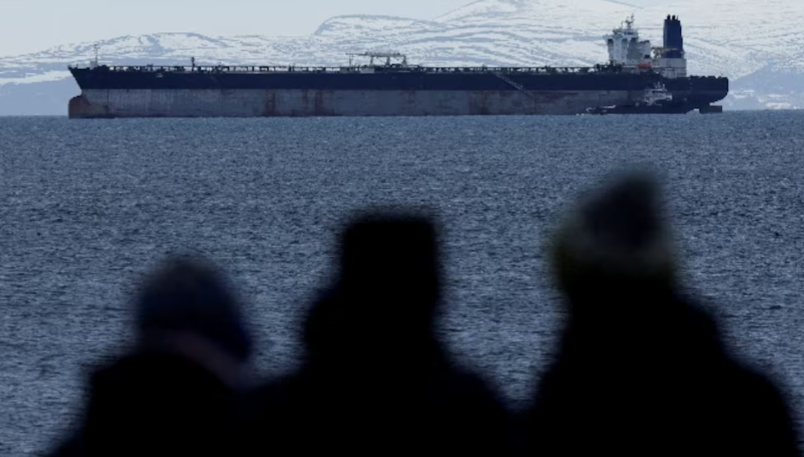
Brent Crude Oil remained above $100 a barrel on September 10, 2026, as escalating attacks on shipping near the Strait of Hormuz increased fears that disruptions to Middle Eastern oil flows could last longer than previously expected. The latest developments have pushed geopolitical risk back to the centre of the global energy market, with traders increasingly focused on physical supply rather than headline production figures alone.
Brent crude futures edged 0.1% lower to $101.10 a barrel by 0256 GMT, while U.S. West Texas Intermediate crude was up 0.2% at $96.24 a barrel. Brent has now gained nearly 30% from its early-August lows, reflecting the market’s growing concern over the duration and scale of supply disruptions.
Why Brent Oil Is Staying Above $100
The latest oil-price rally has been driven primarily by renewed uncertainty over shipments through one of the world’s most strategically important energy corridors.
Iran said on Wednesday that it had attacked 10 ships near the Strait of Hormuz after the United States sank five Iranian oil tankers. Iran’s Islamic Revolutionary Guard Corps also warned that its response could escalate if further attacks occur.
The tit-for-tat attacks have changed the market’s expectations. Traders are no longer treating shipping disruptions as a short-lived interruption. Instead, they are increasingly pricing in the possibility that oil flows from the Persian Gulf could remain below normal levels for an extended period.
ANZ analyst Daniel Hynes said the continuing attacks suggest that Persian Gulf oil flows are likely to remain disrupted for the foreseeable future.
The Market Is Pricing a Geopolitical Risk Premium
Oil prices reflect more than barrels currently available in the market. They also incorporate the risk that future supplies could become harder to move.
This additional cost is commonly described as a geopolitical risk premium. When traders believe that pipelines, ports, tankers or shipping routes could be disrupted, buyers may be willing to pay more for available crude.
That appears to be happening in the current market. OCBC analyst Christopher Wong said uncertainty over the actual volumes moving through the Strait of Hormuz, combined with continued shipping disruptions, is keeping physical crude markets tight and supporting the geopolitical premium.
Strait of Hormuz Remains the Central Oil Market Risk
The Strait of Hormuz is a narrow but critical waterway connecting the Persian Gulf with the Gulf of Oman. Before the current conflict, roughly one-fifth of global oil and gas supplies passed through the route.
Any prolonged disruption therefore has consequences far beyond the countries directly involved in the conflict. Refiners in Asia and other importing regions depend on reliable Gulf shipments, while producers rely on the waterway to reach international customers.
The current situation has created two separate concerns for oil traders: how much crude is actually moving through Hormuz today and how long reduced flows could continue.
The second question may be more important for prices. If traders believe the disruption will last only a few days, inventories and alternative routes may absorb much of the shock. If the disruption continues for weeks or months, the pressure on physical crude supplies could become substantially greater.
Brent Has Already Been Above $100 for More Than a Week
The latest move above $100 is not an isolated intraday event. According to LSEG data, the dated Brent benchmark has remained above $100 per barrel since September 3.
Dated Brent is particularly important because it serves as a pricing reference for a large portion of globally traded crude. Roughly two-thirds of global oil supply is priced against the Brent benchmark or related benchmarks.
This means that sustained Brent prices above $100 can eventually influence the cost structure of refiners, transportation companies, manufacturers and consumers around the world.
Alternative Export Routes Are Also Coming Under Pressure
The market’s concerns are not limited to the Strait of Hormuz. Alternative routes for Gulf oil exports are also facing new risks.
Iran-aligned Houthi militants have stepped up attacks against Saudi Arabia, raising concerns about crude shipments through the Red Sea.
This creates an important complication for the global oil market. When one transportation route becomes difficult to use, producers and traders typically look for alternatives. But if those alternatives also face security threats, the ability to reroute crude becomes more limited.
Why Alternative Routes Matter
Oil markets depend heavily on logistics. Producing crude is only one part of the supply chain. The oil must also be transported from production centres to refineries, and the finished fuels then need to reach consumers.
As a result, a shipping disruption can tighten the physical market even when oil remains underground and production facilities continue operating normally.
This distinction helps explain why crude prices can rise sharply during a geopolitical crisis without a proportionate immediate decline in global oil production.
Physical Oil Markets Are Showing Signs of Tightness
The latest price action in the physical crude market provides another indication of supply concerns.
Physical markets refer to actual crude being bought and sold for delivery rather than purely financial contracts. When available barrels become harder to obtain, buyers may have to pay a larger premium to secure prompt supplies.
The strength of dated Brent above $100 therefore matters because it suggests the market is responding to concerns about physical availability, not simply speculative trading.
OCBC’s Christopher Wong noted that uncertainty around actual oil volumes moving through Hormuz and ongoing shipping disruptions are keeping physical markets tight.
Brent and WTI Prices at a Glance
| Benchmark | Price | Latest Move |
|---|---|---|
| Brent crude | $101.10 per barrel | Down 0.1% |
| WTI crude | $96.24 per barrel | Up 0.2% |
| Brent from early-August lows | Nearly 30% higher | Strong overall rally |
| Dated Brent | Above $100 since September 3 | Physical market remains firm |
US EIA Raises Oil Price Forecasts
The U.S. Energy Information Administration added another bullish signal to the market on Wednesday by raising its oil price forecasts for this year and next.
The agency’s decision reflects expectations that global oil inventories will decline as Middle Eastern supply remains constrained.
Inventory levels are closely watched by oil traders because they provide a buffer against temporary supply disruptions. When inventories are high, consumers and refiners can draw on stored crude during a crisis. When stocks decline, the market becomes more vulnerable to additional disruptions.
That makes the combination of lower Middle Eastern supply and falling global inventories particularly important for the direction of crude prices.
Why the Latest Attacks Are Different for Oil Traders
The oil market has experienced geopolitical disruptions before, but the latest developments have a distinctive feature: shipping itself has become a central part of the conflict.
Attacks on tankers can create uncertainty even when production fields and export terminals continue operating. Shipping companies may become more reluctant to enter high-risk areas, insurers can reassess coverage, and vessels may require alternative routes.
Each additional layer of risk can increase the cost and time required to move crude from producer to consumer.
Higher Freight and Insurance Costs Could Add to Oil Prices
If shipping risks remain elevated, the total cost of delivering oil can rise through higher freight rates, insurance costs, longer routes and additional security requirements.
These costs do not necessarily appear immediately in the headline crude production figures. However, they can eventually be reflected in physical crude prices and refined fuel costs.
What Brent Above $100 Means for the Global Economy
A sustained oil price above $100 can have broader economic consequences because crude remains an essential input for transportation, manufacturing and numerous petroleum-based products.
Higher energy costs can contribute to inflation by increasing the cost of moving goods and operating businesses. Airlines, logistics companies, chemical producers and other energy-intensive industries can face pressure on margins.
For consumers, higher fuel prices can reduce disposable income because more household money is spent on transportation and energy rather than discretionary purchases.
The economic impact therefore depends heavily on how long the oil shock lasts.
Short-Term Oil Shock vs Prolonged Supply Crisis
The duration of the disruption is now one of the most important variables for crude prices.
A short-lived shipping disruption could allow inventories and alternative supply routes to absorb the temporary shock. In that scenario, Brent could eventually retreat as the geopolitical risk premium disappears.
A prolonged disruption would be more serious. Continued reductions in Gulf exports could draw down inventories, increase competition for available barrels and keep physical crude prices elevated.
The market is currently showing signs that traders are increasingly preparing for the second scenario, although the ultimate outcome remains dependent on developments in the conflict.
Key Factors That Could Push Brent Higher or Lower
- Strait of Hormuz flows: A further decline in shipments could create additional upward pressure.
- Tanker attacks: Continued attacks could increase shipping and insurance risks.
- Red Sea security: Additional attacks could reduce the effectiveness of alternative export routes.
- Global inventories: Falling stocks would make the market more vulnerable to supply disruptions.
- Conflict duration: A prolonged conflict would likely keep the geopolitical premium elevated.
- Diplomatic developments: Any credible ceasefire or de-escalation could quickly reduce risk premiums.
- Demand growth: Stronger fuel demand could amplify pressure on already-tight physical markets.
Why $100 Brent Has Become a Critical Psychological Level
The $100 mark carries significance beyond its numerical value. It is a widely watched psychological threshold for traders, businesses, policymakers and consumers.
Once crude remains above that level for an extended period, companies may begin reassessing their cost assumptions, while governments and central banks may pay greater attention to the inflation implications.
For oil-importing economies, sustained prices above $100 can also create pressure on trade balances and currencies. For producers, however, higher prices can improve revenues, provided production and export infrastructure remain operational.
What Traders Will Watch Next
The immediate focus will remain on shipping activity around the Strait of Hormuz and the broader Gulf region. Traders will look for evidence of whether oil flows are stabilising or deteriorating further.
They will also monitor signs of changes in global inventories and the response of major oil-producing countries. Any indication that supply disruptions are spreading beyond the current areas could trigger another sharp move in prices.
At the same time, diplomatic progress could have the opposite effect. Because a significant portion of the current Brent premium reflects uncertainty, credible signs of de-escalation could lead to rapid profit-taking and lower crude prices.
Conclusion
Brent crude is holding above $100 a barrel as attacks on shipping deepen concerns about the security of Middle Eastern oil supplies. Brent was at $101.10 a barrel on September 10, while WTI stood at $96.24.
The key issue for the oil market is no longer simply whether production has been disrupted. The growing concern is whether crude can be transported reliably through the Strait of Hormuz and whether alternative routes can handle additional volumes without facing similar security problems.
With the Strait previously carrying roughly one-fifth of global oil and gas supplies, prolonged disruption could keep the geopolitical risk premium elevated and place further pressure on global inventories.
The next phase of the oil rally will therefore depend heavily on shipping security, actual Gulf export volumes, inventory levels and the duration of the conflict. If disruptions persist, Brent could remain under significant upward pressure. If tensions ease, the same risk premium that pushed prices above $100 could unwind quickly.
For breaking news and live news updates, like us on Facebook or follow us on Twitter and Instagram. Read more on Latest Business on thefoxdaily.com.






COMMENTS 0