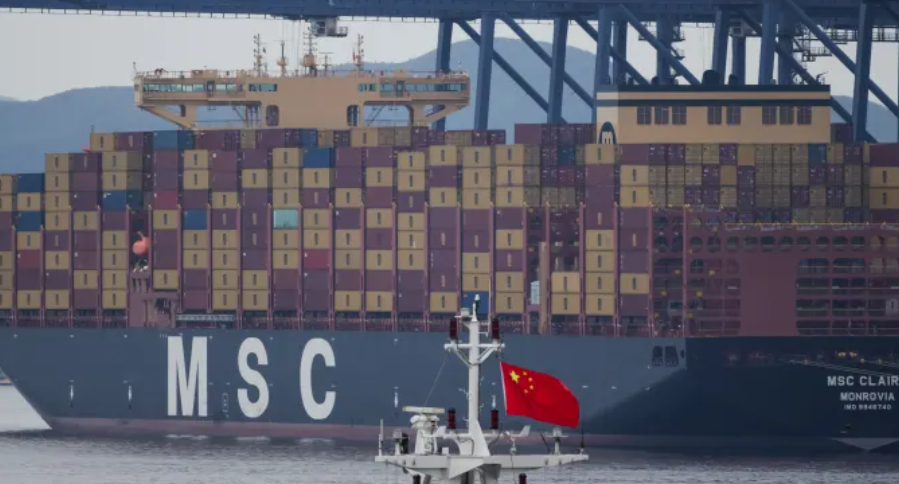
Oil prices have defied some of the most aggressive forecasts made after the Iran conflict began. While analysts initially warned that a major disruption to global crude supplies could push oil toward $150 or even $200 a barrel, Brent crude spent much of the period at considerably lower levels before recently climbing above $100.
The resilience of the global economy has been supported by a combination of weaker Chinese crude demand, strategic stockpiles, alternative energy sources and efforts by major economies to reduce their dependence on vulnerable oil supply routes. However, that cushion may not last indefinitely.
Why Oil Prices Did Not Reach $150 or $200
When the conflict erupted, the market faced the possibility of a sudden reduction in crude supplies from one of the world’s most important energy-producing regions. Several analysts consequently predicted an extreme oil-price shock.
Those forecasts did not materialise. Brent crude initially moved higher but later eased toward around $80 a barrel before renewed fighting in the Gulf pushed prices back above the psychologically important $100 level.
David Gruenwald, an economist at the Australian Treasury, said the market had underestimated how effectively the global economy could absorb the disruption. In his assessment, analysts not only misjudged the magnitude of the shock but, in some cases, also got the direction of the market wrong.
The key lesson is that an oil supply disruption does not automatically translate into an equivalent increase in prices. What matters is how much supply is actually lost, how quickly consumers respond, how much crude is held in inventories and whether other producers or energy sources can compensate.
China Has Become a Major Buffer for the Global Oil Market
One of the most important reasons the oil shock has remained manageable is weaker Chinese crude consumption.
China is the world’s largest importer of crude oil, making its purchasing behaviour crucial for global prices. According to the U.S. Energy Information Administration, Chinese crude imports, including commercial inventories, fell below 8 million barrels per day in May and June. That marked the first time imports had dropped below that level since 2016.
When China’s purchases fall, fewer barrels are competing for global supply. That can partially offset the effect of disrupted production or transportation elsewhere.
This created an unusual situation in which a major geopolitical crisis was occurring at the same time as one of the world’s largest oil consumers was reducing its demand for crude.
China’s Crude Imports Are Starting to Recover
The biggest risk to the current oil-price balance is that Chinese demand could begin returning to normal.
Official trade data showed that China’s crude imports rebounded by 22% month on month in July and another 6.2% in August. Although imports remained significantly below the previous year’s level, the direction of travel is important for the global oil market.
If Chinese purchases eventually return to their pre-war pace, the market could lose one of its most important demand-side buffers.
Krishna Srinivasan, director of the Asia and Pacific Department at the International Monetary Fund, warned that a stronger Chinese recovery in oil imports could amplify the negative impact of elevated crude prices on global economic growth.
That creates a potentially difficult combination: disrupted supply on one side and recovering demand on the other.
China’s Strategic Stockpiles Are Protecting Its Economy
China has spent years preparing for the possibility of disruptions to global energy supplies. Its strategy combines crude stockpiling, alternative energy sources and policies designed to reduce the economy’s dependence on imported oil.
Kai Guo, executive president and senior fellow at the China-focused CF40 Institute, said China’s preparations had helped it absorb the energy shock without suffering a proportionate economic hit.
China is estimated to hold around four months of crude in national reserves. In addition, a new energy law requires major oil companies to maintain additional reserves beyond their normal commercial inventories.
These reserves effectively provide China with an energy cushion. When international oil prices rise or imports become difficult, stockpiled crude can help reduce the immediate pressure on domestic consumers and businesses.
Why China’s Energy Model Is Different
China’s ability to withstand an oil shock is not based solely on crude inventories. The country’s broader energy mix also plays an important role.
Coal remains a major source of China’s energy supply. According to Dan Wang of Eurasia Group, coal accounts for roughly 53% of China’s energy mix.
That gives China another mechanism for reducing its exposure to expensive oil. When crude prices rise sharply, some economic activity can rely more heavily on other energy sources.
This approach would not necessarily be efficient for every economy. Maintaining large reserves and excess energy capacity can involve substantial investment. But during an unexpected geopolitical crisis, those investments can function as insurance.
The current oil disruption therefore highlights an important difference between simply buying energy on global markets and building a national energy-security strategy.
Clean Energy Is Also Reducing China’s Oil Vulnerability
China’s investment in clean energy has another important consequence for the oil market. Electrification can reduce the amount of petroleum required for transportation and other activities.
Electric vehicles, renewable electricity generation and other forms of energy substitution do not eliminate oil demand overnight. However, they can gradually weaken the relationship between economic growth and crude consumption.
This means that China’s economy can potentially expand without increasing oil consumption at the same rate seen in previous decades.
For global oil producers, that is a structural challenge. Even if geopolitical tensions eventually ease, changing energy consumption patterns could limit the long-term growth of crude demand.
But the Oil Market Still Has a Major Risk
The current stability should not be mistaken for a permanent solution.
Oil prices have recently moved back above $100 as renewed hostilities between Iran and the United States disrupted shipping and increased concerns about crude flows through the Gulf.
The Strait of Hormuz remains particularly important because a large share of global oil and gas exports normally passes through the waterway. Any prolonged disruption can increase transportation costs, insurance premiums and the risk premium built into crude prices.
That means the market can remain relatively stable for a period before suddenly becoming more vulnerable if inventories decline and demand strengthens simultaneously.
How Long Could the Gulf Oil Crisis Last?
The duration of the conflict is becoming just as important as the immediate loss of supply.
Dan Wang expects the Gulf standoff to last at least a year and forecasts oil prices could remain between $85 and $100 a barrel through 2027. Her view reflects the belief that strategic reserves, alternative energy sources and adjustments in global trade can prevent an uncontrolled price spike.
However, that is not the only scenario being considered by analysts.
Goldman Sachs economist Daan Struyven has warned that oil prices could still reach $120 a barrel if the war continues to disrupt shipping. The difference between these forecasts illustrates how sensitive the market is to the duration and severity of supply interruptions.
Oil Price Scenarios: What Could Push Brent Higher or Lower?
| Factor | Potential Impact on Oil Prices |
|---|---|
| Prolonged disruption in Gulf shipping | Could push Brent significantly higher |
| Recovery in Chinese crude imports | Could increase global demand and support higher prices |
| Large strategic stockpiles | Can reduce the immediate supply shock |
| Greater use of coal and clean energy | Can reduce oil demand growth |
| Alternative oil supply routes | Can partially offset disrupted shipments |
| Economic slowdown | Could weaken global crude demand |
| Longer-lasting geopolitical conflict | Could keep a higher geopolitical risk premium in prices |
Why the $100 Oil Price Level Matters
The $100 mark is more than a round number. It is an important psychological threshold for traders, businesses and consumers.
When Brent trades above $100 for an extended period, higher energy costs can gradually move through the wider economy. Transportation becomes more expensive, fuel costs rise and companies that depend heavily on petroleum-based inputs can face pressure on their margins.
Governments can also face higher inflation risks because energy is embedded in the cost of producing and transporting many goods.
However, an oil price of $100 does not automatically trigger a global recession. The impact depends on the duration of the price increase, the strength of the global economy and how much energy-intensive activity can adapt.
The Bigger Question: Can China Keep Global Oil Demand Under Control?
China may be the biggest variable in the next phase of the oil market.
If Chinese imports remain subdued, global oil demand could stay manageable even while geopolitical disruptions continue. That would give producers and consumers more time to adjust.
But a strong Chinese economic recovery combined with increased crude imports would change the equation.
More Chinese buying would compete for barrels already affected by shipping disruptions. Global inventories could decline faster, strengthening upward pressure on prices.
This is why recent increases in China’s crude imports deserve close attention. The figures do not yet indicate a full return to previous consumption patterns, but they suggest that the demand side of the market may be becoming less supportive of lower prices.
Why Analysts Are Watching Inventories
Inventories are one of the most important shock absorbers in the oil market.
When supplies are disrupted, refiners and consumers can initially draw on stored crude rather than immediately competing for new production. That can prevent a temporary disruption from causing an extreme price spike.
But inventories are finite. If a crisis continues for months and stockpiles steadily decline, the market becomes increasingly dependent on current production and transportation flows.
That is when relatively small additional disruptions can have a much larger effect on prices.
Could Brent Reach $120?
A move toward $120 is possible if several negative factors occur simultaneously. A prolonged Gulf conflict, continued shipping disruptions, declining global inventories and stronger Chinese demand would create a much tighter market than the one seen earlier in the crisis.
Goldman Sachs’ warning of a possible $120 price therefore represents a higher-risk scenario rather than an inevitable outcome.
Conversely, a de-escalation of the conflict, restoration of shipping routes and continued weak Chinese imports could ease pressure on crude prices.
What the Oil Market Is Really Telling Investors
The most important lesson from the current crisis is that oil prices depend on more than headlines about war.
Geopolitical events can create immediate fear, but actual price movements are determined by the interaction of supply, demand, inventories, transportation capacity, alternative energy sources and expectations about the future.
The market initially expected an enormous supply shock. Instead, lower Chinese imports, strategic reserves and energy substitution helped absorb part of the disruption.
Now the balance may be changing. China’s crude purchases are recovering, Brent has returned above $100 and the conflict continues to threaten shipping routes.
The next phase of the oil market will therefore depend heavily on whether these buffers remain strong enough to offset continuing supply risks.
Conclusion
The oil market has so far avoided the extreme price shock many analysts feared at the beginning of the Iran conflict. Brent did not immediately surge toward $150 or $200 because weaker Chinese crude demand, strategic inventories and China’s ability to substitute away from oil helped cushion the global economy.
But those protections have limits. China’s crude imports are beginning to recover, while renewed fighting and shipping disruptions are pushing Brent back above $100.
The outlook is consequently divided between two possibilities: a relatively contained oil market supported by inventories and alternative energy, or a much tighter market in which recovering demand collides with prolonged supply disruptions.
For now, the $100 level is a critical threshold. If the conflict persists and Chinese demand continues recovering, the possibility of Brent moving toward $120 a barrel becomes more credible. If geopolitical tensions ease and global demand remains restrained, the market could remain considerably below that level.
For breaking news and live news updates, like us on Facebook or follow us on Twitter and Instagram. Read more on Latest Business on thefoxdaily.com.






COMMENTS 0