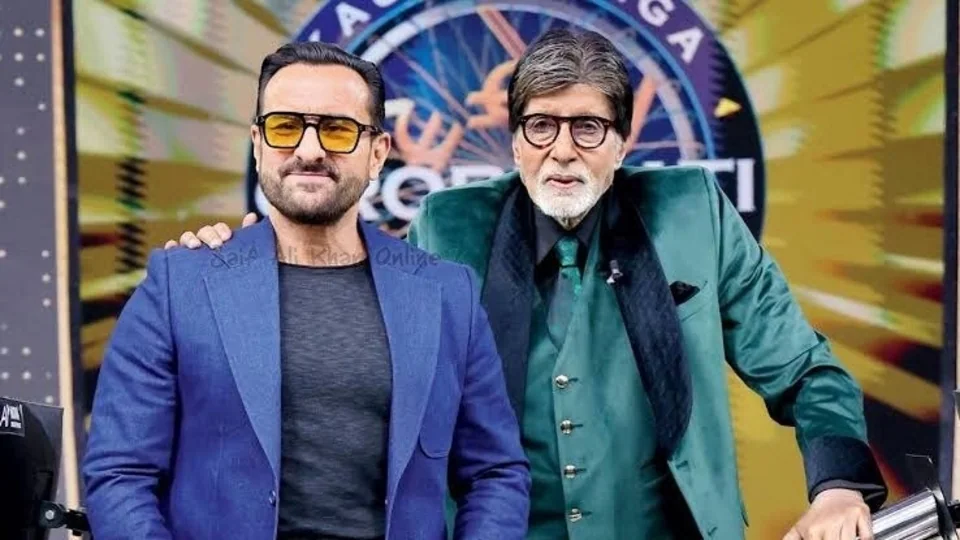
Growing concerns over threats against Bollywood personalities have prompted the All Indian Cine Workers Association (AICWA) to seek urgent intervention from the Maharashtra government. The industry body has written to Chief Minister Devendra Fadnavis, requesting stronger security for actors including Saif Ali Khan and Amitabh Bachchan, along with protection for their families and other film professionals facing threats.
The appeal follows a series of reported intimidation incidents involving prominent names from the Hindi film industry. Saif Ali Khan recently received an alleged death threat referring to the fate of politician Baba Siddique, while several other actors have reportedly received similar messages. A separate shooting incident involving Tiger Shroff in Juhu has also added to concerns about the safety of people associated with the Entertainment Industry.
In its letter, AICWA warned that threats against film personalities could eventually affect the ability of the industry to function normally. The organisation argued that the consequences would extend beyond actors to technicians, daily-wage workers, production teams and businesses dependent on film shoots.
The demand is therefore not limited to personal protection for a few high-profile celebrities. It raises a wider question about security at public appearances, film locations and workplaces across Mumbai’s entertainment industry.
Why AICWA has approached Maharashtra Chief Minister Devendra Fadnavis
AICWA president Suresh Shyamlal Gupta wrote to Chief Minister Devendra Fadnavis, sending a copy of the letter to Mumbai Police Commissioner Deven Bharti. The organisation called for urgent steps to address threats allegedly issued by gangsters against actors and other film personalities.
The letter referred to claims made by criminal groups about having access to around 200 shooters. Such claims, as cited by the association, have contributed to an atmosphere of anxiety within the film industry. The organisation argued that visible personalities can become targets because their public profiles make them easier to identify and their names can attract attention.
AICWA also highlighted the possible economic consequences of continued intimidation. Film production involves a large network of people who depend on regular shoots and related activities for their income. Actors may be the most recognisable members of a production, but the work behind a film also involves camera crews, lighting technicians, costume departments, make-up artists, spot workers, drivers, catering teams and set workers.
In the letter, the association warned that prolonged security concerns could disrupt shooting schedules, delay projects and put workers’ livelihoods at risk. It said the industry could face a situation in which filming becomes difficult to organise because cast members and production teams are worried about their safety.
The organisation also pointed to Bollywood’s contribution to India’s public image and economy. Its argument is that threats against film personalities do not affect only individual celebrities; they can also create uncertainty for an industry that employs people across several levels of production.
AICWA’s five demands to protect Bollywood
The association outlined five key demands in its appeal to the Maharashtra government. They cover individual protection, workplace security, law enforcement and monitoring of public events involving film personalities.
- Stronger security for threatened actors and families: AICWA specifically named Saif Ali Khan, Amitabh Bachchan and Abhishek Bachchan, seeking enhanced protection for them and their families.
- Safety for film personalities and filmmakers: The organisation called for measures to protect actors, directors and other prominent members of the film industry in Mumbai.
- Police protection at shooting locations: It requested adequate security arrangements at film sets and other locations where productions are taking place.
- Strict action against criminal networks: The association demanded action against gangsters and their networks, while calling for a Mumbai free from gangster intimidation.
- Monitoring of public events: It sought closer monitoring of press conferences and public appearances involving film personalities, where crowds and open access can create additional security concerns.
The demands reflect different parts of the industry’s security requirements. Protecting an actor at home is not the same as securing a film set, a public event or an outdoor shoot. Each setting involves different risks, access arrangements and coordination requirements.
For instance, a film production may involve a large crew, temporary staff, visitors, equipment suppliers and members of the public, particularly when filming takes place outside a controlled studio environment. AICWA’s demand for police protection at shooting locations reflects concern that security arrangements need to extend beyond individual residences.
Saif Ali Khan death threat: What Mumbai Police are investigating
The association’s letter follows an alleged threat received by actor Saif Ali Khan. Mumbai Police told news agency PTI on Thursday that an investigation had been initiated and that officers were checking the authenticity of the threat.
A police official, as quoted by PTI, said that Saif had received a voice message on his phone in the name of Zeeshan Akhtar. The message allegedly warned that the actor would meet the same fate as Baba Siddique.
The reference to Siddique made the message particularly serious. Siddique, a former Maharashtra minister and Nationalist Congress Party leader, was shot dead in Mumbai in October. The alleged threat to Saif invoked that incident, but the existence of a threatening message and the identity of the person who sent it are separate questions that investigators need to establish.
At the time of the police statement cited in the report, officers were verifying the authenticity of the message. The claim that it came from a particular individual should therefore not be treated as confirmation of the sender’s identity or of any person’s involvement.
Threat investigations require authorities to establish where a message originated, whether the communication is genuine and whether it is connected to a wider criminal network. A message can create immediate concern for the recipient, but determining who sent it and whether the threat is actionable requires investigation.
For the film industry, the incident has renewed attention on the security arrangements available to actors who are frequently required to travel, attend public events and work at locations that may not offer the controlled environment of a private residence or studio.
Amitabh Bachchan and other Bollywood personalities reportedly receive threats
Saif Ali Khan is not the only actor named in the recent reports about threats against film personalities. Amitabh Bachchan has also reportedly received a threat, prompting AICWA to include him and his family in its request for stronger protection.
Other names mentioned in the reports include Abhishek Bachchan, Ayushmann Khurrana, Diljit Dosanjh and Tusshar Kapoor. The association’s appeal reflects concern that the incidents should not be treated as isolated problems affecting only one or two celebrities.
However, the details and circumstances of individual threats may differ. A reported threat does not automatically establish that every case is connected to the same group or criminal network. Authorities must assess each incident on its own evidence rather than assume a common source.
The distinction is important because security responses need to reflect the nature of the threat. An actor receiving a message, a public figure facing repeated intimidation and a person targeted in a shooting incident may require different assessments and protective measures.
Tiger Shroff shooting incident adds to concerns over celebrity safety
The shooting incident involving Tiger Shroff in Juhu has also contributed to the wider debate about security around Bollywood personalities. According to the supplied report, shots were fired at the actor in October, but he escaped unharmed. His driver and a bystander sustained bullet injuries.
The incident illustrates why security concerns around public figures can extend beyond the intended target. When violence takes place in a public area, people nearby may also be exposed to danger. Drivers, staff members, passers-by and others who happen to be present can become unintended victims.
This is particularly relevant for film personalities whose professional commitments often involve movement between homes, studios, outdoor locations, promotional events and public venues. Their schedules may be widely discussed or visible, and their appearances can attract crowds.
Security at such locations involves more than assigning protection to a celebrity. It can also require managing entry points, assessing potential risks, coordinating with local police and ensuring that members of the public are not placed in danger.
Salman Khan’s long-running security concerns
Salman Khan has also faced repeated threats attributed to Lawrence Bishnoi and members of his gang. The threats have been linked in reports to the controversy surrounding an alleged blackbuck poaching case.
His situation has become one of the most prominent examples of the security challenges faced by a Bollywood star amid threats attributed to organised criminal networks. It has also kept attention on the risks that can arise when celebrity disputes, criminal intimidation and public visibility overlap.
For the wider industry, the concern is that security cannot be approached only after a high-profile incident. Threat assessments, communication between law enforcement and production teams, and arrangements for public appearances all form part of a broader preventive approach.
At the same time, individual cases should be assessed on verified information. Public speculation about the identity of a sender or the links between separate incidents can complicate an investigation and create unnecessary alarm.
Why threats against actors can affect the entire film industry
AICWA’s warning about a possible disruption to Bollywood highlights an often-overlooked aspect of celebrity security: the number of livelihoods connected to a single film production.
A film set is a temporary workplace involving people from a wide range of professions. Some are employed for the duration of a project, while others work on a daily or assignment-based basis. If shooting is delayed or cancelled, the financial consequences can reach far beyond the actors whose names appear on posters.
Production schedules also involve several linked arrangements. Locations may be booked, equipment hired, transport organised and workers assigned to specific dates. A sudden security concern can force a production to reconsider these plans, potentially creating additional costs and delays.
Not every threat will lead to a cancelled shoot, and the association’s warning describes a possible risk rather than a confirmed industry-wide shutdown. Nevertheless, the concern is understandable: uncertainty around safety can make it harder for producers to plan work and for crew members to rely on regular assignments.
There is also a difference between security at a controlled studio and protection during outdoor filming. Studio premises may have established entry procedures, while public locations can involve changing surroundings, larger crowds and less predictable access. AICWA’s request for adequate police protection at shooting locations addresses this practical challenge.
What stronger security could mean for Bollywood
The association’s demands point towards a more coordinated approach to protecting film personalities and workers. Stronger security for individuals may be one part of the response, but the wider industry also needs arrangements that account for the different places where film-related work happens.
Closer coordination between production teams and local police could help identify security requirements before filming or public appearances begin. Access management, advance risk assessments and clear procedures for responding to suspicious activity are among the practical areas that may need attention, depending on the circumstances.
Public events require particular care because they bring together celebrities, media representatives, organisers and fans. AICWA’s request for closer monitoring of press conferences and public appearances reflects the need to consider security before an event begins, rather than relying only on emergency responses.
The next important development will be how the Maharashtra government and Mumbai Police respond to the association’s appeal. The letter sets out AICWA’s demands, but it does not itself confirm that new security measures have been approved or implemented.
AICWA seeks a safer working environment for Bollywood
The latest appeal from AICWA places the safety of Bollywood personalities within a broader discussion about the security of an entire working industry. Saif Ali Khan’s alleged death threat, reports involving Amitabh Bachchan and other actors, and the shooting incident involving Tiger Shroff have intensified concerns about intimidation and violence around film professionals.
By approaching Chief Minister Devendra Fadnavis and copying Mumbai Police Commissioner Deven Bharti, the association has asked the authorities to address both individual threats and the risks faced by people working on film productions.
Whether the demands lead to new arrangements will depend on the authorities’ assessment and response. For now, AICWA’s central message is that actors, filmmakers and workers should be able to travel, attend events and carry out their jobs without fear of intimidation or violence.
The issue extends beyond the public lives of celebrities. A safer working environment is essential for the technicians, artists, set workers and other professionals whose livelihoods depend on Bollywood continuing to function.
For breaking news and live news updates, like us on Facebook or follow us on Twitter and Instagram. Read more on Latest Entertainment on thefoxdaily.com.






COMMENTS 0