The death toll from the Filo Jet ferry disaster off northern Cyprus has risen to 12 after rescuers recovered the remains of two more people from the wreck, authorities said on Friday. Sixteen passengers and crew members remain missing as search teams continue a difficult operation around the sunken vessel.
The high-speed catamaran, carrying 267 passengers and crew, capsized and sank on Sunday after leaving Kyrenia, also known as Girne, for the Turkish port of Tasucu. The wreck now lies roughly 550 metres below the sea surface, creating a difficult Environment for divers and rescue teams.
The latest recovery brings the known death toll to 12. Northern Cyprus Prime Minister Unal Ustel said the two newly recovered victims were women. Their identities had not immediately been formally established.
The disaster has triggered an increasingly wide-ranging Investigation into the ferry’s final voyage, including questions about its condition, the decision to sail, emergency procedures and the actions of the crew after the vessel began taking on water.
Authorities in the north of Cyprus have detained several people connected to the ferry’s operation, while others, including company employees and port officials, are also under investigation.
Two more bodies recovered from the wreck
The latest recovery was carried out during the deep-water search around the sunken ferry. Turkish Navy vessels equipped with specialised underwater equipment are being used to search the wreck and surrounding seabed.
The two newly recovered bodies were found after rescuers expanded their efforts around the vessel, which rests at a depth of approximately 550 metres about 7.5 kilometres from the northern Cypriot coast.
Earlier, rescuers had recovered the bodies of a man and a woman from the wreckage. The increasing death toll has made the search more urgent as authorities attempt to locate the remaining missing passengers and crew.
Prime Minister Ustel said the operation was continuing around the clock under extremely difficult conditions, with support from Turkey and multiple agencies.
The search is complicated not only by the depth but also by the condition of the wreck. Rescue teams must determine which areas can be safely entered while using remotely operated and submersible equipment to inspect the vessel.
What happened to the Filo Jet?
The Filo Jet departed Kyrenia on Sunday, August 30, bound for Tasucu in Turkey’s Mersin province.
The crossing had been delayed because of Weather conditions, and the vessel left the port at around 12:30 p.m. local time. Not long after departing, the ferry began experiencing serious problems.
Survivors reported hearing loud noises from below the decks before the vessel began listing and taking on water. As the catamaran tilted, passengers reportedly panicked and struggled to escape the interior sections of the ferry.
The vessel eventually capsized and sank in deep water.
Some passengers survived by escaping onto the overturned hull and were later rescued by coast guard and naval units, while others were trapped inside the vessel or swept into the sea.
The exact cause of the sinking has not yet been formally established, but investigators are examining several possibilities, including structural damage, water ingress, mechanical problems and failures in the evacuation process.
Survivors reported loud noises and rapid flooding
Accounts from survivors have become an important part of the investigation.
Passengers said they heard several loud noises before the ferry began taking on water. Some survivors also described the vessel behaving abnormally before it overturned.
According to evidence presented during the investigation, the front section of the port-side hull may have fractured several miles from Kyrenia, allowing water to enter the vessel.
Other reports indicate that water had been entering the ship before the final emergency and that crew members had been alerted to the problem.
These accounts are now being compared with technical evidence from the wreck, official records and statements from crew members.
The investigation will need to establish whether the vessel suffered a sudden and unpredictable failure or whether earlier warning signs should have prompted the crew to stop the voyage and begin an emergency evacuation.
Questions over whether the ferry should have sailed
One of the most significant questions concerns the decision to allow the Filo Jet to leave Kyrenia.
Reports from the investigation indicate that the destination port of Tasucu had earlier been closed to traffic because of weather conditions. The ferry’s second captain is also reported to have advised against sailing, while the master ultimately proceeded.
Authorities are examining the circumstances surrounding that decision, including what weather information was available at the time and why departure was eventually permitted.
The issue is important because the ferry had already been scheduled to operate the route and the voyage was a regular maritime connection between northern Cyprus and mainland Turkey.
If investigators establish that the vessel sailed despite conditions or technical warnings that should have prevented departure, that could become an important part of any eventual criminal or regulatory proceedings.
Nine people have been detained in the investigation
The sinking has led to a widening criminal investigation.
The vessel’s captain, second captain, chief engineer, second engineer and other crew members were among those detained. A company official has also been taken into custody.
The people being held face allegations connected to causing deaths through carelessness or negligence. Several additional people, including staff associated with the ferry company and port officials, are also under investigation.
Being detained or investigated does not establish criminal responsibility. Authorities must still gather evidence and prosecutors and courts must determine whether individual actions or omissions contributed to the deaths.
The investigation is examining both the condition of the vessel and the decisions made before and during the emergency.
Early findings raise questions about emergency procedures
One preliminary expert assessment has raised questions about how the emergency was handled once the ferry began taking on water.
The report reportedly criticised the captain for failing to reduce the vessel’s speed once water entered the ship and for not organising an orderly evacuation quickly enough.
Investigators are also examining whether distress communications were made promptly and whether passengers received clear instructions about what to do.
These questions are particularly important in a high-speed ferry because passengers may have only a short period to reach life jackets, muster points and evacuation equipment when a vessel suddenly begins to capsize.
Survivors have reportedly given accounts suggesting there were problems obtaining life jackets and that some warnings may not have received an adequate response.
Those claims are being assessed alongside official records indicating that the ferry had the required lifesaving equipment. Establishing what actually happened will require investigators to compare the documents with physical evidence and eyewitness accounts.
The ferry’s technical history is under scrutiny
The investigation has also expanded to the vessel’s previous maintenance and inspection record.
The ferry was built in 2000 and had previously operated under another name before becoming the Filo Jet.
A condition survey carried out in 2018 reportedly identified numerous deficiencies and concluded that the vessel was not fit to trade internationally until the problems were addressed.
The survey identified issues involving the main engines and other systems, while later legal proceedings examined whether those deficiencies had been adequately rectified.
That history does not establish that an old defect caused the 2026 sinking. The vessel underwent subsequent inspections and had received approvals before operating the Kyrenia-Tasucu service.
Nevertheless, investigators are likely to examine its entire maintenance history to determine whether unresolved technical weaknesses contributed to the accident.
Concerns over the vessel’s hull and mechanical condition
Evidence presented during the investigation indicates that the ferry may have suffered a structural failure in the forward part of the hull shortly after leaving port.
Police reportedly told a court that the vessel’s port-forward hull section fractured after it had travelled several miles, after which it began taking on water and eventually capsized.
The investigation is also examining reported engine and steering defects and questions concerning whether the vessel had previously taken on water.
Again, none of these factors has yet been established as the definitive cause of the sinking.
Maritime investigations typically require investigators to distinguish between a vessel’s long-term maintenance history and the specific failure that caused a particular accident.
The recovery of the wreckage and retrieval of technical information from the vessel could therefore become crucial to determining what happened during the final minutes of the voyage.
The search is taking place at extreme depth
The rescue operation is unusually difficult because the Filo Jet lies about 550 metres underwater.
At that depth, conventional diving is not practical for most operations. Turkish naval rescue vessels are using remotely operated and submersible systems capable of reaching the wreck and inspecting sections of the vessel.
Specialised equipment allows rescuers to examine the hull, search interior compartments and attempt to recover bodies or other evidence without putting divers directly into an extremely dangerous environment.
Deep-water recovery is also physically and technically demanding. Visibility can be limited, underwater currents can complicate operations and damaged sections of the ferry can create entrapment risks for equipment.
The priority remains locating the 16 missing people, but investigators also hope to recover information from the wreck that could help establish how the accident occurred.
Seven ships and six aircraft are supporting the search
The scale of the operation has expanded as the number of missing people remains high.
According to the Turkish Ministry of Defence, multiple ships and aircraft are participating in the search, alongside specialised underwater systems.
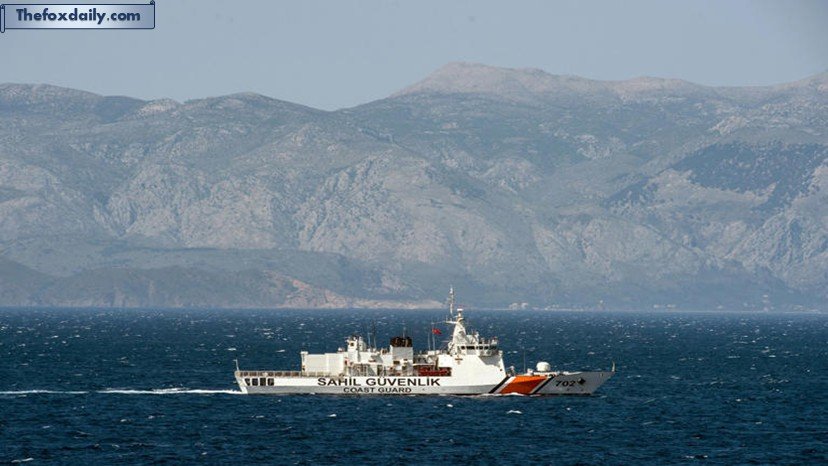
Turkish Coast Guard and Navy units, northern Cypriot authorities and other emergency services have been coordinating the operation since the ferry sank.
The involvement of specialised deep-sea teams reflects the difficulty of searching a wreck at hundreds of metres below the surface.
Authorities have stressed that the operation will continue around the clock while conditions permit.
Families are still waiting for missing relatives
For the families of the 16 missing passengers and crew members, the deep-water search remains the most important part of the response.
The recovery of additional bodies has brought painful confirmation for some families while leaving others waiting for information.
The uncertainty is especially difficult in cases where rescuers have yet to establish whether missing people remain inside the wreck or were swept away when the ferry sank.
Authorities are continuing to compare passenger lists, survivor accounts and recovered remains as they work to identify everyone involved.
The final casualty figures will depend on the recovery and identification of additional victims.
Why the ferry route matters
The Kyrenia-Tasucu connection is an important maritime link between northern Cyprus and mainland Turkey.
Fast ferries on the route provide a relatively quick alternative to air Travel for passengers moving between the two areas. The service is used by workers, residents and others travelling between the island’s northern region and Turkey.
The Filo Jet was operated by Filo Denizcilik, which has now had its services suspended while the investigation continues.
Another operator has taken over the route temporarily, while additional flights have been added to maintain connectivity between northern Cyprus and Turkey.
The decision to suspend the company’s operations reflects the seriousness of the investigation and allows authorities to examine the wider safety of its services.
The disaster is also politically sensitive
The ferry sinking occurred in the northern part of a politically divided Cyprus.
Cyprus has been divided along ethnic and political lines since 1974. The Turkish Cypriot administration in the north declared independence in 1983, but it is recognised only by Turkey.
Turkey maintains a substantial military presence in the north, while the internationally recognised Republic of Cyprus controls the southern part of the island.
That political division means maritime operations around northern Cyprus take place within a complicated regional context.
The current rescue effort, however, has involved practical cooperation between Turkish and northern Cypriot authorities. Turkish naval and coast guard resources have played a central role in the search and recovery operation.
The ferry disaster has already caused political fallout
The consequences of the sinking have extended beyond the rescue operation.
Prime Minister Ustel dismissed the transport minister, Erhan Arikli, amid the investigation. Arikli’s party subsequently withdrew from the governing coalition, creating additional political uncertainty in northern Cyprus.
The decision reflected concerns over accountability while the causes of the disaster were being investigated.
Ustel has described the sinking as the worst maritime disaster in Cyprus’s history, underlining the seriousness with which authorities are treating the incident.
Three days of National Mourning were declared after the accident.
The political implications are likely to remain secondary to the search and criminal investigation in the immediate future, but the fate of the ferry and the decisions surrounding its final voyage are already generating intense scrutiny.
Investigators must separate weather from other possible causes
Weather conditions have been cited repeatedly since the sinking, but investigators have not established that weather alone caused the disaster.
The ferry’s departure had been delayed from the previous day because of weather. But questions have also emerged over the vessel’s technical condition, the decision to depart and the response after water entered the ship.
Authorities will therefore need to determine how weather interacted with the ferry’s condition and operating decisions.
Even moderate adverse conditions can become dangerous when combined with mechanical problems or structural damage, particularly aboard a fast catamaran travelling at sea.
The official investigation will be important in determining whether weather was the principal cause, a contributing factor or largely unrelated to the vessel’s failure.
What the recovered wreck could reveal
The Filo Jet itself could contain some of the most important evidence in the case.
Investigators hope to examine the damaged hull, determine the point and nature of any structural failure and recover technical equipment from the vessel.
A voyage data recorder, if accessible and recovered, could provide information about the ferry’s speed, heading and other operating parameters shortly before the accident.
Physical evidence could also help determine how quickly the vessel took on water and how the flooding spread through its compartments.
Those details will help investigators compare the technical evidence with witness accounts.
That process is likely to take time because deep-water recovery is inherently difficult, and investigators must balance the need for evidence with the safety of the recovery teams and equipment.
What happens next in the Cyprus ferry investigation?
The immediate priority is to continue searching for the 16 people who remain missing.
At the same time, investigators are expected to continue questioning the detained crew and company officials, examine the ferry’s maintenance and inspection records and analyse evidence recovered from the wreck.
Authorities will also need to reconstruct the decision-making process surrounding the voyage, including the weather assessment and the circumstances under which the vessel received clearance to depart.
The investigation will eventually have to answer several fundamental questions: what caused the initial damage, why the ferry continued sailing, how quickly the crew recognised the seriousness of the emergency, whether evacuation procedures were followed and whether any preventable failures contributed to the loss of life.
Until those questions are resolved, the cause of the sinking remains officially unsettled.
A race to find 16 missing people
The latest recovery of two more bodies has raised the confirmed death toll to 12, but the search effort is far from over.
Sixteen people are still missing, and the wreck of the Filo Jet sits hundreds of metres beneath the surface in conditions that make every recovery operation technically demanding.
The rescue of survivors in the immediate aftermath of the sinking showed that people could escape the overturned vessel, while the later discovery of bodies inside the wreck demonstrated that others remained trapped.
For families still waiting for news, every new search operation carries the possibility of an answer.
The sinking has also raised broader questions about ferry safety, vessel maintenance, emergency preparedness and regulatory oversight. Those issues will become clearer as investigators examine the evidence from the ship, the voyage records and the decisions made before the disaster.
For now, the central focus remains on the 16 missing people. The operation continues around the clock, while the investigation seeks to determine how a routine crossing from Kyrenia to Tasucu turned into one of the region’s deadliest maritime disasters in decades.
For breaking news and live news updates, like us on Facebook or follow us on Twitter and Instagram. Read more on Latest World on thefoxdaily.com.


COMMENTS 0