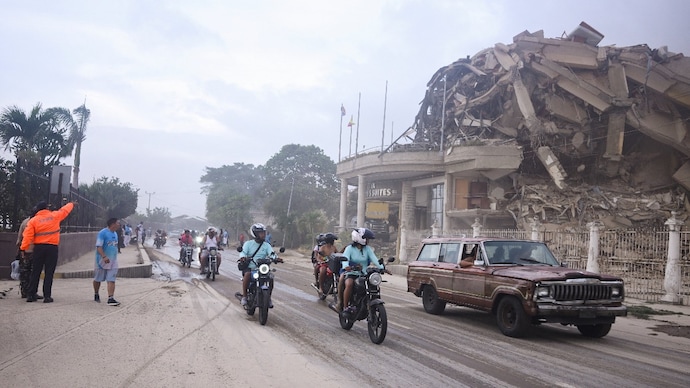
Venezuela is facing one of the most complex crises in its recent history. The devastating twin earthquakes that struck the northern state of La Guaira on June 24 have left thousands dead, tens of thousands missing, and entire communities struggling to recover. While emergency crews continue searching through collapsed buildings for survivors, public attention has increasingly shifted toward questions surrounding the speed of the government’s response, the effectiveness of rescue operations, and the country’s evolving political leadership.
The disaster has become more than a humanitarian emergency. It has also exposed longstanding challenges related to emergency preparedness, public trust, Governance, infrastructure resilience, and constitutional continuity. As officials defend their actions and critics demand greater accountability, Venezuela now faces the difficult task of balancing life-saving rescue operations with long-term national recovery.
What Happened in the Venezuela Earthquake?
The twin earthquakes struck Venezuela’s northern coastal region, with La Guaira among the hardest-hit areas. The disaster caused widespread destruction to residential neighborhoods, commercial buildings, transportation infrastructure, Healthcare facilities, and public utilities.
According to official government figures:
- More than 2,295 people have been confirmed dead.
- Tens of thousands of residents have been displaced.
- Thousands of buildings suffered varying degrees of structural damage.
- Rescue teams continue searching collapsed structures for survivors.
Independent tracking organizations have reported significantly higher numbers of people whose whereabouts remain unknown, illustrating the ongoing difficulty of accurately assessing the disaster’s human impact during active rescue operations.
Rescue Operations Continue Beyond the Critical Survival Window
One of the most remarkable developments has been the rescue of a 43-year-old security guard WHO was pulled alive from beneath the basement of a collapsed shopping mall nearly eight days after the earthquakes.
Such rescues are uncommon but not impossible. Disaster medicine experts note that survival beyond the first week can occur when victims have access to trapped air, limited water, and protection from crushing injuries or severe temperature extremes.
The rescue provided hope to affected families while reinforcing authorities’ decision to continue search-and-rescue operations despite increasingly difficult conditions.
Government Defends Its Emergency Response
Facing mounting public criticism, Acting President Delcy Rodríguez publicly defended the government’s handling of the emergency, stating that rescue operations began immediately after the earthquakes.
Government officials emphasized that authorities:
- Rapidly mobilized emergency responders.
- Deployed heavy rescue equipment.
- Established medical assistance in affected regions.
- Worked alongside international humanitarian teams.
- Continued active searches at locations where survivors might still be found.
Officials also announced the creation of mechanisms to receive financial assistance for reconstruction while stressing that rescue efforts had not yet transitioned into a recovery-only phase.
Residents Raise Questions About the Initial Response
Despite official assurances, many residents have described a different experience during the crucial first days following the earthquakes.
Numerous survivors reported:
- Searching collapsed buildings themselves.
- Limited availability of heavy excavation machinery during the first 48 hours.
- Delays before organized rescue teams reached some neighborhoods.
- Difficulty contacting emergency services because of damaged communications infrastructure.
These contrasting accounts have become central to the broader public debate over disaster preparedness and emergency management.
Why the First 72 Hours Matter in Earthquake Rescue
Search-and-rescue specialists often describe the first three days after a major Earthquake as the most critical period for locating survivors.
During this window:
- Victims are more likely to survive without water deprivation.
- Medical complications are generally easier to treat.
- Structural conditions may still allow safer rescue operations.
- Detection equipment is more likely to locate trapped individuals before environmental conditions deteriorate.
However, exceptional rescues occurring days later demonstrate why authorities sometimes continue intensive operations well beyond this period when credible evidence suggests survivors may still be alive.
The Scale of the Humanitarian Challenge
Beyond the tragic loss of life, the earthquakes have created an enormous humanitarian emergency.
Communities face multiple simultaneous challenges:
- Temporary displacement.
- Housing shortages.
- Interrupted healthcare services.
- Damaged schools.
- Disrupted transportation networks.
- Limited access to clean water and sanitation in some areas.
- Psychological trauma among survivors.
Natural disasters of this magnitude often require years of coordinated recovery efforts extending well beyond the initial emergency response.
Economic Impact Could Last for Years
Preliminary international assessments estimate that physical damage runs into billions of dollars, making the earthquakes one of the country’s costliest natural disasters in recent decades.
Recovery costs typically extend far beyond rebuilding damaged structures. Governments must also finance:
- Infrastructure reconstruction.
- Housing assistance.
- Business recovery programs.
- Healthcare expansion.
- School reconstruction.
- Transportation repairs.
- Disaster risk reduction initiatives.
These long-term investments often continue for many years after major earthquakes.
International Assistance Expands the Response
Authorities have reported support from numerous international partners through medical personnel, field hospitals, humanitarian supplies, and technical expertise.
International disaster assistance commonly includes:
- Urban search-and-rescue specialists.
- Emergency physicians.
- Engineers assessing structural safety.
- Water purification systems.
- Temporary shelters.
- Medical supplies.
- Psychological support teams.
International cooperation frequently plays an important role when disasters overwhelm domestic emergency capacity.
Political Uncertainty Adds Another Layer to the Crisis
Alongside the humanitarian emergency, Venezuela faces constitutional questions regarding the continuation of its interim executive leadership.
The expiration of the constitutional timeframe governing temporary presidential authority has generated uncertainty about the country’s political roadmap while disaster response remains ongoing.
This overlap between humanitarian and constitutional issues presents policymakers with a difficult balancing act, as governments responding to disasters must also maintain institutional continuity and public confidence.
Understanding Venezuela’s Constitutional Framework
Under Venezuela’s constitutional provisions governing temporary presidential absences, the vice president may assume executive responsibilities for a limited period. Extensions require legislative approval under specific constitutional conditions.
The recent expiration of that maximum interim period has prompted renewed discussion regarding:
- Possible legislative action.
- Future elections.
- Executive authority.
- Institutional stability.
- Governance during national emergencies.
At the time of the latest developments, authorities had not publicly announced the next constitutional steps.
Disaster Response and Public Trust
Natural disasters often become major tests of public confidence in government institutions.
Citizens typically evaluate authorities based on:
- Speed of emergency response.
- Transparency.
- Accuracy of public information.
- Distribution of humanitarian aid.
- Coordination among agencies.
- Communication with affected communities.
When official accounts differ significantly from public experiences, trust can become as important as logistics in determining how disaster management is perceived.
Comparison: Rescue Phase vs. Recovery Phase
| Phase | Primary Objective | Typical Activities |
|---|---|---|
| Search and Rescue | Save lives | Locating survivors, medical stabilization, debris removal, emergency response. |
| Emergency Relief | Meet immediate needs | Food, water, temporary shelter, healthcare, sanitation. |
| Recovery | Restore communities | Housing repairs, infrastructure rebuilding, business recovery, education restoration. |
| Reconstruction | Long-term resilience | Urban planning improvements, stronger building standards, disaster preparedness. |
Lessons from Major Earthquakes Worldwide
Global experience demonstrates that earthquake recovery depends on more than rebuilding physical structures.
Countries recovering successfully from major disasters often prioritize:
- Transparent communication.
- Independent engineering assessments.
- Modern building codes.
- Community participation.
- Mental Health services.
- Economic support for affected businesses.
- Investment in future disaster preparedness.
These lessons increasingly shape international disaster management strategies and reconstruction planning.
Expert Insight: Why Earthquake Preparedness Matters Before Disaster Strikes
While emergency response receives the greatest public attention, disaster risk specialists consistently emphasize that preparedness before an earthquake often saves more lives than any response afterward.
Key preparedness measures include:
- Earthquake-resistant construction.
- Routine structural inspections.
- Public emergency education.
- Early warning systems where feasible.
- Regular emergency drills.
- Well-equipped rescue agencies.
- Clear coordination between national and local authorities.
Countries investing in resilience before disasters occur generally experience faster recovery and reduced long-term losses.
What Recovery Will Require Going Forward
Even after search operations conclude, Venezuela’s recovery is likely to continue for several years.
Priority areas are expected to include:
- Permanent housing reconstruction.
- Restoration of hospitals and schools.
- Economic assistance for affected families.
- Infrastructure modernization.
- Strengthened disaster preparedness.
- Improved emergency response coordination.
Successful recovery will depend not only on financial resources but also on sustained institutional cooperation, transparent planning, and community engagement.
Future Outlook
The coming weeks will be critical for both humanitarian operations and Venezuela’s political landscape. Rescue efforts are expected to continue where authorities believe survivors may still be found, while attention will gradually shift toward large-scale reconstruction and support for displaced communities.
At the same time, decisions regarding constitutional governance and future political processes are likely to remain closely watched both domestically and internationally. How these parallel challenges are managed may significantly influence public confidence, economic recovery, and the country’s long-term resilience.
Conclusion
The devastating earthquakes have placed Venezuela at the intersection of humanitarian tragedy and political uncertainty. As emergency teams continue searching for survivors and communities begin the long road toward rebuilding, questions surrounding disaster response, institutional accountability, and constitutional leadership remain central to the national conversation.
Regardless of political developments, the immediate priority remains protecting lives, supporting affected families, restoring essential services, and building stronger systems capable of responding more effectively to future disasters. The experience also serves as a reminder that resilience depends not only on emergency response but on preparedness, transparent governance, and sustained investment in safer communities.
For breaking news and live news updates, like us on Facebook or follow us on Twitter and Instagram. Read more on Latest World on thefoxdaily.com.



COMMENTS 0