Political unrest often begins with slogans, rallies and public demonstrations. But when essential supplies start disappearing from shops, pharmacies and fuel stations, the consequences extend far beyond Politics.
That is the situation unfolding across Pakistan-occupied Kashmir (POK), where a growing anti-government movement has collided with allegations that authorities are restricting the movement of food, fuel and medicines into the region. While Islamabad denies imposing any blockade, reports from residents, opposition leaders, transport operators and local media paint a picture of deepening shortages that are affecting daily life across multiple districts.
What began as a dispute over political representation has now evolved into one of the most serious challenges Pakistan has faced in the region in recent years. With businesses shuttered, supply chains disrupted, and thousands of protesters refusing to back down, the crisis is increasingly raising questions about Governance, political legitimacy and the risks of using economic pressure to contain public dissent.
What Triggered the Latest Unrest in POK?
The roots of the current crisis lie in a long-running dispute over political representation within Pakistan-occupied Kashmir’s legislative system.
At the centre of the controversy are 12 seats in the regional assembly reserved for refugees from Jammu and Kashmir. Protest groups argue that these seats allow Islamabad to exert disproportionate influence over local politics and shape electoral outcomes in ways that weaken genuine regional representation.
Frustration over this issue has steadily grown over the years, eventually leading to widespread demonstrations spearheaded by the Joint Awami Action Committee (JAAC).
The movement quickly expanded beyond electoral concerns, evolving into a broader protest against what many residents view as excessive federal interference in local affairs.
As demonstrations intensified, Pakistani authorities designated the JAAC a terrorist organisation and launched a crackdown on activists and organisers. The resulting confrontation has transformed a political dispute into a major regional crisis.
From Political Protest to Humanitarian Concern
While political conflicts are common in disputed territories, what makes the current situation particularly alarming is its impact on ordinary civilians.
Across several towns and districts, residents report increasing difficulty obtaining basic necessities required for everyday life.
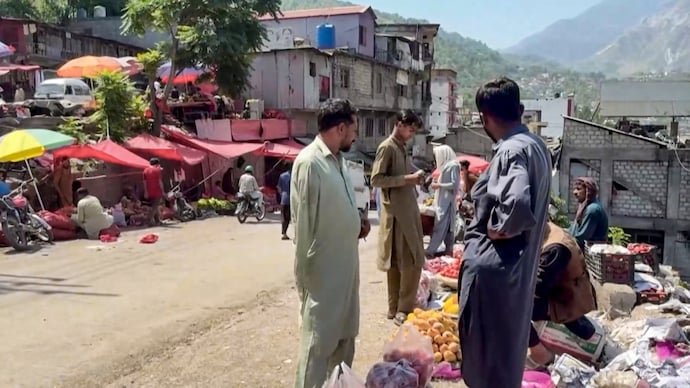
Pharmacies are struggling to maintain inventories. Grocery stores are reporting shortages of essential food items. Petrol pumps have either shut down or significantly reduced operations due to limited supplies.
For many families, the crisis is no longer about politics—it is about survival.
Medical access has emerged as one of the most pressing concerns. Patients requiring regular medication for chronic illnesses are reportedly finding it increasingly difficult to obtain prescriptions, while healthcare facilities face uncertainty about future supplies.
In remote mountainous areas, where communities already depend heavily on regular supply deliveries, disruptions can have particularly severe consequences.
Why Supply Chains Matter More Than Ever in Mountain Regions
One often-overlooked aspect of the crisis is the unique geography of Pakistan-occupied Kashmir.
Unlike densely connected urban centres, many communities in the region rely on a limited number of transportation corridors to receive essential goods.
Mountainous terrain, difficult weather conditions and long travel distances mean that even short disruptions can quickly trigger shortages.
When roads become inaccessible or transport networks are interrupted, local inventories can be depleted within days.
That reality makes uninterrupted supply chains especially critical for Food Security, healthcare access and economic stability.
Experts WHO study humanitarian crises frequently note that logistics networks are often as important as the supplies themselves. Once transportation routes become unreliable, shortages tend to spread rapidly across multiple sectors.
Allegations of a Supply Blockade Intensify
The most contentious aspect of the current crisis involves allegations that authorities are deliberately restricting the movement of essential commodities into the region.
Residents travelling outside POK to purchase food, medicine and fuel claim they have encountered obstacles while attempting to return home.
Truck operators have also alleged that commercial shipments carrying essential goods have faced delays at checkpoints and entry routes leading into the territory.
These claims have fuelled accusations that economic pressure is being used as a tool to weaken the protest movement.
Authorities reject these allegations and insist that no official blockade exists. Government representatives argue that disruptions are largely the result of ongoing Protests, road closures and transport interruptions linked to the agitation itself.
The competing narratives have created a highly contested information environment, making independent verification difficult.
The Economics of Protest: Who Suffers First?
Regardless of who is responsible for the disruptions, economic History shows that prolonged shutdowns typically affect ordinary citizens before they affect political leaders.
Small business owners lose revenue.
Daily wage earners struggle to support their families.
Farmers face difficulties transporting produce.
Patients experience delays in receiving treatment.
Students encounter disruptions to education and communication.
As shortages expand, prices often rise due to scarcity, creating additional hardship for lower-income households.
The result is a cycle in which political conflict gradually transforms into an economic crisis.
That pattern has been observed in numerous conflict zones worldwide, where prolonged instability eventually affects every aspect of civilian life.
The Strategic Question Facing Islamabad
If authorities are indeed attempting to restrict supplies as part of a broader effort to contain protests, history suggests such strategies often produce mixed results.
Governments sometimes believe economic pressure can reduce the ability of protest movements to organise and sustain large gatherings.
However, political research frequently shows that collective hardship can also strengthen public solidarity and deepen resentment toward authorities.
When citizens begin associating shortages of food, fuel or medicine with government actions, political grievances often become more intense rather than less.
This dynamic has appeared repeatedly in regions experiencing prolonged political unrest.
Instead of weakening opposition movements, supply restrictions can sometimes expand public participation by affecting individuals who were previously uninvolved in political activism.
Why the Protests Continue to Grow
One of the most significant developments in recent weeks has been the apparent resilience of the protest movement despite arrests, restrictions and growing economic pressure.
Large gatherings continue to attract participants from multiple districts.
Reports suggest that thousands of people have joined demonstrations and sit-ins across the region, reflecting widespread dissatisfaction that extends beyond a single issue.
The movement’s ability to sustain momentum indicates that many participants view the protests as part of a broader struggle over political rights, governance and regional autonomy.
That makes the current situation considerably more complex than a conventional law-and-order challenge.
When demonstrations evolve into mass movements driven by underlying political frustrations, purely security-focused responses rarely resolve the root causes of unrest.
A Comparison With Previous Regional Unrest
The current crisis bears similarities to other periods of unrest in disputed and politically sensitive territories around the world.
In many cases, governments initially view demonstrations as temporary disturbances. However, when underlying grievances remain unresolved, protest movements often gain broader social and political significance.
What begins as opposition to a specific policy can evolve into a wider debate about governance, representation and legitimacy.
The situation in POK appears to be following a similar trajectory.
The original dispute centred on legislative representation. Today, discussions increasingly encompass economic hardship, civil liberties, government accountability and public trust.
The Human Cost Often Gets Overlooked
Amid political rhetoric and competing narratives, the most important reality remains the experience of ordinary residents.
Families searching for medicines, parents worrying about food supplies and workers struggling to maintain livelihoods are bearing the immediate consequences of the crisis.
Whether shortages stem from protest-related disruptions, administrative decisions or a combination of factors, civilians remain the most vulnerable stakeholders.
Humanitarian experts frequently warn that prolonged shortages can have lasting consequences, particularly for children, elderly individuals and those with existing health conditions.
The longer disruptions continue, the greater the risk of broader social and economic damage.
What Happens Next?
The trajectory of the crisis will likely depend on three critical factors.
- Whether authorities and protest leaders can establish meaningful dialogue.
- Whether supply chains are restored and essential goods reach affected communities.
- Whether political grievances driving the protests are addressed through institutional mechanisms.
If tensions continue escalating without a negotiated solution, the region could face a prolonged period of instability marked by economic disruption and increasing public frustration.
Conversely, efforts to restore supplies and open channels for political engagement could help prevent the situation from deteriorating further.
The coming weeks may therefore prove decisive not only for the protest movement but also for broader stability across Pakistan-occupied Kashmir.
Conclusion
The unfolding crisis in Pakistan-occupied Kashmir is no longer solely a political dispute over legislative representation. It has evolved into a wider struggle involving governance, public trust, economic stability and access to essential services.
As allegations of supply restrictions collide with official denials, one fact remains undeniable: residents across the region are experiencing significant hardship. Food shortages, fuel scarcity and limited access to medicines are affecting daily life in ways that extend far beyond political debates.
Whether Islamabad’s current approach succeeds in restoring order or fuels further resistance will depend largely on how authorities address both the immediate humanitarian concerns and the deeper political grievances driving the unrest. History suggests that while governments can often control roads and checkpoints, winning public confidence requires a far more durable solution.
For breaking news and live news updates, like us on Facebook or follow us on Twitter and Instagram. Read more on Latest World on thefoxdaily.com.






COMMENTS 0