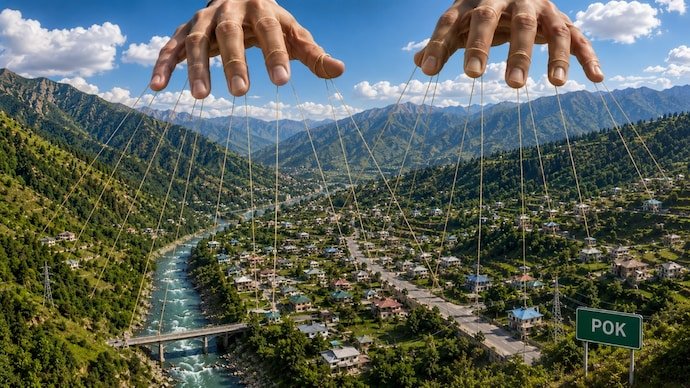
For decades, Pakistan has described Pakistan-occupied Kashmir (POK), officially referred to by Islamabad as “Azad Jammu and Kashmir” (AJK), as a self-governing territory. However, political activists, strategic analysts, and rights groups have increasingly challenged that narrative, arguing that key decisions affecting the region are made not in Muzaffarabad, but in Pakistan’s power centers of Islamabad and Rawalpindi.
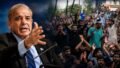
The debate has gained renewed attention following recent protests and crackdowns in POK, where demonstrators demanded greater autonomy, economic reforms, and reduced external influence in local affairs. At the center of the Controversy is a term that has become increasingly common among critics: “Punjabisation.”
While the term can be politically charged, it broadly refers to the perception that Pakistan’s Punjabi-dominated military, bureaucracy, and political establishment have gradually expanded their influence over POK and Gilgit-Baltistan, shaping Governance, demographics, economic opportunities, and cultural identity in ways that critics believe have weakened local representation.
Understanding the Meaning of ‘Punjabisation’
Punjabisation is often misunderstood as merely a linguistic issue. In reality, the debate extends far beyond language. Critics use the term to describe a broader process in which administrative control, political authority, economic resources, and demographic patterns increasingly reflect the priorities of Pakistan’s central institutions rather than local communities.
The argument centers on several key concerns:
- Centralized political decision-making from Islamabad
- Dominance of federal bureaucracies and security institutions
- Migration and demographic changes
- Declining influence of local languages and cultures
- Limited constitutional autonomy
- Control of natural resources by federal authorities
Supporters of this view argue that these developments have gradually transformed the political and social landscape of POK over the past seven decades.
The Historical Foundations of Pakistan-Occupied Kashmir
Any discussion of POK’s identity requires understanding its historical complexity. Contrary to popular assumptions, the region has never been ethnically or linguistically uniform.
Today’s Pakistan-administered territories consist primarily of two regions: Azad Jammu and Kashmir and Gilgit-Baltistan. Together, they encompass diverse ethnic communities including Gujjars, Rajputs, Jats, Sudhans, Awans, Mughals, Pashtuns, Baltis, Shinas, Burushos, Wakhis, and others.
Similarly, the linguistic landscape is highly diverse. Languages historically spoken across these territories include:
- Kashmiri
- Pahari
- Pothwari
- Punjabi
- Hindko
- Shina
- Balti
- Burushaski
- Wakhi
- Khowar
This diversity means that discussions about identity in POK cannot be reduced to a simple Kashmiri-versus-Punjabi framework. However, critics argue that the issue is less about ethnicity and more about WHO exercises political and institutional power.
The Karachi Agreement and the Shift of Authority
Many analysts trace the roots of centralized control back to the Karachi Agreement of 1949.
The agreement transferred significant authority over defense, foreign affairs, and matters related to Kashmir from local authorities to Pakistan’s federal government. Critics contend that this arrangement established a precedent in which major strategic decisions affecting the region would be made outside POK.
Over the following decades, constitutional and administrative changes were frequently introduced through executive actions from Islamabad rather than through locally driven political processes.
This pattern created a governance structure where local institutions existed, but ultimate authority often remained concentrated at the federal level.
Why Political Representation Remains a Controversial Issue
One of the most persistent grievances among local activists concerns political representation.
While POK has its own legislative assembly, president, and prime minister, critics argue that these institutions possess limited authority when compared to Pakistan’s federal structures.
Major policy decisions relating to security, strategic planning, Infrastructure, and constitutional arrangements continue to involve federal oversight.
This has led many local groups to question whether elected representatives truly possess the power to shape the region’s future.
The recent protests organized by the Joint Awami Action Committee (JAAC) brought these concerns into the national spotlight, as demonstrators demanded greater local control over governance and decision-making.
Language and Cultural Transformation in POK
The cultural dimension of Punjabisation remains one of the most emotionally charged aspects of the debate.
Many activists claim that Kashmiri language use has declined significantly across parts of POK, particularly among younger generations. At the same time, Punjabi-related dialects such as Pothwari and other regional languages have become increasingly prominent.
However, experts caution against oversimplification.
Large areas of Mirpur, Bhimber, and Kotli historically spoke dialects linked to the broader Potohar region long before Partition. Therefore, language shifts cannot be attributed solely to contemporary political developments.
Nevertheless, cultural activists argue that insufficient institutional support for local languages has contributed to concerns about the gradual erosion of traditional identities.
The Demographic Debate and Settlement Concerns
Perhaps the most controversial aspect of Punjabisation involves demographic changes.
Critics point to the abolition of State Subject Rules in the 1970s as a turning point. These rules had previously restricted land ownership and settlement by outsiders.
Following their removal, migration from other parts of Pakistan reportedly increased, particularly from Punjab and neighboring regions.
Supporters of demographic concerns argue that such migration has altered the social and political composition of certain areas, while critics of this view contend that migration is a natural phenomenon occurring across many regions.
The debate remains politically sensitive because demographic changes can influence electoral representation, land ownership, economic opportunities, and cultural preservation.
| Issue | Concerns Raised by Critics |
|---|---|
| Migration | Changing population composition |
| Land Ownership | Increased acquisition by outsiders |
| Political Influence | Reduced local representation |
| Cultural Identity | Erosion of local traditions and languages |
| Economic Opportunities | Competition for jobs and contracts |
Gilgit-Baltistan: The Strategic Dimension
While discussions often focus on POK, many analysts argue that the effects of centralization are even more visible in Gilgit-Baltistan.
The region occupies a strategically critical location connecting South Asia, Central Asia, and china. It is also home to major infrastructure projects associated with the China-Pakistan Economic Corridor (CPEC).
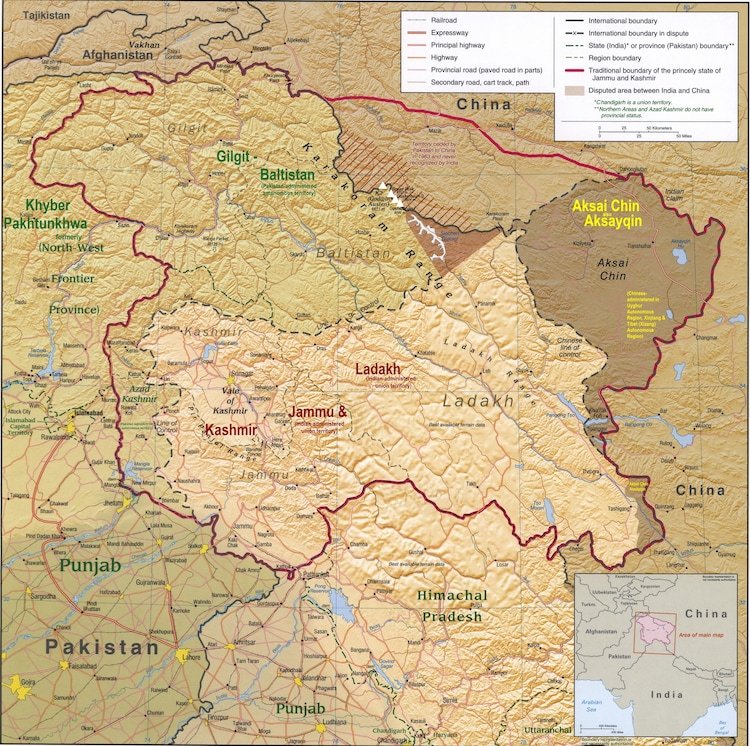
For decades, residents of Gilgit-Baltistan lacked constitutional recognition comparable to Pakistan’s provinces. Critics argue that important decisions regarding infrastructure, resources, and development have frequently been made without meaningful local participation.
The region’s strategic significance has made it a focal point for both domestic governance debates and broader geopolitical competition.
The Role of the Military and Bureaucracy
A recurring theme in discussions about Punjabisation is the influence of Pakistan’s military and federal bureaucracy.
Critics argue that many key administrative and security positions in POK and Gilgit-Baltistan are occupied by officials from outside the region, limiting local participation in governance.
Supporters of centralized administration often argue that federal involvement is necessary for National Security and effective governance.
However, opponents contend that such arrangements weaken democratic accountability and make local institutions dependent on external authorities.
The tension between security priorities and regional autonomy remains one of the most significant political challenges facing the region.
Economic Inequality and Resource Control
Economic concerns are increasingly driving public dissatisfaction.
Local activists frequently argue that while POK and Gilgit-Baltistan contribute strategic value, water resources, and tourism potential, many communities continue to face economic hardship.
Key grievances include:
- Limited industrial development
- High unemployment rates
- Rising inflation
- Energy shortages
- Perceived unequal distribution of resources
- Limited local control over major infrastructure projects
These economic concerns have helped transform political debates into broader social movements demanding structural reforms.
The Shia-Sunni Dimension and Sectarian Tensions
Another aspect often highlighted by researchers is the changing sectarian landscape, particularly in Gilgit-Baltistan.
Historically, the region had significant Shia and Ismaili populations. Over the past several decades, demographic changes, migration patterns, and broader political developments have coincided with increasing sectarian tensions.
Analysts have linked these developments to wider regional dynamics affecting Pakistan as a whole.
The issue is particularly significant because sectarian harmony has traditionally been a defining characteristic of many communities in the region.
Why the Recent JAAC Protests Matter
The resurgence of large-scale protests has brought long-standing grievances back into public focus.
While economic issues such as electricity prices and inflation initially fueled demonstrations, the movement evolved into a broader conversation about governance, representation, and autonomy.
Protesters argued that local voices continue to be marginalized in decisions affecting their future.
The government’s response to these protests has further intensified discussions about political rights and democratic participation in the region.
A Comparison With Other Federal Systems
One way to understand the debate is by comparing it with federal systems elsewhere in the world.
In many democracies, regions possess varying degrees of autonomy over taxation, Education, natural resources, and local governance.
The central question raised by activists in POK and Gilgit-Baltistan is whether existing institutions provide sufficient authority for local communities to shape their own political and economic futures.
This comparison highlights that the debate is not solely about identity it is fundamentally about governance and self-representation.
What the Future Holds for POK
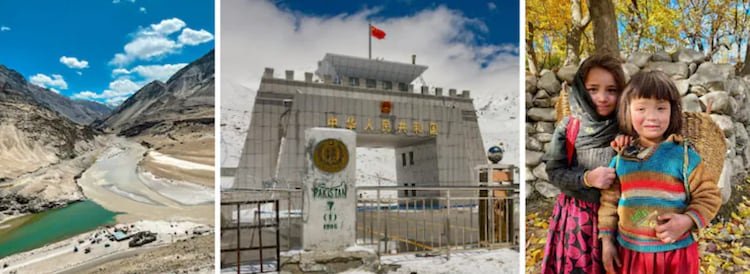
The future of Pakistan-occupied Kashmir and Gilgit-Baltistan will likely depend on how effectively authorities address growing demands for accountability, representation, and economic opportunity.
Several possible scenarios could emerge:
- Greater constitutional autonomy
- Expanded local representation
- Institutional reforms
- Continued centralized governance
- Increased political activism
- Further debates over demographic and cultural identity
The outcome will have implications not only for local populations but also for regional stability and broader geopolitical dynamics.
Conclusion
The debate over Punjabisation in Pakistan-occupied Kashmir extends far beyond language or ethnicity. At its core, it reflects deeper questions about political authority, cultural identity, demographic change, economic opportunity, and self-governance.
While the region’s history and demographics are far more complex than simplified narratives often suggest, there is little doubt that governance structures have remained heavily influenced by institutions located outside POK for decades.
Whether described as Punjabisation, centralization, or administrative control, the underlying issue remains the same: who ultimately decides the future of Pakistan-occupied Kashmir and Gilgit-Baltistan?
As protests, political movements, and debates continue to evolve, that question is likely to remain at the center of discussions about the region’s identity, governance, and future trajectory for years to come.
For breaking news and live news updates, like us on Facebook or follow us on Twitter and Instagram. Read more on Latest World on thefoxdaily.com.




COMMENTS 0